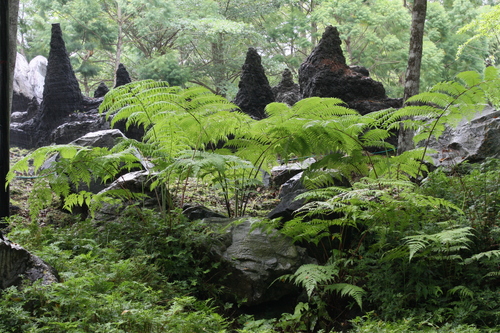
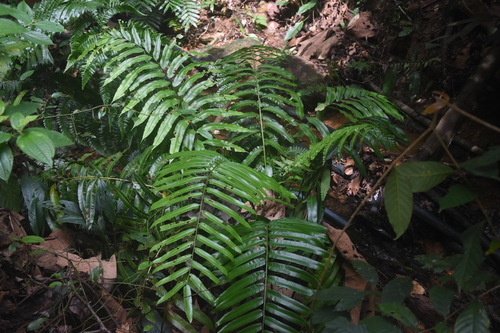
Cyathea gigantea
(Wallich ex W.J. Hooker) Holttum
Giant tree fern
iNaturalist· cc-by
(c) Julien Renoult, some rights reserved (CC BY)
wikimedia· cc-by-sa
Wikimedia Commons - Nativeplants garden
wikimedia· cc-by-sa
Wikimedia Commons - Nativeplants garden
Description
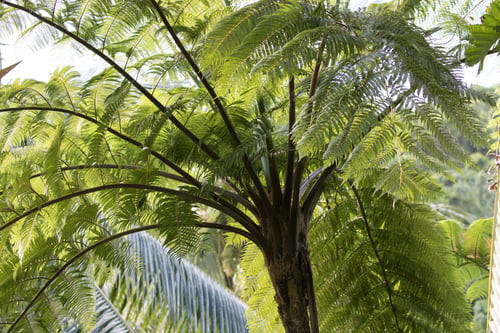
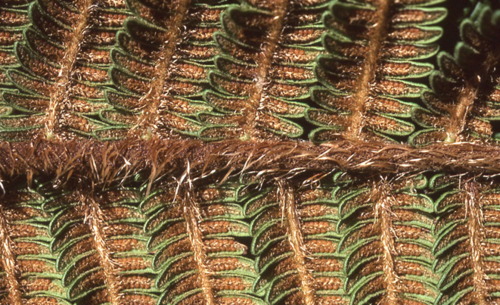
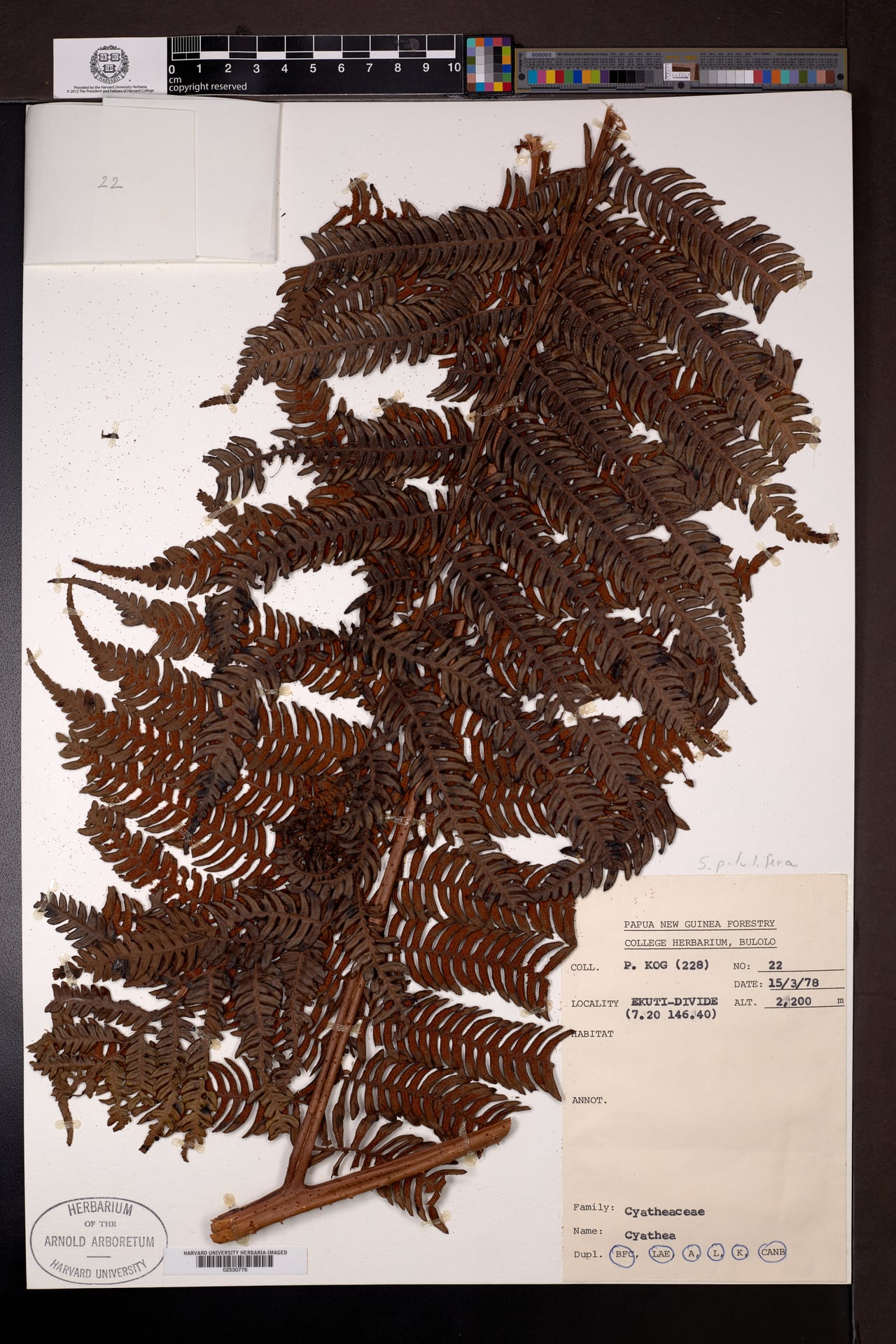
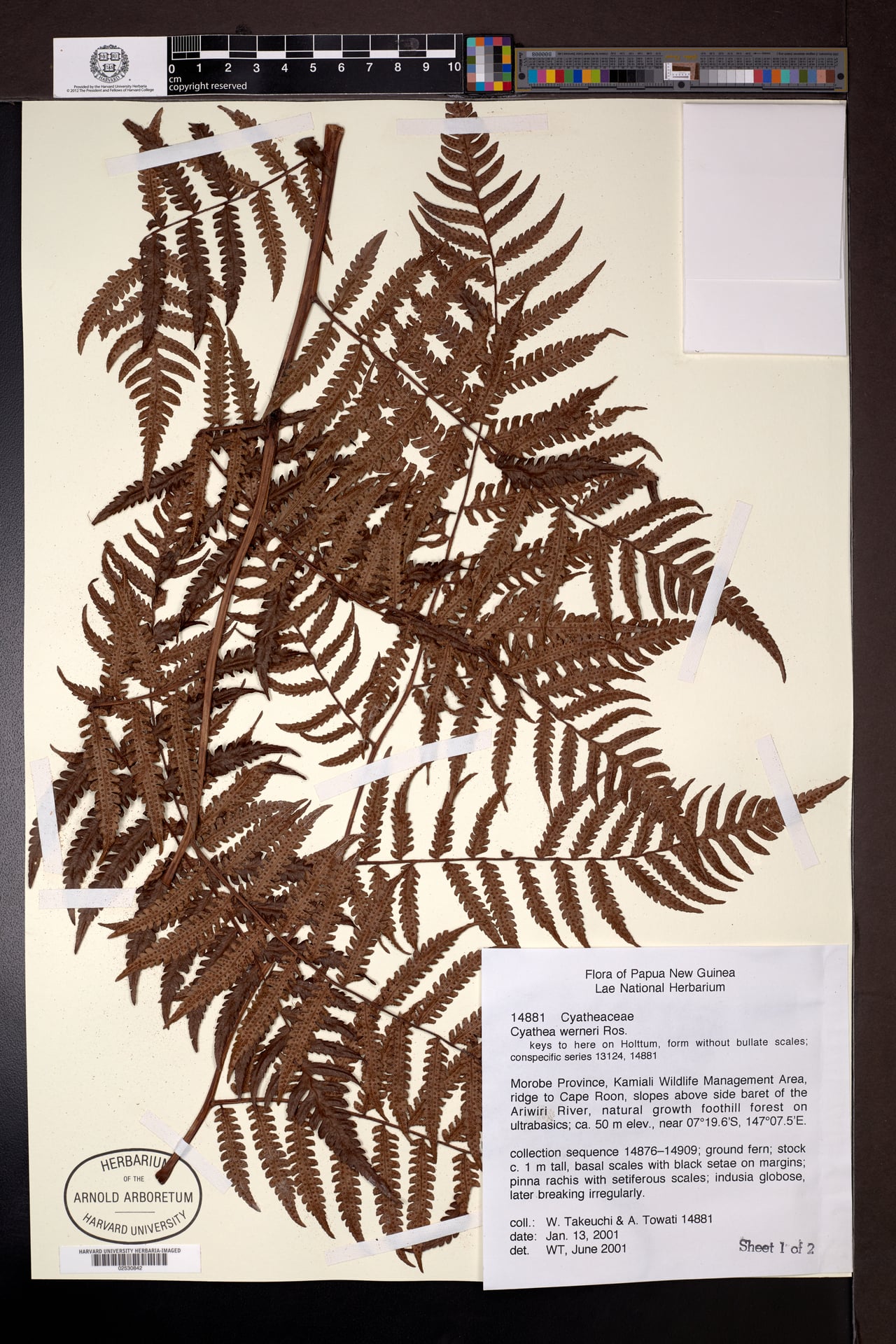
A tree fern. It has an erect trunk. It can be 5 m or more tall. The fronds are 2-3 m long and divided 2 or 3 times. The middle leaflets are 45 cm long by 18 cm wide and have smaller leaflets 14 cm long by 2 cm wide. The stalk is long, and dark and rough. There are glossy scales which are dark brown with a lighter edge but these fall off. The spore bodies are round and do not have a covering.
Edible Uses
Starch extracted from the stem is used as food.
Traditional Uses
The starch from the stem is used as food.
This uses section is brief — help expand it
Distribution
It is a tropical plant. Plants are found in moist open areas between 600-1000 m altitude.
Where It Grows
Asia, Himalayas, India, Indochina, Indonesia, Laos, Myanmar, Nepal, Northeastern India, SE Asia, Sikkim, Sri Lanka, Thailand, Vietnam,
Notes
There are about 800 Cyathea species.
Nutrition
| Part | Moisture | kJ | kcal | Protein | Vit A | Vit C | Iron | Zinc |
|---|---|---|---|---|---|---|---|---|
| Leaves | 74 | — | — | 1.8 | — | — | — | — |
Synonyms
References (6)
- Gangwar, A. K. & Ramakrishnan, P. S., 1990, Ethnobotanical Notes on Some Tribes of Arunachal Pradesh, Northeastern India. Economic Botany, Vol. 44, No. 1 pp. 94-105
- Islam, M., 1983, Utilisation of Certain Ferns and Fern Allies in the North-Eastern Region, India. J.Econ. Tax. Bot. Vol.4.No.3 pp 861-
- Large, M.F., & Braggins, J.E., 2004, Tree Ferns. CSIRO Publishing, Melbourne, Australia. p 136 Plate 50
- Manju, S., and Sundriyal, R. C., 2001, Wild Edible Plants of the Sikkim Himalaya: Nutritive Values of Selected Species. Economic Botany 55(3): 377-390
- Sahni, K.C., 2000, The Book of Indian Trees. Bombay Natural History Society. Oxford. p 206
Show all 6 references Hide references
- Salvi, J. et al, 2016, A review: Underutilized wild edible plants as a potential source of alternative nutrition. International Journal of Botany Studies. Volume 1; Issue 4; May 2016; Page No. 32-36