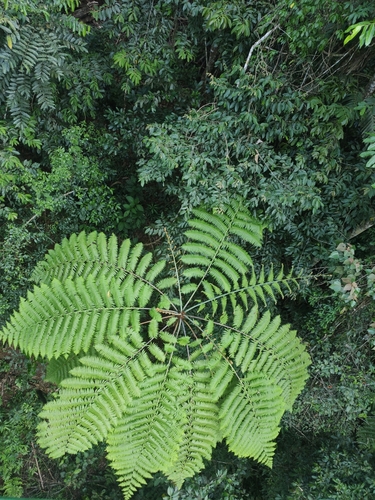
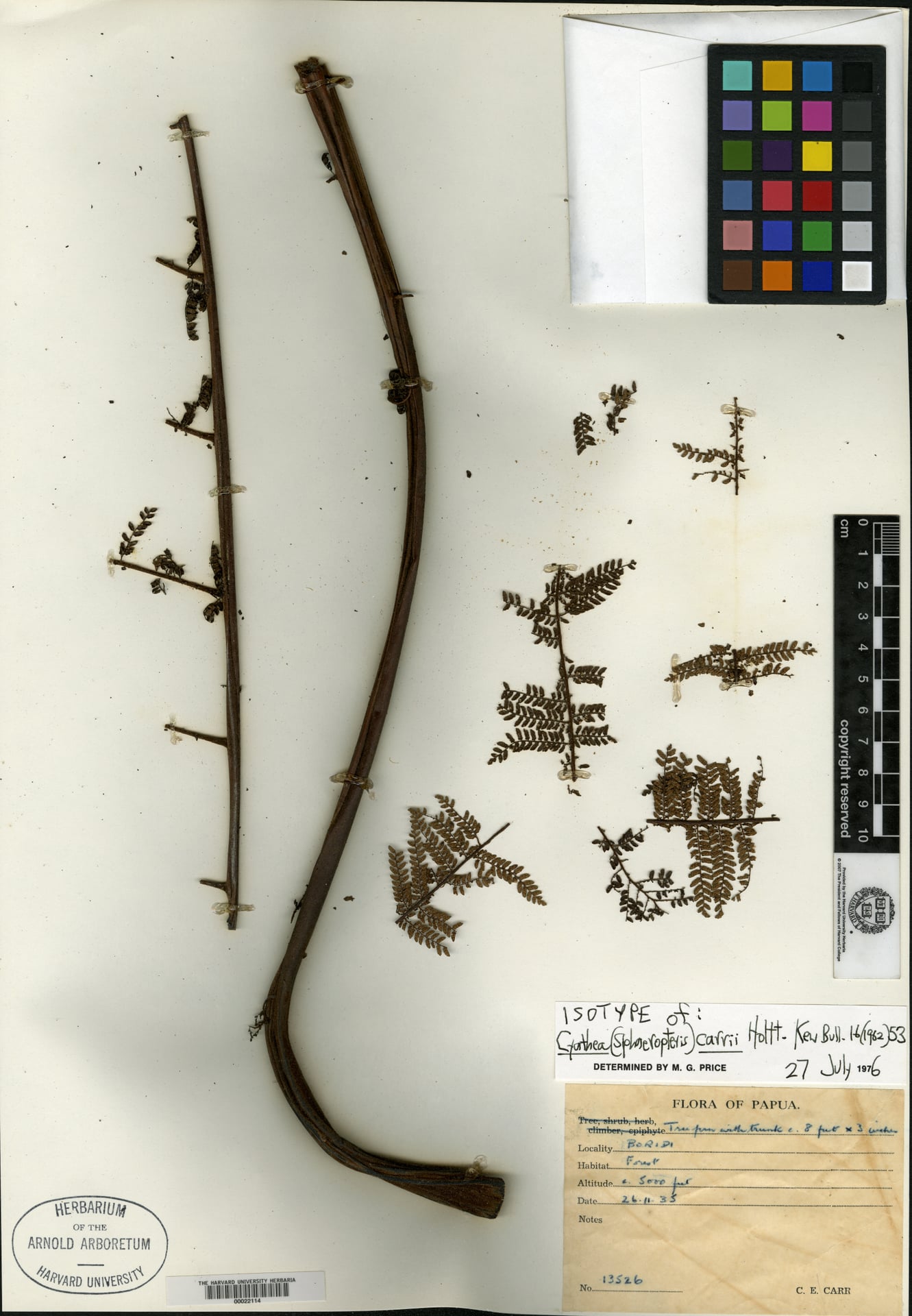
Cyathea brunoniana
(Wall. ex Hook.) C. B. Clarke & Baker
iNaturalist· cc-by-nc
(c) bxqyl, some rights reserved (CC BY-NC)
iNaturalist· cc-by-nc
(c) liangfern, some rights reserved (CC BY-NC)
iNaturalist· cc-by-nc
(c) liangfern, some rights reserved (CC BY-NC)
Description
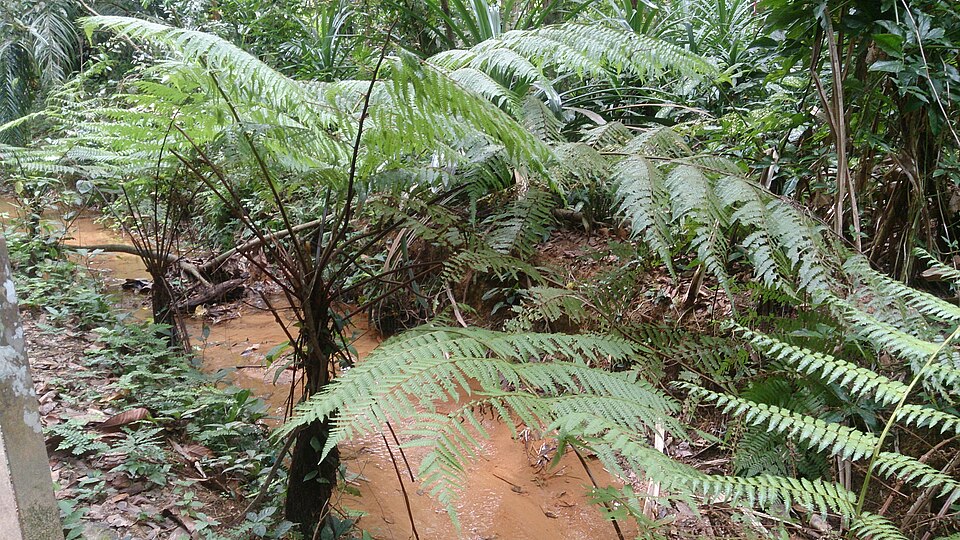
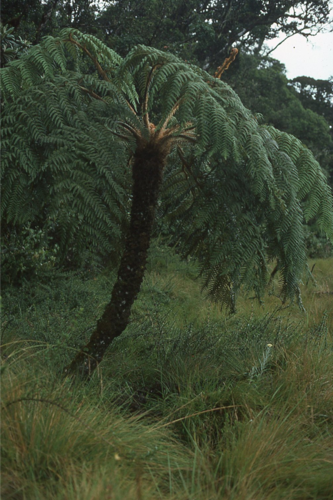
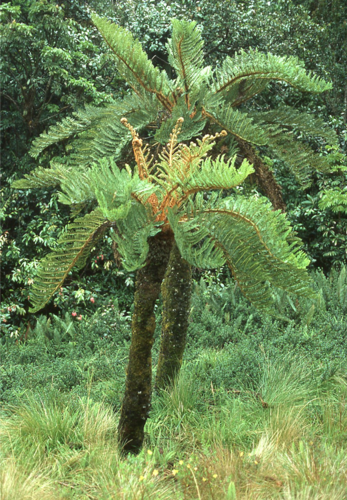
A tree fern. The trunk can be 10-12 m tall. The fronds can be 2-3 m long. They are divided 2 or 3 times. The stalk is smooth and can have pale thin scales near the base. The spore bodies or sori are in 2 rows and are prickly. They are along the main veins and covered with a half round cup.
Edible Uses
The soft pith is edible and eaten as a starch source.
Traditional Uses
The soft pith is edible.
This uses section is brief — help expand it
Distribution
A tropical and subtropical plant. In Sikkim it grows between 1,200-2,000 m above sea level.
Where It Grows
Asia, Bangladesh, Bhutan, China, Himalayas, India, Indochina, Myanmar, Nepal, Northeastern India, SE Asia, Sikkim, Vietnam,
Notes
There are about 800 Cyathea species.
Synonyms
Also Known As
Pakpa, Pakpe, Pasen, Pashien, Unyo
References (6)
- Ambasta, S.P. (Ed.), 2000, The Useful Plants of India. CSIR India. p 153
- Large, M.F., & Braggins, J.E., 2004, Tree Ferns. CSIRO Publishing, Melbourne, Australia. p 108
- Sahni, K.C., 2000, The Book of Indian Trees. Bombay Natural History Society. Oxford. p 205
- Sundriyal, M., et al, 1998, Wild edibles and other useful plants from the Sikkim Himalaya, India. Oecologia Montana 7:43-54
- Sundriyal, M., et al, 2004, Dietary Use of Wild Plant Resources in the Sikkim Himalaya, India. Economic Botany 58(4) pp 626-638
Show all 6 references Hide references
- Wild edible plants of Himachal Pradesh