Paris polyphylla var. yunnanensis
(Franch.) Hand.-Mazz.
gbif· cc-by-nc
Copyright Royal Botanic Garden Edinburgh. Contact us for rights to commercial use.
gbif· cc-by-nc
Copyright Royal Botanic Garden Edinburgh. Contact us for rights to commercial use.
gbif· cc-by-nc
Copyright Royal Botanic Garden Edinburgh. Contact us for rights to commercial use.
Summary
Source: WikipediaParis polyphylla is a species of flowering plant native to China, the Indian subcontinent, and Indochina. It produces spider-like flowers that throw out long, thread-like, yellowish green petals throughout most of the warm summer months and into the autumn. In the fall, the flowers are followed by small, scarlet berries. It is a perennial, which slowly spreads, is fully hardy in Britain, and survives in leafy, moist soil in either complete or partial shade. This plant usually grows up to 90 cm (3 ft) high and spreads out about 30 cm (1 ft) wide. Its leaves grow in a single whorl below a flower growing in two whorls. According to Fayaz, there can be as many as twenty-two leaves in the whorl, a number exceeded only by some Equisetum species. This same source states that the tepals can number up to fourteen. It is used as an ornamental plant for woodland gardens or for planting under deciduous trees.
Description
A subtropical herb in the Melanthiaceae family, growing 30–100 cm tall with 5–9 leaves. Native to Yunnan, it grows between 1,400–3,100 m above sea level and is sold in local markets.
Edible Uses
The root is used in tonic soup.
Traditional Uses
The root is used in tonic soup.
This uses section is brief — help expand it
Medicinal Uses
Paris polyphylla has been used by local inhabitants of Nepal traditionally since ancient times. They use it primarily for fevers and headaches, burns, wounds, and many livestock disease mainly to neutralize poisons. People harvest the rhizome of the Paris polyphylla at fruiting season (October), just before the plant dies because the plant is abundant at this time. However, the local people, especially the Gurungs, believe that the plant harvested on Tuesdays of mid April (i.e. last Tuesday of Chaitra month) will be more effective as a medicine than those harvested at any other season. There used to be a large scale collection and trading of the rhizomes; they were traded to Pokhara city or Kathmandu. However, no trade of Paris polyphylla occurs at present because it is banned for commercial collection as it falls under the Annapurna Conservation Area.
Distribution
It is a subtropical plant. In Yunnan. It grows between 1,400-3,100 m above sea level.
Where It Grows
Asia, China, Himalayas, India, Myanmar, Northeastern India, SE Asia, Tibet, Vietnam, Xizang,
Other Information
It is sold in local markets.
Synonyms
Also Known As
Dian chong lou
References (1)
- Cao, Y., et al, 2020, Ethnobotanical study on wild edible plants used by three trans-boundary ethnic groups in Jiangcheng County, Pu’er, Southwest China. Journal of Ethnobiology and Ethnomedicine (2020) 16:66
More from Melanthiaceae
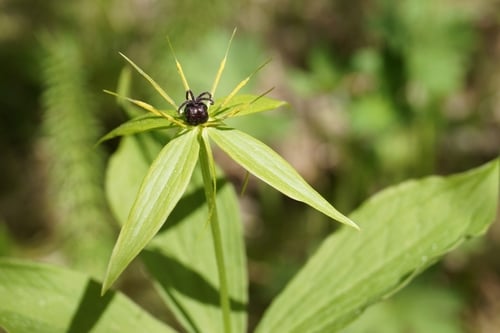
Paris verticillata
Sakkannamul
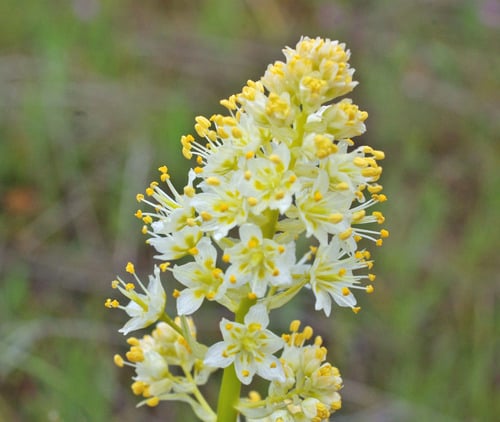
Toxicoscordion paniculatum
Foothill deathcamas
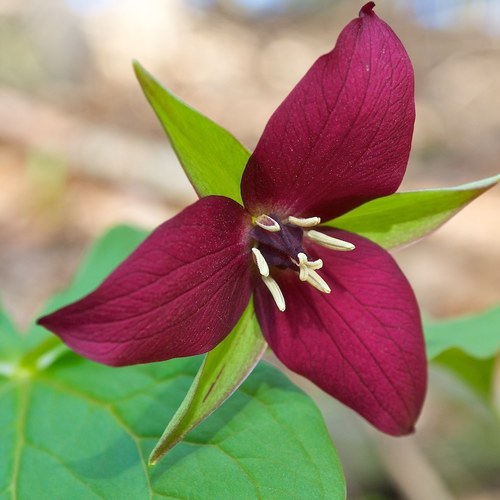
Trillium erectum
Beth root, Stinking Benjamin, Purple trillium, Birthroot, Red trillium
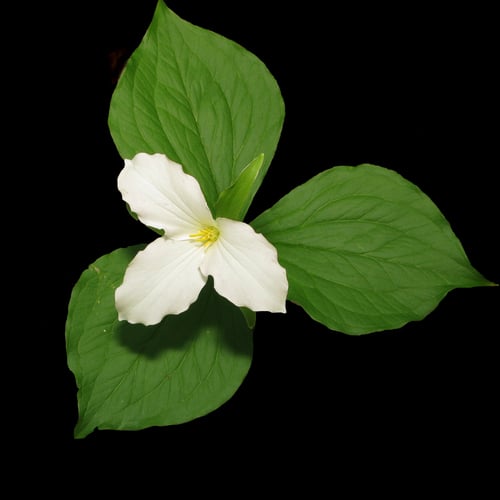
Trillium grandiflorum
White trilium, Wake robin, White wake robin, Grand trillium, Showy trillium, Large-flowered trillium
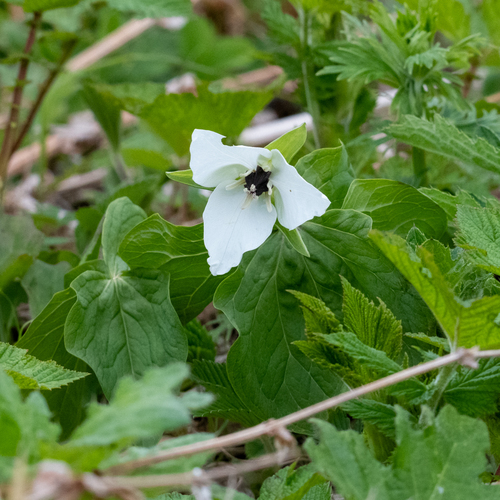
Trillium kamtschaticum
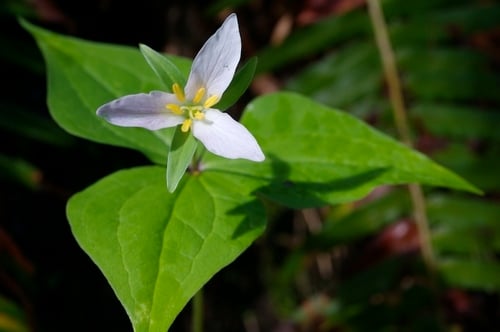
Trillium ovatum
Wakerobin, Western trillium, Pacific trillium