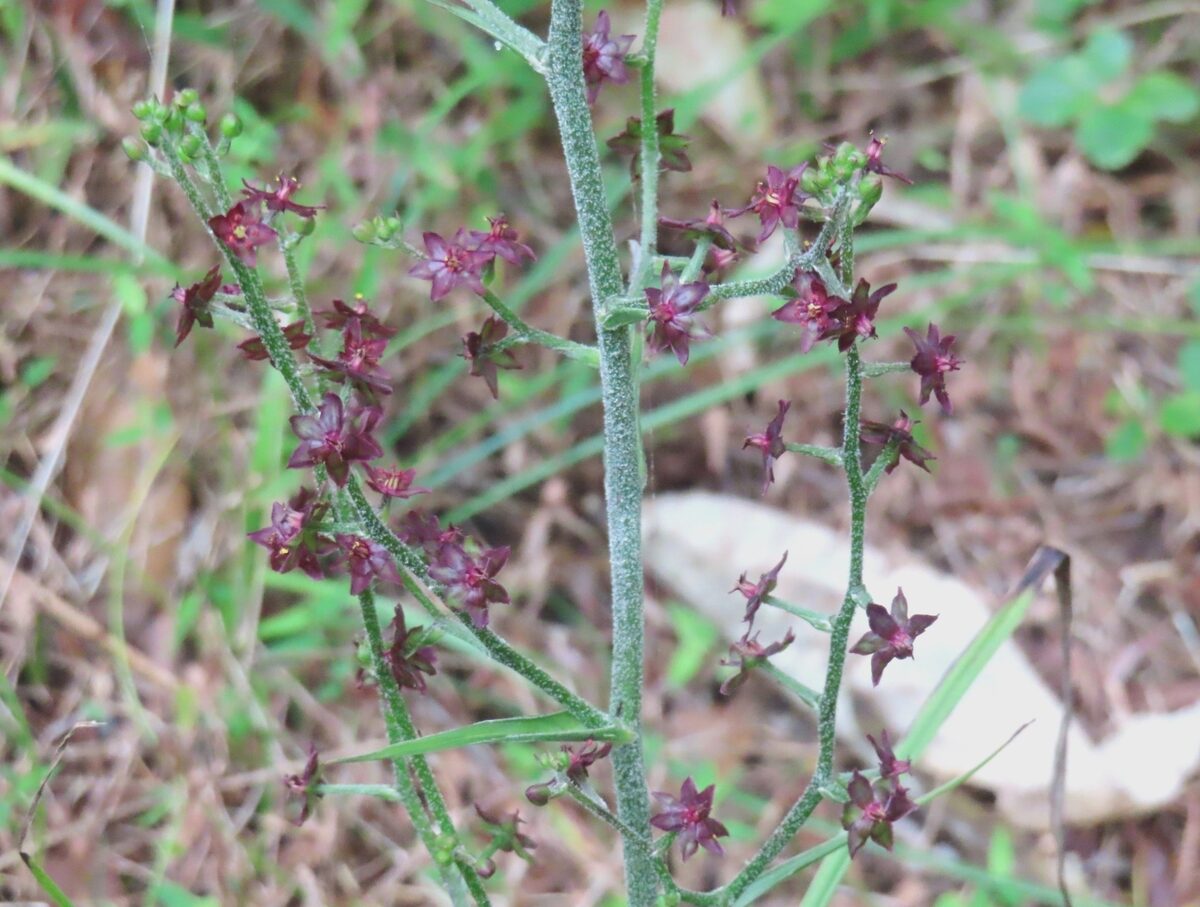
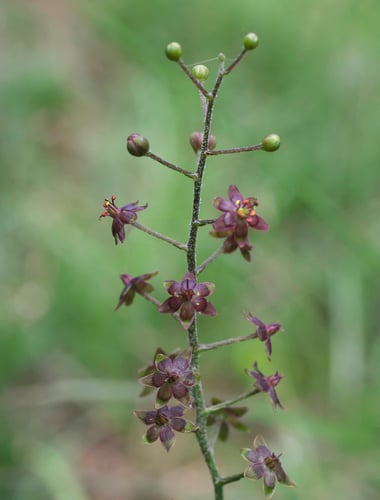
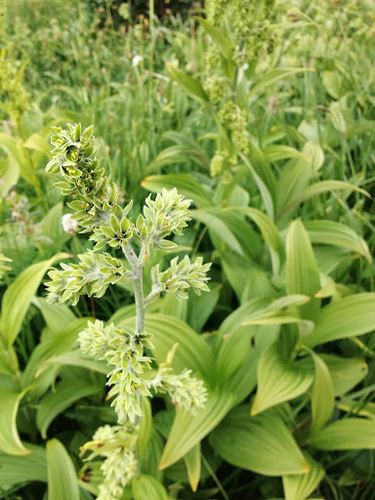
Toxicoscordion paniculatum
(Nutt.) S. Watson
Foothill deathcamas
iNaturalist· cc-by-nc
(c) Robert Wilson, some rights reserved (CC BY-NC), uploaded by Robert Wilson
iNaturalist· cc-by-nc-sa
(c) Zach Hawn, some rights reserved (CC BY-NC-SA), uploaded by Zach Hawn
iNaturalist· cc-by
(c) Steve Matson, some rights reserved (CC BY), uploaded by Steve Matson
Summary
Source: WikipediaToxicoscordion paniculatum is a species of flowering plant known by the common names foothill deathcamas, panicled death-camas, and sand-corn. It is widely distributed across much of the western United States, especially in the mountains and deserts of the Great Basin region west of the Rocky Mountains. It grows in many types of habitats, including sagebrush plateau, grasslands, forests, and woodlands.
Description
Foothill deathcamas is a bulb plant in the Melanthiaceae family (also classified in Liliaceae) found in temperate regions.
This description is brief — help expand it
Edible Uses
The bulbs are cooked together with meat and corn and eaten.
Traditional Uses
The bulbs are cooked with meat and corn and eaten.
This uses section is brief — help expand it
Known Hazards
Toxicoscordion paniculatum is infamous for its poisonous qualities in the western United States. All parts of the plant are poisonous, people have even been poisoned by the flowers. However, the most poisonous part is the bulb. Humans that have mistaken the bulbs for those of wild onions or camas and eaten them have been fatally poisoned. In 2003 eight people who mistook the bulbs for that of the edible sego lily (Calochortus nuttallii) were poisoned in Juab County, Utah. Six of them seriously enough to require hospitalization. Horses and cattle tend to avoid the plant and are therefore less commonly poisoned than sheep. Animals are most often poisoned when in pastures containing foothill death camas early in the spring before other plants begin to green up.
Distribution
It is a temperate plant.
Where It Grows
North America, USA,
Notes
Also put in the family Liliaceae.
Synonyms
References (1)
- Moerman, D. F., 2010, Native American Ethnobotany. Timber Press. p 613