Trillium erectum
L.
Beth root, Stinking Benjamin, Purple trillium, Birthroot, Red trillium
iNaturalist· cc-by-nc-nd
(c) Distant Hill Gardens, some rights reserved (CC BY-NC-ND)
iNaturalist· cc-by-nc
(c) rnupusers, some rights reserved (CC BY-NC)
iNaturalist· cc-by-nc
(c) Chuck Cantley, some rights reserved (CC BY-NC)
Summary
Source: WikipediaTrillium erectum, the red trillium, also known as wake robin, purple trillium, bethroot, or stinking benjamin, is a species of flowering plant in the family Melanthiaceae. The plant takes its common name "wake robin" by analogy with the European robin, which has a red breast heralding spring. Likewise Trillium erectum is a spring ephemeral plant whose life-cycle is synchronized with that of the forests in which it lives. It is native to the eastern United States and eastern Canada from northern Georgia to Quebec and New Brunswick.
Description
A perennial wildflower reaching 40cm tall and 30cm wide with slow growth habit. Hardy to UK zone 4. Flowers appear May to June and are pollinated by flies. Grows well in sandy, loamy, or clay soils with good drainage across mildly acidic to mildly alkaline pH levels. Adapts to deep woodland shade, light shade, or open sun, preferring consistently moist soil.
Edible Uses
The leaves can be eaten raw or cooked. Young, unfolding leaves gathered in spring make an excellent salad addition with a flavour somewhat like sunflower seeds. They can also be cooked as a potherb.
Traditional Uses
The young unfolding leaves are added to salads. They can be eaten as a potherb served with butter or vinegar.
This uses section is brief — help expand it
Medicinal Uses
Beth root was traditionally used by various native North American Indian tribes as a woman's herb to assist childbirth and to treat irregular menstrual periods, period pains, and excessive vaginal discharge. Modern research has confirmed the root contains steroidal saponins with hormonal effects, now used in gynaecological and obstetric medicine. This herb should not be taken during pregnancy except under professional supervision. The root is antiseptic, aphrodisiac, astringent, expectorant, tonic, and a uterine tonic. Internally, it is used to treat haemorrhage from the uterus, urinary tract, and lungs, and to reduce excessive menstruation. It has also proved valuable in stopping bleeding after childbirth. Externally, it is applied for excessive vaginal discharge, ulcers (especially varicose), skin complaints, gangrene, insect bites and stings, and as a wash for sore nipples. The root is harvested in late summer after the leaves have died down and dried for later use. The whole plant can be used as a poultice for tumours, inflammations, and ulcers.
Known Hazards
Can cause nausea in high doses and promote labour and menstruation. Local application can cause irritation. Should not be used during pregnancy.
Where It Grows
Leaves,
Cultivation
Prefers a deep well-drained woodland or humus-rich soil in a somewhat shady position that remains moist in the summer. Prefers a neutral to slightly acid soil. Grows well in open deciduous woodland. Succeeds in a sunny position if the soil does not dry out. Succeeds in deep shade. A very hardy plant, tolerating temperatures down to about -35°c. Plants are long-lived. Any transplanting is best done whilst the plants are in flower. A very variable species, it is subject to mutation. Members of this genus are rarely if ever troubled by browsing deer or rabbits, though slugs are very fond of the leaves. The flowers have an unattractive smell rather like putrefied flesh. The white-flowered form, blandum, is almost scentless. Plants can flower in two years from seed.
Propagation
Seed is best sown in a shaded cold frame as soon as it is ripe. Stored seed should be sown in late winter or early spring. Germination usually occurs within 1–3 months at 15°C, though some reports indicate seeds produce a root after the first cold stratification but no shoot until after a second winter; others suggest germination can take up to 3 years. Seedlings are prone to damping off and must be watered carefully with good air circulation. Young plants should be overwintered in a cold frame in their first year, then planted out in late spring. Pots must not become too dry or too wet. Divide with care when plants die down after flowering. Larger divisions can go directly into permanent positions; smaller divisions are best potted up and grown on in light shade in a greenhouse or cold frame until establishing well, then planted out the following spring.
Other Uses
None known. This plant is noted for its scent.
Other Information
Melanthiaceae
Notes
It grows 40 cm high. There are a ring of 3 leaves which do not have stalks. They are large and deep green. The flower stalks are 10 cm long. The sepals and petals are almost the same length. The flowers are maroon. The flowers have an unpleasant scent.
Synonyms
Also Known As
Wake robin
References (9)
- Cundall, P., (ed.), 2004, Gardening Australia: flora: the gardener's bible. ABC Books. p 1430
- Facciola, S., 1998, Cornucopia 2: a Source Book of Edible Plants. Kampong Publications, p 242
- Hibbert, M., 2002, The Aussie Plant Finder 2002, Florilegium. p 301
- Kermath, B. M., et al, 2014, Food Plants in the Americas: A survey of the domesticated, cultivated and wild plants used for Human food in North, Central and South America and the Caribbean. On line draft. p 876
- MacKinnon, A., et al, 2009, Edible & Medicinal Plants of Canada. Lone Pine. p 173
Show all 9 references Hide references
- Morley, B. & Everard, B., 1970, Wild Flowers of the World. Ebury press. Plate 167
- Plants for a Future database, The Field, Penpol, Lostwithiel, Cornwall, PL22 0NG, UK. http://www.scs.leeds.ac.uk/pfaf/
- Slocum, P.D. & Robinson, P., 1999, Water Gardening. Water Lilies and Lotuses. Timber Press. p 137
- Sp. pl. 1:340. 1753
More from Melanthiaceae
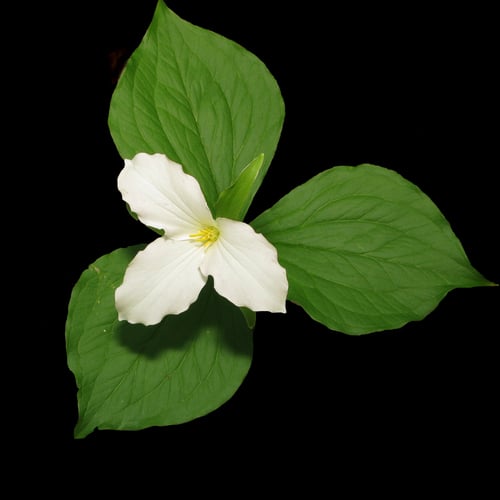
Trillium grandiflorum
White trilium, Wake robin, White wake robin, Grand trillium, Showy trillium, Large-flowered trillium
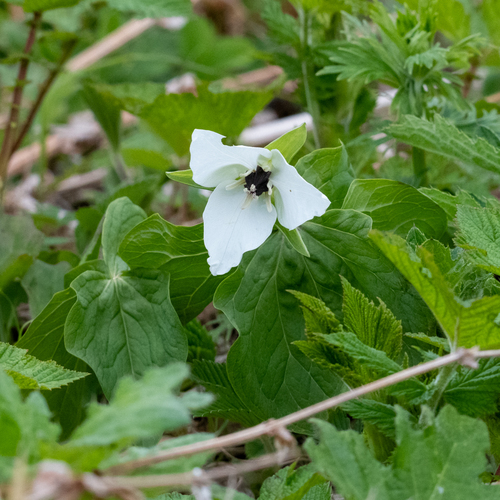
Trillium kamtschaticum
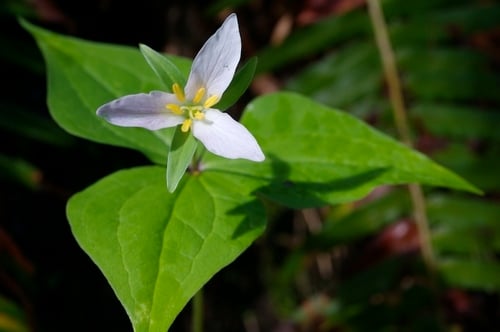
Trillium ovatum
Wakerobin, Western trillium, Pacific trillium
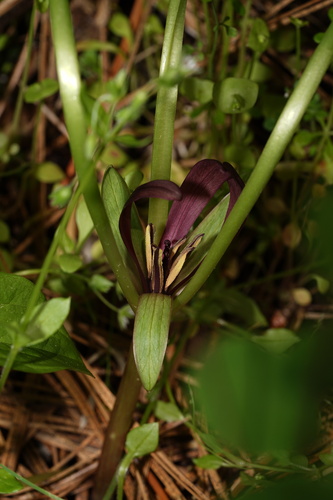
Trillium petiolatum
Idaho trillium, Purple trillium, Round-leaved trillium
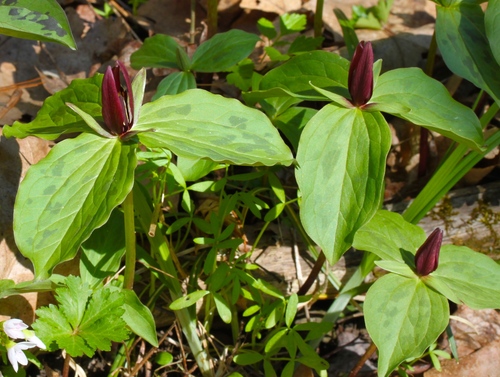
Trillium sessile
Toadshade, Red trillium, Wake robin, Sessile trillium
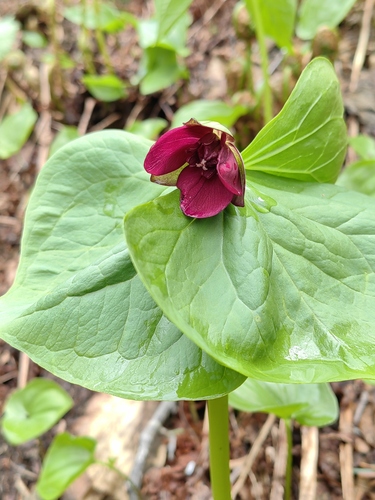
Trillium smallii
Enrei-So