Vaccinium exaristatum
Kurz
iNaturalist· cc-by-nc
(c) NaturemanThaimountain, some rights reserved (CC BY-NC)
iNaturalist· cc-by-nc
(c) NaturemanThaimountain, some rights reserved (CC BY-NC)
iNaturalist· cc-by-nc
(c) NaturemanThaimountain, some rights reserved (CC BY-NC)
Description
A small tree. It grows 3-5 m tall. The twigs are hairy. The leaves are scattered. The leaves are oblong to sward shaped and 3-7.5 cm long by 1-3 cm wide. The flowering shoots are 3-10 cm long with many flowers. The fruit is a berry with 10 sections. It is red to purple and 4-5 mm across.
Edible Uses
The young stems and leaves are used as a potherb; the fruit are eaten as berries.
Traditional Uses
The young stems and leaves are used as a potherb.
This uses section is brief — help expand it
Distribution
It is a subtropical plant. It grows in Yunnan. It grows between 500-1,500 m above sea level.
Where It Grows
Asia, China, India, Laos, Myanmar, Northeastern India, SE Asia, Thailand, Vietnam,
Dangerous Lookalikes
This plant can be confused with the following toxic species. Always verify identification carefully before consuming any wild plant.
Deadly Nightshade
Atropa belladonna
Joan Simon from Barcelona, España
Vaccinium exaristatum
Vaccinium exaristatum
(c) NaturemanThaimountain, some rights reserved (CC BY-NC)
Deadly Nightshade: Tall herbaceous plant (1-2m), single shiny black cherry-sized berries, star-shaped calyx, large oval leaves, sweet but dangerous taste.
Vaccinium exaristatum: Low woody shrub, berries in clusters with crown/remnant calyx ring, sweet taste.
Also Known As
A me te li, Ge die yang, Ma di, Yin ju yue ju
References (1)
- Cao, Y., et al, 2020, Ethnobotanical study on wild edible plants used by three trans-boundary ethnic groups in Jiangcheng County, Pu’er, Southwest China. Journal of Ethnobiology and Ethnomedicine (2020) 16:66
More from Ericaceae
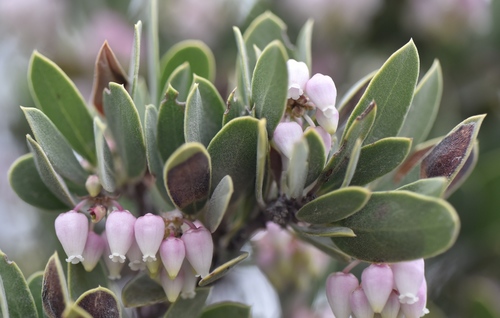
Arctostaphylos pungens
Pointleaf manzanita
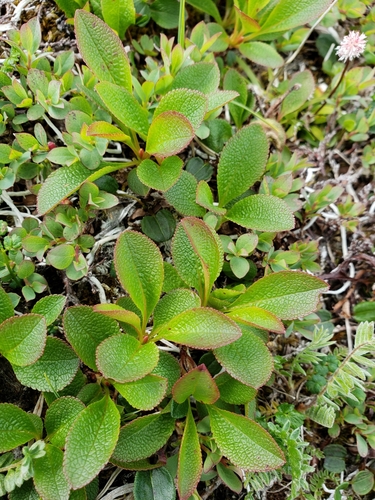
Arctostaphylos rubra
Red alpine bearberry
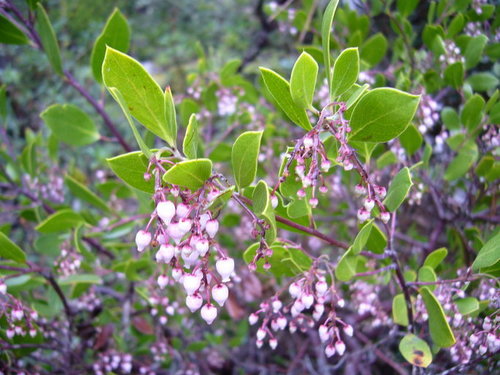
Arctostaphylos stanfordiana
Stanford's Manzanita, Myacoma manzanita
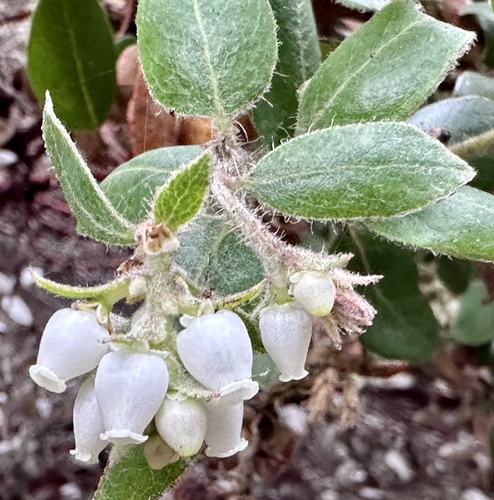
Arctostaphylos tomentosa
Downy manzanita, Woolly manzanita
Arctostaphylos uva-ursi
Bear berry, Kinnikinick, Brawlins, Bear's grape, Creashak, Mountain box, Mealy bearberry, Stoneberry, Mlivnjak
Arctous alpina
Alpine bearberry, Black bearberry