Curcuma mangga
Valeton & van Zijp.
White turmeric, Mango ginger
wikimedia· cc-by-sa
Wikimedia Commons - Manojk
wikimedia· cc0
Wikimedia Commons - Vicharam
Description
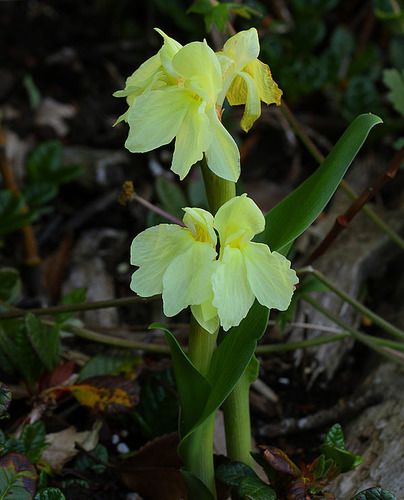
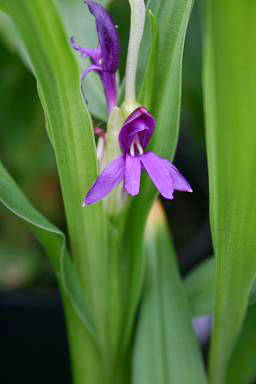
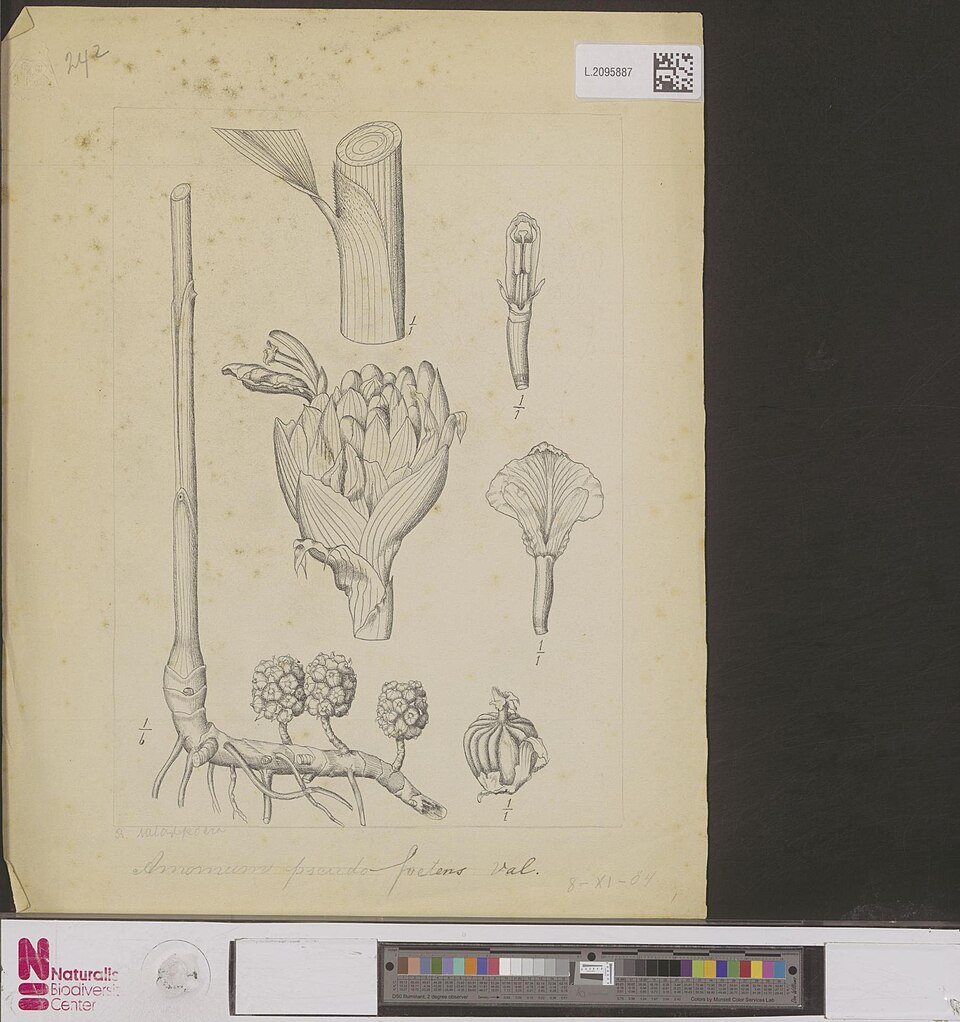
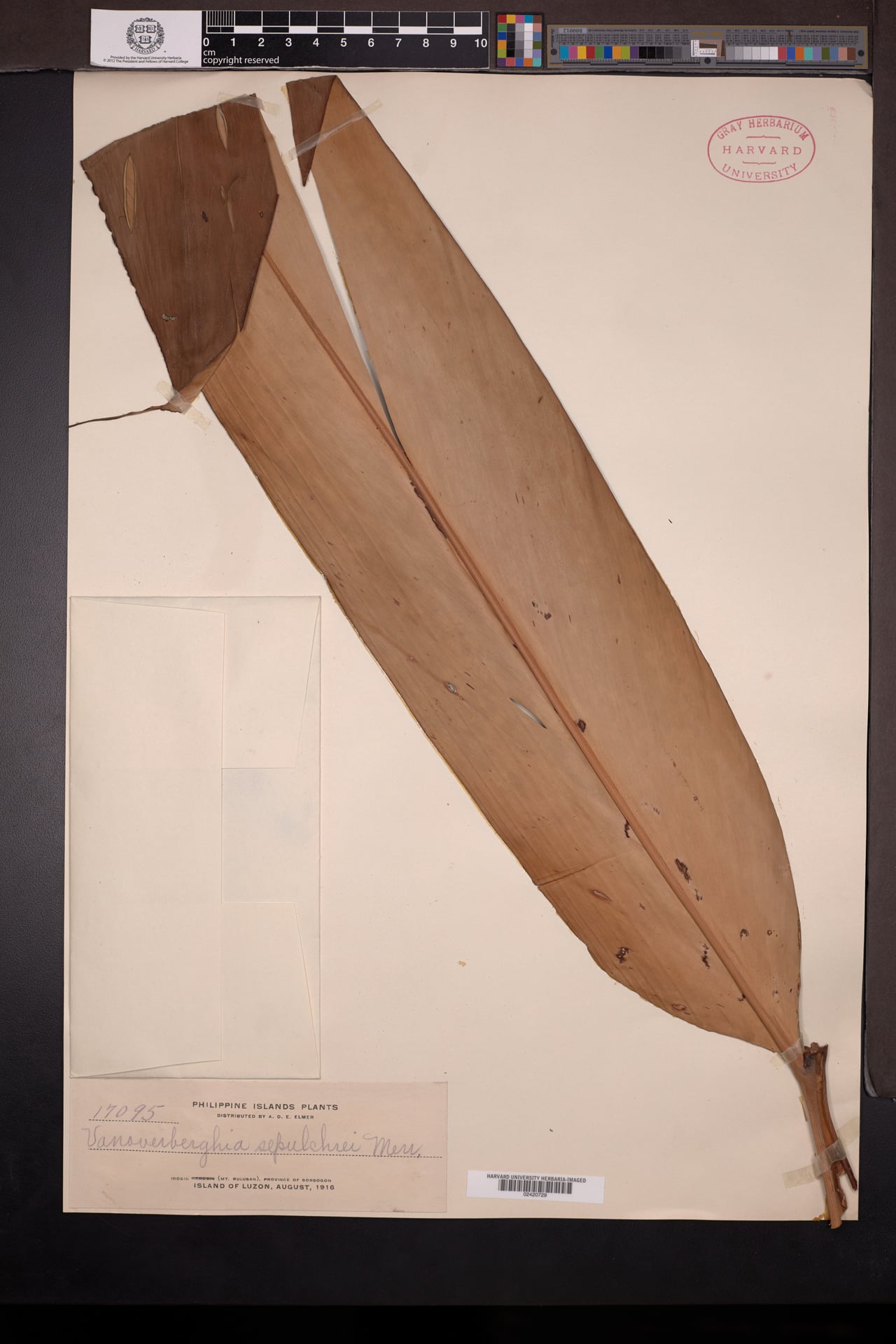
A ginger family herb with a rhizome which smells of unripe mangoes. The rhizomes are pale yellow inside. It has strong tillers or runners and the rhizome or underground stem is swollen and fleshy. It is creeping and branched. It has several tuberous roots. The leaves are alternate and form 2 series. They are dark green and shiny but lighter underneath. They are 15-95 cm long by 5-20 cm wide. The flowering shoots are on the side of the rhizome with long stalks and a spike. The stalk is 5-25 cm long and the spike is 10-20 cm long by 4-9 cm wide. There are coloured leafy bracts. The flowers are slender with a narrow throat.
Edible Uses
Mango-ginger is a popular spice and vegetable due to its rich flavor, which is described as sweet with subtle earthy floral and pepper overtones and similar to that of raw mango. It is used as an addition to salads and stir fries, in South Asian and Southeast Asian as well as Far East Asian cuisines. Mango ginger are used in making pickles in south India and chutneys in north India. It is served as chutney in community feasts in Nepal's southern plains. Mango ginger and elephant foot yam pickle is popular in Nepal's southern plains.
Traditional Uses
Young shoots and tender rhizomes are eaten raw in salads or cooked in coconut milk. The rhizomes are used as a seasoning in foods. The flower clusters are steamed and eaten with rice or used in stews.
Medicinal Uses
The rhizomes have an aroma somewhat like mango fruits. They are chewed to cause the womb to contract after childbirth. They are part of a mixture that is given in the treatment of continued fever. The starch from the rhizomes is recommended by traditional healers as a treatment for abdominal illness.
Distribution
A tropical plant. It needs fertile soil and is best in a sunny position. It grows up to 1,000 m above sea level.
Where It Grows
Andamans, Asia, East Timor, India, Indochina, Indonesia*, Malaysia, SE Asia, Thailand, Timor-Leste,
Cultivation
It can be grown from small pieces of the rhizome with 3 or 4 buds.
Propagation
Seed - best sown as soon as it is ripe. Germinates best at temperatures around 20°c. Division of the rhizome when the plant is dormant.
Other Information
It is a commercially cultivated vegetable.
Notes
There are about 50 Curcuma species. They are mostly in SE Asia.
Also Known As
Khamin khao, Koneng joho, Koneng lalab, Koneng pare, Kunyit putih, Manga injee, Temu bajangan, Temu lalab, Temu mangga, Temu pauh, Temu poh
References (21)
- Abas, F., et al, 2006, Antioxidant and nitric oxide inhibition of selected Malay traditional vegetables. Food Chemistry 95: 566-573
- Ali, R. M., et al, (Eds.), 2010, ASEAN Herbal and Medicinal Plants. Forestry research Institute Malaysia. p 94
- Arora, R. K., 2014, Diversity in Underutilized Plant Species - An Asia-Pacific Perspective. Bioversity International. p 39
- Burkill, I.H., 1966, A Dictionary of the Economic Products of the Malay Peninsula. Ministry of Agriculture and Cooperatives, Kuala Lumpur, Malaysia. Vol 1 (A-H) p 722
- Facciola, S., 1998, Cornucopia 2: a Source Book of Edible Plants. Kampong Publications, p 248
Show all 21 references Hide references
- Japanese International Research Centre for Agricultural Science www.jircas.affrc.go.jp/project/value_addition/Vegetables
- Kays, S. J., and Dias, J. C. S., 1995, Common Names of Commercially Cultivated Vegetables of the World in 15 languages. Economic Botany, Vol. 49, No. 2, pp. 115-152
- Larsen, K., Ibrahim, H., Khaw, S.H., & Saw, L.G., 1999, Gingers of Peninsula Malaysia and Singapore. Natural History Publications (Borneo). p 9
- Lembaga Biologi Nasional, 1977, Ubi-Ubian, Balai Pustaka, Jakarta. p 86
- Lim, T. K., 2015, Edible Medicinal and Non Medicinal Plants. Volume 9, Modified Stems, Roots, Bulbs. Springer p 30
- Lim, T. K., 2016, Edible Medicinal and Non-Medicinal Plants: Volume 12 Modified Stems, Roots p 7
- Martin, F.W. & Ruberte, R.M., 1979, Edible Leaves of the Tropics. Antillian College Press, Mayaguez, Puerto Rico. p 225
- Morton,
- Ochse, J. J. et al, 1931, Vegetables of the Dutch East Indies. Asher reprint. p 739
- PROSEA handbook Volume 9 Plants yielding non-seed carbohydrates. p 188
- Purseglove, J.W., 1972, Tropical Crops. Monocotyledons. Longmans p 522
- Solomon, C., 2001, Encyclopedia of Asian Food. New Holland. p 231
- Staples, G.W. and Herbst, D.R., 2005, A tropical Garden Flora. Bishop Museum Press, Honolulu, Hawaii. p 764
- Sukarya, D. G., (Ed.) 2013, 3,500 Plant Species of the Botanic Gardens of Indonesia. LIPI p 1098
- van Wyk, B., 2005, Food Plants of the World. An illustrated guide. Timber press. p 165
- World Checklist of Useful Plant Species 2020. Royal Botanic Gardens, Kew