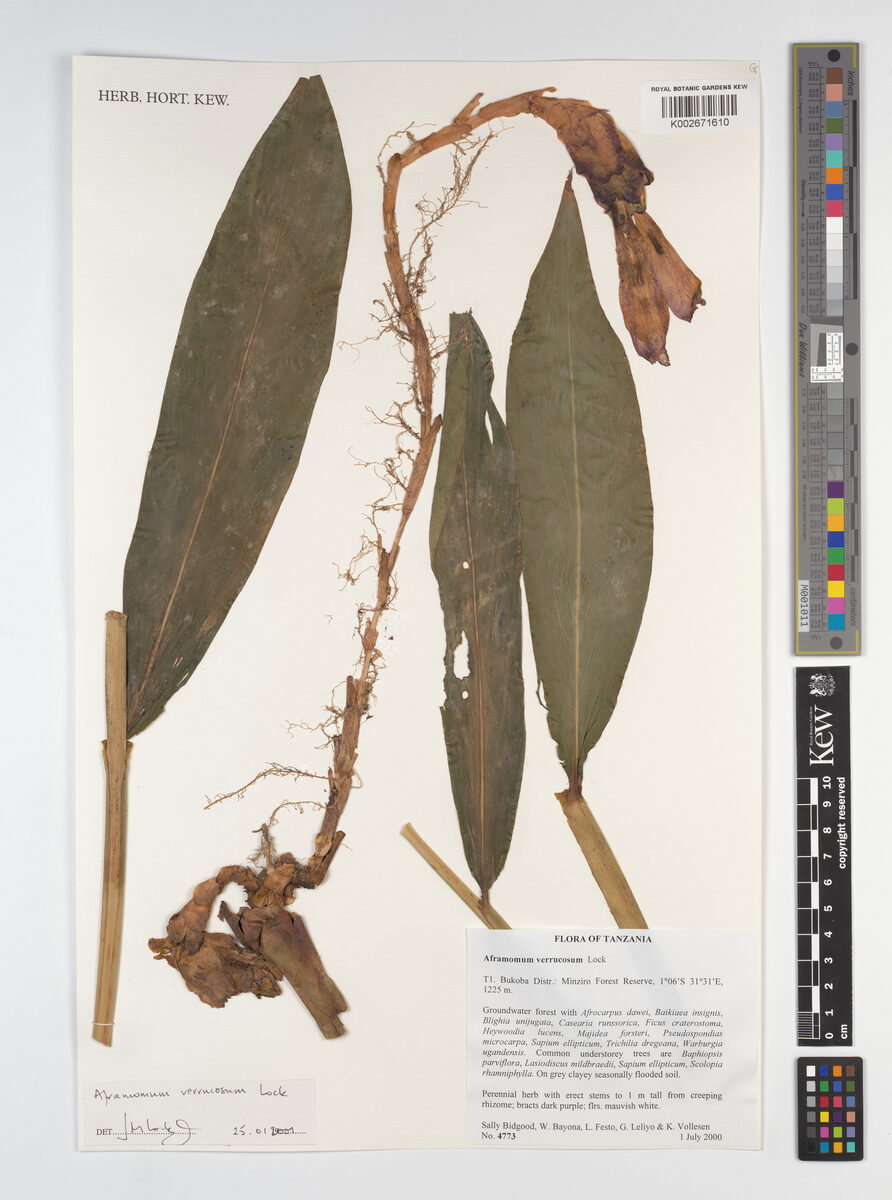
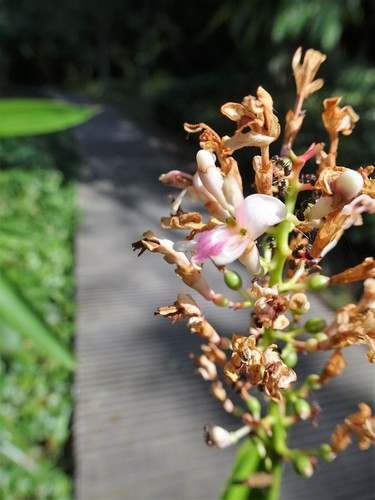
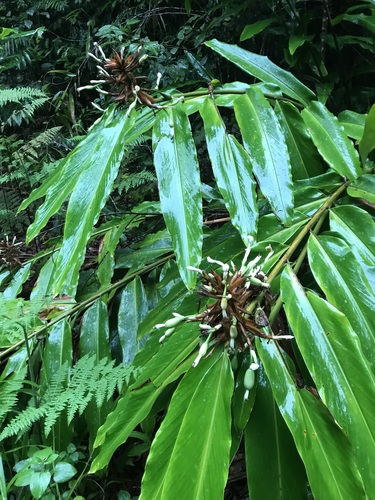
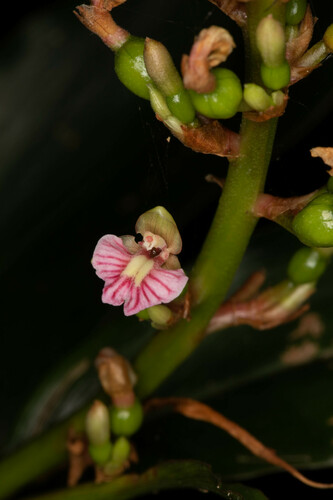
Amomum koenigii
J. F. Gmel.
Tough ginger
Zingiberaceae Edible: Flowers, Leaves, Fruit
wikimedia· cc0
Wikimedia Commons - Curtis, Charles M.; Drake, S. A.; Gorachaud.; Treuttel and Würtz.; Vishnupersaud.; Wallich, N.
Description
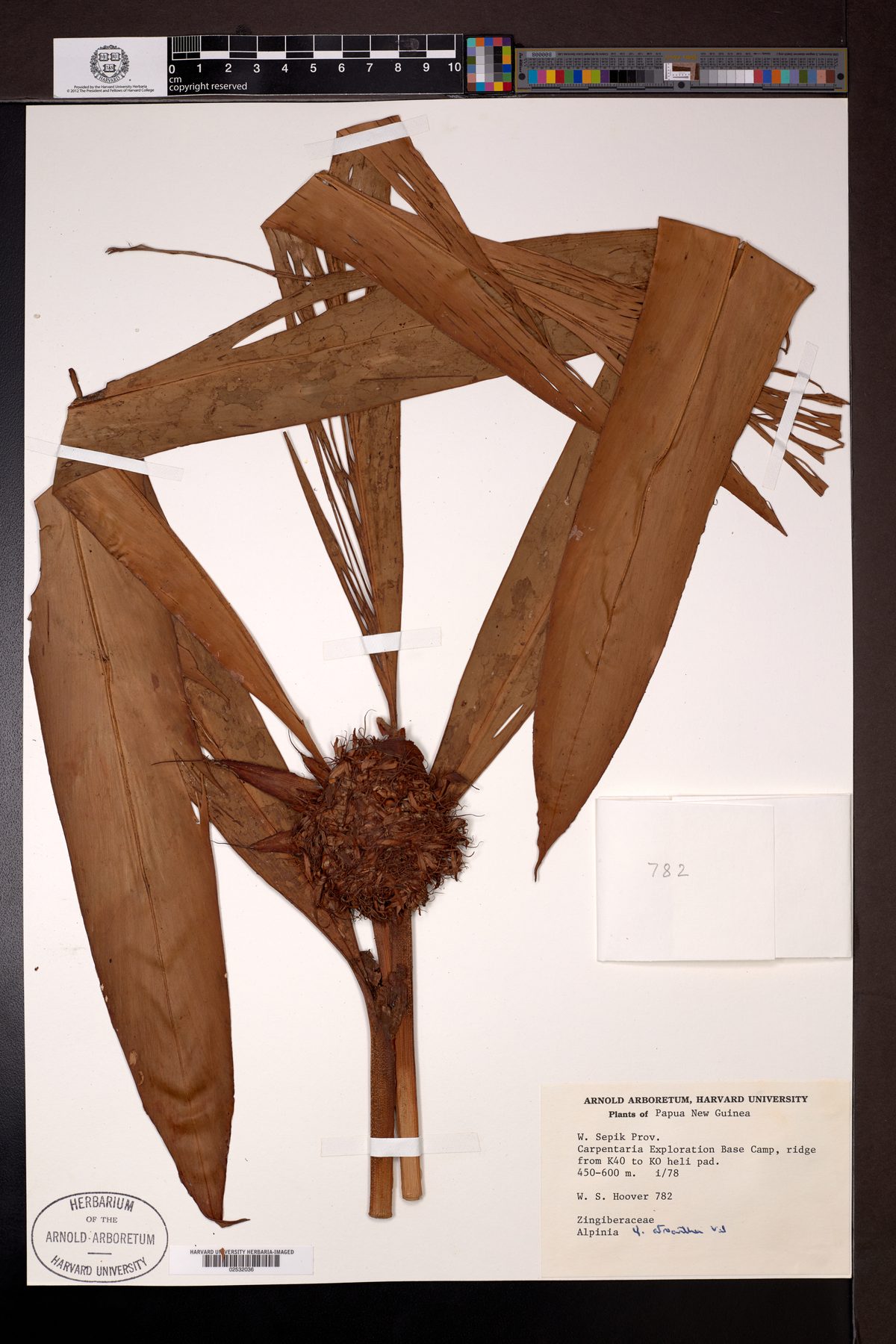
A ginger family herb. It grows 1-3 m tall. The leaves are narrowly sword shaped and 30-45 cm long by 4-11 cm wide. The flower spike is narrow and 4-5 cm long. The flowering stalk is 30-35 cm long. The flowers are white.
Edible Uses
The flowers, leaves, and fruit are all eaten.
Distribution
It is a tropical plant. In southern China it grows between 200-1,500 m above sea level. In Yunnan.
Where It Grows
Asia, Bangladesh, China, India, Indochina, Laos, Myanmar, Northeastern India, SE Asia, Thailand, Vietnam,
Synonyms
Amomum corynostachyum Wall.Cardamomum corynostyachyum (Wall.) KuntzeCardamomum koenigii (J. F. Gmel.) KuntzeMeisteria amomum RaeuschZingiber corynostachyum (Wall.) Steud.Khu-eng,
Also Known As
Ge bo biu, Ma guo, Mi jie
References (3)
- Cao, Y., et al, 2020, Ethnobotanical study on wild edible plants used by three trans-boundary ethnic groups in Jiangcheng County, Pu’er, Southwest China. Journal of Ethnobiology and Ethnomedicine (2020) 16:66
- Liu, Yi-tao, & Long, Chun-Lin, 2002, Studies on Edible Flowers Consumed by Ethnic Groups in Yunnan. Acta Botanica Yunnanica. 24(1):41-56
- Teron, R. & Borthakur, S. K., 2016, Edible Medicines: An Exploration of Medicinal Plants in Dietary Practices of Karbi Tribal Population of Assam, Northeast India. In Mondal, N. & Sen, J.(Ed.) Nutrition and Health among tribal populations of India. p 156 (As Amomum corynostachyum)