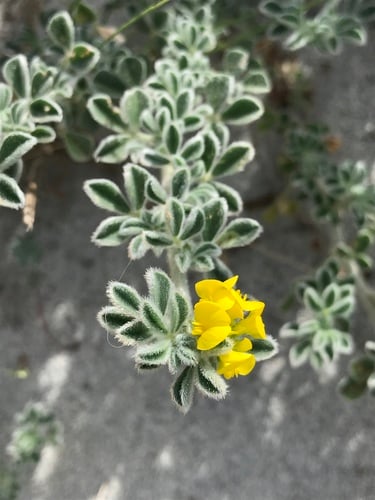
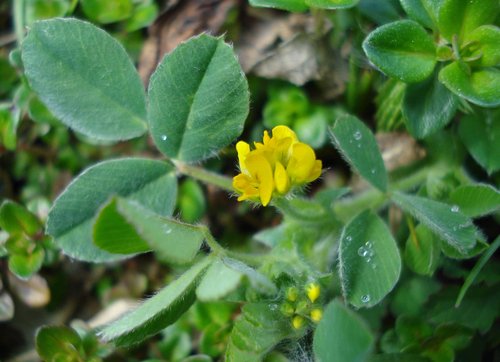
Sesbania aculeata
(Schreb.) Pers.
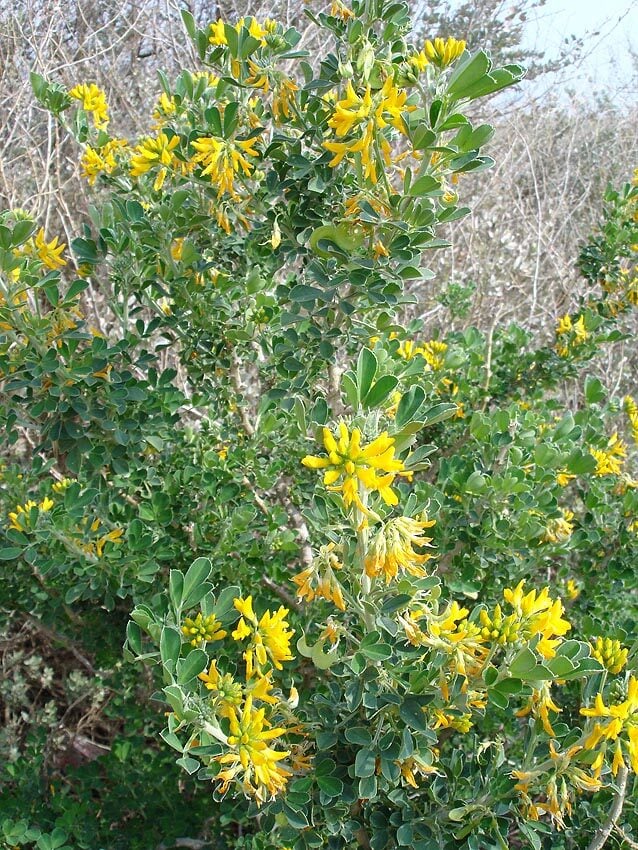
iNaturalist· cc-by-nc
(c) Ricky Taylor, some rights reserved (CC BY-NC)
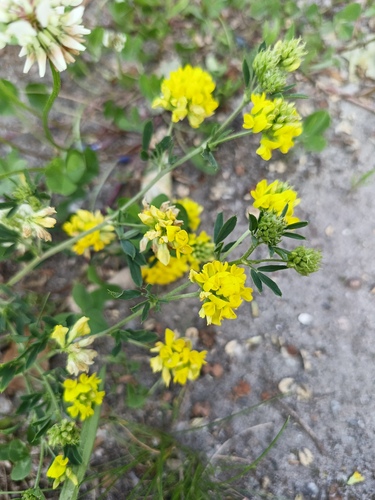
iNaturalist· cc-by-nc
(c) Ricky Taylor, some rights reserved (CC BY-NC)
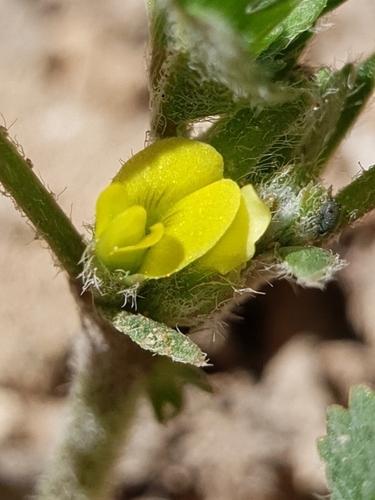
iNaturalist· cc-by-nc
(c) Ricky Taylor, some rights reserved (CC BY-NC)
Description
A shrub. It grows 5 m tall. The leaves are 10-30 cm long. There are 25-50 pairs of leaflets. The flowers are yellow with purple spots. The pod is 25 cm long and curved. It has a beak 1 cm long. It has 35-40 seeds. The seeds are brown and 3 mm by 1.5 mm by 1.1 mm. Possibly the same as Sesbania bispinosa.
Edible Uses
It can be used like industrial hemp for rope, fish nets, sackcloth and sailcloth. Its fibers are similar to those of birch trees and show promise as a source of paper fiber. The foliage makes a good fodder for livestock and the beans can be fed to fowl. The plant has been also used as a famine food by people. Natural gum from the plant is useful as a thickening agent. Like other legumes, it can be planted to improve the soil via nitrogen fixation. It makes a good firewood. The yellow flowers of S. aculeata are eaten as a vegetable in Southeast Asia. They are much smaller than the more popular white flowers of Sesbania grandiflora, but similar in shape. Still, they are appreciated as food in Thai and Vietnamese cuisine. In the Thai language the flowers are called ดอกโสน (dok sanō). They are used in Thai cuisine both cooked and raw, they can also be used to make omelettes and sweets.
Distribution
It is a tropical plant. It grows in muddy swamps.
Where It Grows
Africa, Asia, East Africa, Kenya, Tanzania,
Synonyms
References (1)
- World Checklist of Useful Plant Species 2020. Royal Botanic Gardens, Kew