Maclura tricuspidata
(Carrière.) Bur. ex Lav.
Che, Silkworm thorn, Chinese Che, Chinese Mulberry, Cudrang, Mandarin Melon Berry, Tuo, Zheshu, Zhe tree
iNaturalist· cc-by-nc
(c) Zhao Chaoyue, some rights reserved (CC BY-NC), uploaded by Zhao Chaoyue
iNaturalist· cc-by
(c) Cheng-Tao Lin, some rights reserved (CC BY), uploaded by Cheng-Tao Lin
iNaturalist· cc-by-nc
(c) Charles, some rights reserved (CC BY-NC), uploaded by Charles
Summary
Source: WikipediaMaclura tricuspidata is a tree native to East Asia, occasionally grown for its fruit, somewhat similar to that of the related mulberry (Morus spp.).
Description
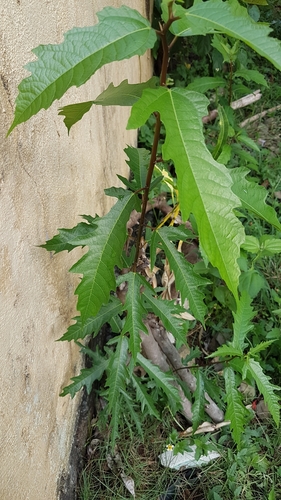
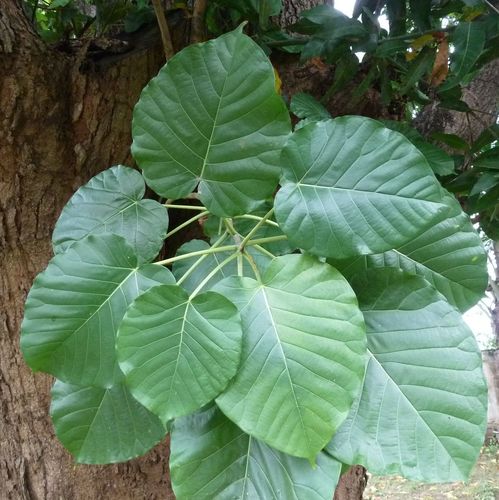
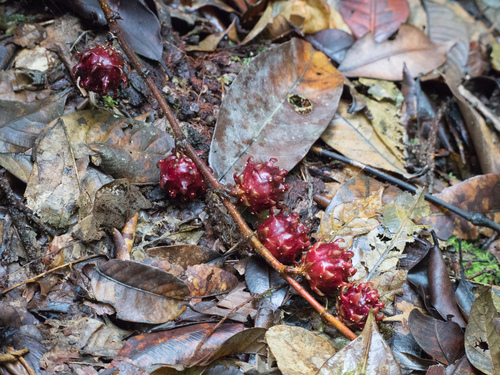
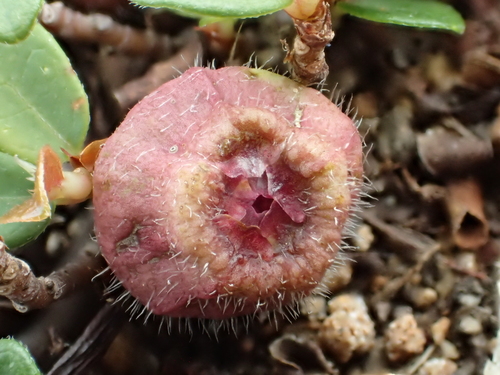
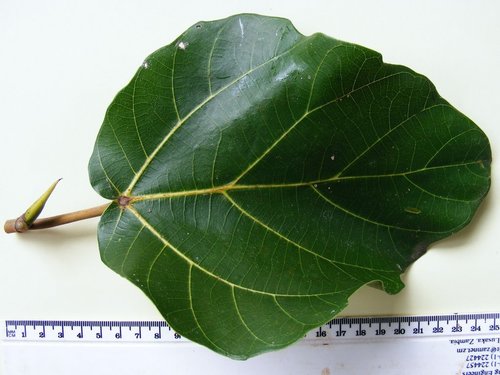
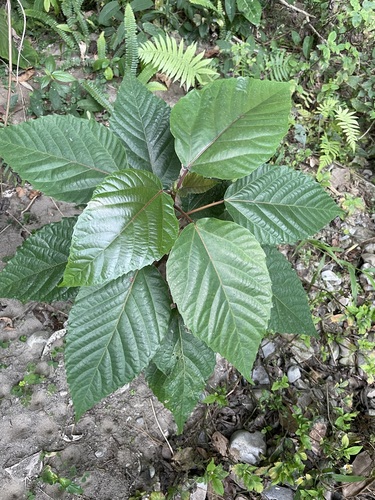
A tree which loses its leaves seasonally. It grows up to 8 m high. It is a broad spreading tree. The bark is greyish brown. The young branches are slightly ridged. Young trees and branches have thorns but these fall off. They are 5-20 mm long. The leaves are carried one after another along the branch. The leaves are like mulberry leaves. Often leaves have three lobes with the central love the largest, but leaf shape can vary. The winter buds are reddish brown. Male and female flowers occur on different plants. Female trees are larger than male trees. The flowers are green and pea-sized. Male flowers are 0.5 cm across. Female flowers are 1-1.5 cm across. Pollen is carried by wind. Fruit are somewhat like a mulberry and litchi. The fruit are 1-2.5 cm across and orange-red when ripe. The flesh is juicy and red with 3-6 small brown seeds. In colder places the leaves drop before fruit are ripe. The fruit is edible.
Edible Uses
Aside from its edible fruit, which can also be used to make wine, the tree has several other uses. In China, its leaves are fed to silkworms, its bark is used to make paper and a reddish-yellow dye, and its roots are used for medicinal purposes. Its wood is also valuable, and is used for the construction of bows.
Traditional Uses
The fruit are eaten fresh or cooked. They are used for juice after the seeds are strained out.
This uses section is brief — help expand it
Distribution
Plants can grow in quite poor soils. They are tolerant of drought. They can withstand temperatures down to -6°C. They need a warm sunny position. They can withstand wind. They do best with a well drained soil. In China they grow on sunny forest margins and mountain slopes between 500-2200 m altitude. It suits hardiness zones 6-9.
Where It Grows
Asia, Australia, China, Europe, Himalayas, Japan, Korea, Nepal, North America, USA,
Cultivation
Plants can be grown from seed but these may take 10 years to bear. Seed should be sown fresh from the fruit. Plants can also b grown from softwood cuttings and rooting hormone used. Plants can also be grafted. A male and female plant can be planted together and pruned as one bush with 25% male and 75% female branches. Pruning is done regularly. The previous years growth is pruned to half its length.
Production
Up to 150 kg of fruit per tree is possible. Fruit are not easily picked off the tree. Fruit should be fully ripe for best flavour. This means they are dark red to black.
Other Information
It is cultivated in Japan.
Notes
The leaves are used for silk worm.
Synonyms
References (10)
- Cundall, P., (ed.), 2004, Gardening Australia: flora: the gardener's bible. ABC Books. p 849
- Etherington, K., & Imwold, D., (Eds), 2001, Botanica's Trees & Shrubs. The illustrated A-Z of over 8500 trees and shrubs. Random House, Australia. p 242 (As Cudrania tricuspidata)
- Facciola, S., 1998, Cornucopia 2: a Source Book of Edible Plants. Kampong Publications, p 154 (As Cudrania tricuspidata)
- Flora of China. Vol. 5 p 36 and Flora of China. www.eFloras.org
- Hu, Shiu-ying, 2005, Food Plants of China. The Chinese University Press. p 355 (As Cudrania tricuspidata)
Show all 10 references Hide references
- Kiple, K.F. & Ornelas, K.C., (eds), 2000, The Cambridge World History of Food. CUP p 1750 (As Cudrania tricuspidata)
- Lyle, S., 2006, Discovering fruit and nuts. Land Links. p 169 (As Cudrania tricuspidata)
- Plants for a Future database, The Field, Penpol, Lostwithiel, Cornwall, PL22 0NG, UK. http://www.scs.leeds.ac.uk/pfaf/ (As Cudrania tricuspidata)
- Rev. Hort. 35:390, fig. 37. 1864
- Valder, P., 1999, The Garden Plants of China. Florilegium. p 304