Ficus platyphylla
Delile
Gutta perch tree
iNaturalist· cc-by-nc
(c) ONG OeBenin, some rights reserved (CC BY-NC), uploaded by ONG OeBenin
Summary
Source: WikipediaFicus platyphylla is a deciduous tree within the family Moraceae. Common local names include Gamji in Hausa and Gaba or Kobo in Bambara.
Description
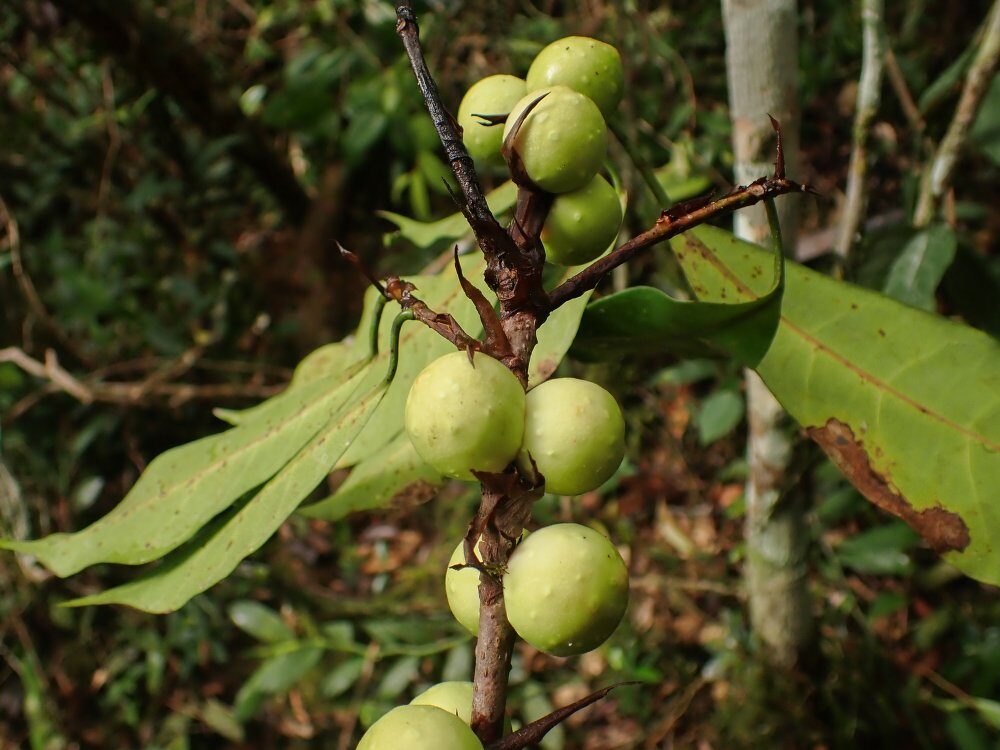
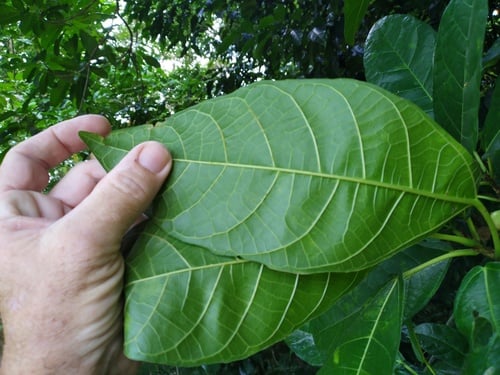
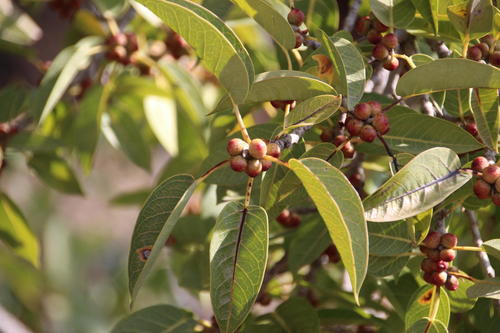
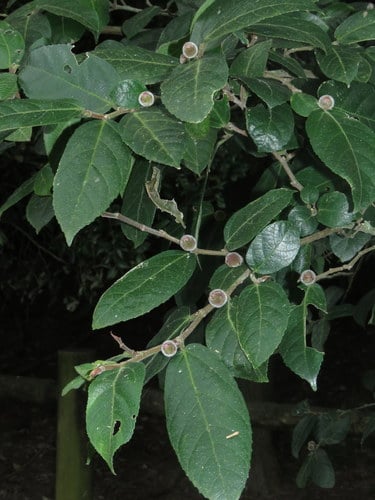
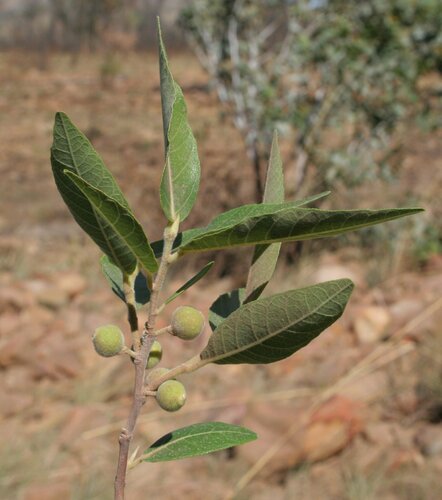
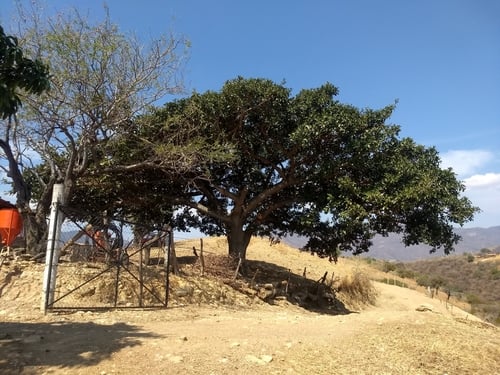
A fig. It is a large tree. It grows up to 15-20 m tall. It loses its leaves during the year. It often starts by growing attached to others trees. The bark is brown or grey. It often has many surface roots. The small branches are 1-2 cm thick and white or hairy. The surface is flaky when they are dry and it has large leaf scars. The leaves are dark green and oval. They are large and stiff. They can be 15-26 cm long and 10-20 cm across. The edge of the leaf is wavy and the tip can be blunt or pointed. The base of the leaf is heart shaped. There are 9-11 (10-16) pairs of side veins. The leaf stalk is 4-10 cm long. The fruit are figs which occur in clusters or 2-5. They are towards the tip of the small branches. They are on stalks 1-2.5 cm long and below the leaves. The figs are 1-2 cm across. They are red (green). The figs are edible.
Edible Uses
The fig fruit are eaten, typically as a famine food. The tree also produces Niger Gutta, which was historically used for chewing gum.
Traditional Uses
The fig fruit are eaten. The tree produces Niger Gutta which used to be used for chewing gum.
This uses section is brief — help expand it
Medicinal Uses
A decoction of the bark is sometimes used in the treatment of leprosy and stomach pins. A decoction of the leafy branch tips is said to be an antidote to arrow poisoning.
Known Hazards
The species is used as an antidote to poison in different cultures. In Nigeria, the stem bark extracts of the plant is used in ethnomedicine to treat a variety of ailments including depression, epilepsy and psychosis. It is also used to expel parasitic worms from the body.
Distribution
A tropical plant. It grows in dry savannah and wooded grassland. It grows in the Sahel. It grows between 950-1,200 m above sea level. It grows in areas with an annual rainfall between 600-1,300 mm. It can grow in arid places.
Where It Grows
Africa, Burkina Faso, Cameroon, Central Africa, Côte d'Ivoire, East Africa, Egypt, Ethiopia, Gambia, Ghana, Guinea, Guinée, Guinea-Bissau, Ivory Coast, Mali, Mozambique, Niger, Nigeria, North Africa, Sahel, Senegal, Somalia, Southern Africa, South Sudan, Sudan, Uganda, West Africa, Zimbabwe,
Cultivation
Plants grow naturally from seed. Plants can also be grown from cuttings. The seed should be extracted from the figs and dried for planting. Seed can be stored fro 2 months.
Propagation
Seed - germinates best at a temperature around 20°c. Air layering. Tip cuttings around 4 - 12cm long, taken from lateral branches.
Other Uses
A latex is obtained from the tree. It is used to make a good quality rubber. The latex is used to make a more solid rubber, known as 'gutta percha' or balata. The dried latex is used for cleaning copper and brass instruments. The latex can be used to repair broken pottery. The bark is a source of tannins. The bark is a dye sources for traditional 'bogolan' textiles, giving red-ochre to brownish colours. A green dye is obtained from the leaves. A fibre obtained from the inner bark is used for making ropes, cordage and bark-cloth.
Other Information
The fruit are usually eaten as a famine food.
Notes
There are about 800-1000 Ficus species. They are mostly in the tropics. There are 120 Ficus species in tropical America.
Nutrition
| Part | Moisture | kJ | kcal | Protein | Vit A | Vit C | Iron | Zinc |
|---|---|---|---|---|---|---|---|---|
| Fruit raw | 83 | 234 | 56 | 1.9 | — | — | 4 | — |
Synonyms
Also Known As
Bazlawar, Dundehi, Ebulai, Ebule, Fadut, Gamji, Leiya, Liya, Mulombo, Ngabara, Oboloko, Pouhre, Rerumma, Surei, Titee
References (30)
- Abbiw, D.K., 1990, Useful Plants of Ghana. West African uses of wild and cultivated plants. Intermediate Technology Publications and the Royal Botanic Gardens, Kew. p 47
- Abdel-Hameed, E. S., 2009, Total phenolic contents and free radical scavenging activity of certain Egyptian Ficus species leaf samples. Food Chemistry 114: 1271-1277
- Addis, G., Asfaw, Z & Woldu, Z., 2013, Ethnobotany of Wild and Semi-wild Edible Plants of Konso Ethnic Community, South Ethiopia. Ethnobotany Research and Applications. 11:121-141
- Addis, G., et al, 2013, The Role of Wild and Semi-wild Edible Plants in Household Food Sovereignty in Hamer and Konso Communities, South Ethiopia. Ethnobotany Research & Applications. 11:251-271
- Burkill, H. M., 1985, The useful plants of west tropical Africa, Vol. 4. Kew.
Show all 30 references Hide references
- Centurie de plantes d'Afrique 62. 1826 (F. Cailliaud, Voy. Meroe; 4:355. 1827)
- Dalziel, J. M., 1937, The Useful plants of west tropical Africa. Crown Agents for the Colonies London.
- FAO, 1988, Traditional Food Plants, FAO Food and Nutrition Paper 42. FAO Rome p 283
- Food Composition Tables for use in Africa FAO http://www.fao.org/infoods/directory No. 915
- Gallagher, D. E., 2010, Farming beyond the escarpment: Society, Environment, and Mobility in Precolonial Southeastern Burkina Faso. PhD University of Michigan.
- Gilbert, T., et al, 2017, Diversity and local transformation of indigenous edible fruits in sahelian domain of Cameroon. Journal of Animal & Plant Sciences Vol. 26 (2): 5289-5300
- Harris, F. M. A. and Salisu Mohammed, 2003, Relying on nature: Wild Foods in Northern Nigeria. AMBIO Vol. 32 No. 1, p 27
- Jardin, C., 1970, List of Foods Used In Africa, FAO Nutrition Information Document Series No 2.p 137
- Katende, A.B., Birnie, A & Tengnas B., 1995, Useful Trees and Shrubs for Uganda. Identification, Propagation and Management for Agricultural and Pastoral Communities. Technical handbook No 10. Regional Soil Conservation Unit, Nairobi, Kenya. p 320
- Kidane, B., et al, 2014, Ethnobotany of Wild and Semi-wild Edible Fruit Species used by Maale and Ari Ethnic Communities in South Ethiopia. Ethnobotany Research and Applications. Vol. 12, 1546-3465-12-455
- Le Houerou, H. N., (Ed.), 1980, Browse in Africa. The current state of knowledge. International Livestock Centre for Africa, Ethiopia. p 163
- Lulekal, E., et al, 2011, Wild edible plants in Ethiopia: a review on their potential to combat food insecurity. Afrika Focus - Vol. 24, No 2. pp 71-121
- Maydell, H. von, 1990, Trees and shrubs of the Sahel: their characteristics and uses. Margraf. p 279
- Moksia, F., et al, 2019, Diversity and Socio-Economic Value of Wild Edible Plants in the Mounts Mandara Region, Cameroon. International Journal of Sciences. Vol. 8:10
- MORTIMORE,
- Ocho, D. L., et al, 2012, Assessing the levels of food shortage using the traffic light metaphor by analyzing the gathering and consumption of wild food plants, crop parts and crop residues in Konso, Ethiopia. Journal of Ethnobiology and Ethnomedicine 8:30
- Ojelel, S. & Kakudidi, E. K., 2015, Wild edible plant species utilized by a subsistence farming community in the Obalanga sub-county, Amuria district, Uganda. Journal of Ethnobiology and Ethnomedicine. 11:7
- Ojelel, S., et al, 2019, Wild edible plants used by communities in and around selected forest reserves of Teso-Karamoja region, Uganda. Journal of Ethnobiology and Ethnomedicine (2019) 15:3
- Peters, C. R., O'Brien, E. M., and Drummond, R.B., 1992, Edible Wild plants of Sub-saharan Africa. Kew. p 150
- Royal Botanic Gardens, Kew (1999). Survey of Economic Plants for Arid and Semi-Arid Lands (SEPASAL) database. Published on the Internet; http://www.rbgkew.org.uk/ceb/sepasal/internet [Accessed 4th May 2011]
- Unwin, A. H., 1920, West African Forests and Forestry. Fisher Unwin Ltd. pdf on Internet p 107
- Vivien, J., & Faure, J.J., 1996, Fruitiers Sauvages d'Afrique. Especes du Cameroun. CTA p 215
- World Checklist of Useful Plant Species 2020. Royal Botanic Gardens, Kew
- www.figweb.org
- Yimer, A., et al, 2021, Ethnobotanical study of wild edible plants used by Meinit Ethnic Community at Bench-Maji Zone, Southwest Ethiopia. Research Square. p 6