Ficus polita
Vahl
Wild rubber fig
iNaturalist· cc-by-nc
(c) mamy_andriamahay, some rights reserved (CC BY-NC), uploaded by mamy_andriamahay
iNaturalist· cc-by-nc
(c) magdastlucia, some rights reserved (CC BY-NC)
iNaturalist· cc-by-nc
(c) magdastlucia, some rights reserved (CC BY-NC), uploaded by magdastlucia
Summary
Source: WikipediaFicus polita, the heart-leaved fig, is a species of fig that is native to forests of tropical Africa,
Description
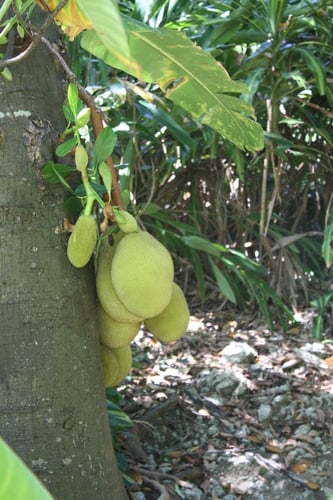
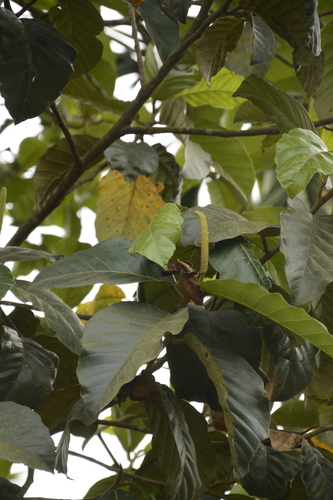
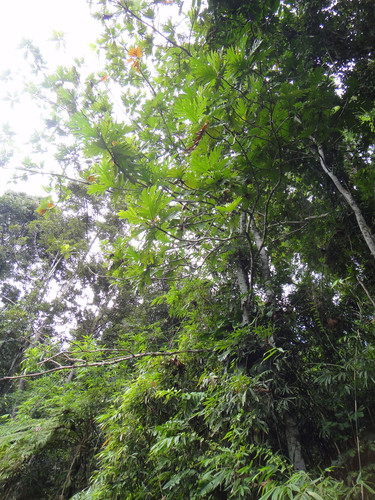
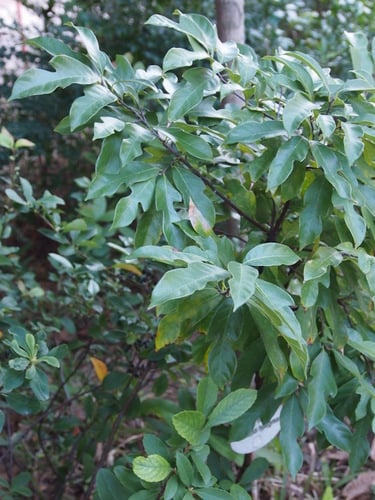
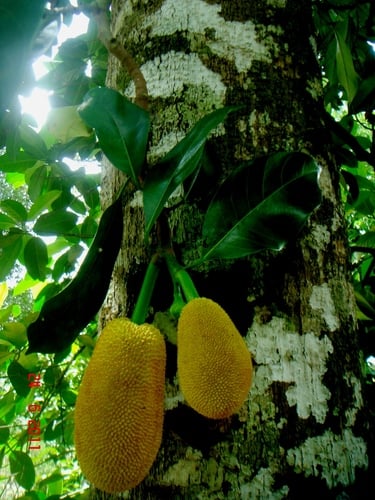
A strangler fig that becomes a large tree. It grows 10-16 m tall. The bark is light brown. It flakes in small sections. The leaves are broadly oval. They are 6-15 cm long by 4-10 cm wide. They are dark green and glossy above and paler underneath. The tip narrows to a point. The base is rounded. The figs are 1.5-3 cm across. They normally occur in pairs. They can be on the branches or the trunk. They are green and warty.
Edible Uses
Leaves - cooked. The leaves are occasionally used as a vegetable. The green to purple, globose fruits are 20 - 40mm in diameter. This report does not say that they are edible, though many species in this genus do produce edible fruit.
Traditional Uses
The fruit are eaten. The young leaves are eaten.
This uses section is brief — help expand it
Distribution
A tropical plant. It grows in evergreen forest, coastal forest and dune forest. It grows up to 1,500 m above sea level.
Where It Grows
Africa, Angola, Benin, Burkina Faso, Cameroon, Central Africa, Central African Republic, CAR, Congo DR, Congo R,Côte d'Ivoire, East Africa, Eswatini, Gabon, Ghana, Guinea, Guinée, Guinea-Bissau, Ivory Coast, Kenya, Madagascar, Malawi, Mozambique, Nigeria, Senegal, Sierra Leone, South Africa, Southern Africa, Swaziland, Tanzania, Uganda, West Africa, Zambia, Zimbabwe,
Cultivation
The wasp pollinator is Courtella bekiliensis.
Propagation
Seed - Cuttings
Other Uses
The tree is sometimes used as a boundary marker and for live fences.
Notes
There are about 800-1000 Ficus species. They are mostly in the tropics. There are 120 Ficus species in tropical America.
Synonyms
Also Known As
Arafaja, Blohunyi, Bupoco, Durumi, Figuerinha, Lithahi, Rita
References (16)
- Abbiw, D.K., 1990, Useful Plants of Ghana. West African uses of wild and cultivated plants. Intermediate Technology Publications and the Royal Botanic Gardens, Kew. p 47
- Achigan-Dako, E, et al (Eds), 2009, Catalogue of Traditional Vegetables in Benin. International Foundation for Science.
- Dalziel, J. M., 1937, The Useful plants of west tropical Africa. Crown Agents for the Colonies London.
- Gilbert, T., et al, 2017, Diversity and local transformation of indigenous edible fruits in sahelian domain of Cameroon. Journal of Animal & Plant Sciences Vol. 26 (2): 5289-5300
- Jardin, C., 1970, List of Foods Used In Africa, FAO Nutrition Information Document Series No 2.p 78, 137 (Also as Ficus megapoda)
Show all 16 references Hide references
- Long, C., 2005, Swaziland's Flora - siSwati names and Uses http://www.sntc.org.sz/flora/
- Martin, F.W. & Ruberte, R.M., 1979, Edible Leaves of the Tropics. Antillian College Press, Mayaguez, Puerto Rico. p 206
- Moksia, F., et al, 2019, Diversity and Socio-Economic Value of Wild Edible Plants in the Mounts Mandara Region, Cameroon. International Journal of Sciences. Vol. 8:10
- MORTIMORE,
- Palgrave, K.C., 1996, Trees of Southern Africa. Struik Publishers. p 113
- Peters, C. R., O'Brien, E. M., and Drummond, R.B., 1992, Edible Wild plants of Sub-saharan Africa. Kew. p 150
- Swaziland's Flora Database http://www.sntc.org.sz/flora
- Terra, G.J.A., 1973, Tropical Vegetables. Communication 54e Royal Tropical Institute, Amsterdam, p 46
- Vivien, J., & Faure, J.J., 1996, Fruitiers Sauvages d'Afrique. Especes du Cameroun. CTA p 216
- White, F., Dowsett-Lemaire, F. and Chapman, J. D., 2001, Evergreen Forest Flora of Malawi. Kew. p 387
- www.figweb.org