Cucurbita argyrosperma
C. Huber
Cushaw, Japanese pie pumpkin
wikimedia· cc-by
Carolina L. Llano (via Wikimedia Commons)
wikimedia· cc0
User:RoRo (via Wikimedia Commons)
wikimedia· cc0
User:RoRo (via Wikimedia Commons)
iNaturalist· cc-by-nc
(c) Rafael Angel Arenas Wong, some rights reserved (CC BY-NC), uploaded by Rafael Angel Arenas Wong
iNaturalist· cc-by-nc-nd
(c) Miguel Gastelum, some rights reserved (CC BY-NC-ND), uploaded by Miguel Gastelum
Summary
Source: WikipediaCucurbita argyrosperma, commonly known as cushaw, kershaw, or silver-seed gourd, is a species of squash grown most frequently in North and Central America, and believed to originate from southern Mexico. This annual herbaceous plant is cultivated for its nutritional value: its flowers, shoots, and fruits are all harvested, but it is cultivated commonly in its native range for seeds. The species is believed to have originated in Mexico, from its wild sororia form. The reference genome of this species was published in 2019. In precolonial America, archaeological remains have been found as far northward as the Eastern Agricultural Complex. The extant native range of the wild sororia type is from northern Mexico through Central America to Nicaragua, at elevations from sea level to 1,900m. The species epiphet argyrosperma means "silver seeds" in reference to the distinctively-colored seed margins of certain varieties. Cucurbita argyrosperma was formerly known as C. mixta. Historically, some varieties now recognized as C. argyrosperma were assigned to Cucurbita moschata instead. A small number of true C. moschata varieties are still commonly known as cushaws.
Description
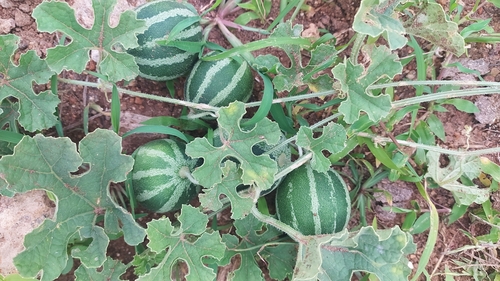
A pumpkin family plant. It is a climbing vine. It can be hairy. The stems are slightly angular. It grows 3-5 m long. The tendrils are branched. The leaves are simple and alternate. The leaves are heart shaped to triangular. They can be 10-30 cm long by 15-40 cm wide. They have white spots. Flowers are separately male and female. The fruit are normally pear shaped or crook-neck shaped. They can weigh 8 kg.
Edible Uses
The fruit is eaten cooked and used as a vegetable in pies and similar dishes; it can be stored for up to 6 months. The flesh is generally more fibrous, watery, and less richly flavoured than that of C. maxima, C. moschata, or C. pepo. The flesh can also be dried, ground into a powder, and mixed with cereals when making bread, cakes, and similar foods. Fruit diameter reaches up to 20cm. Seeds can be eaten raw or roasted, or dried and ground into a powder to mix with cereals for bread-making. They are rich in oil with a pleasant nutty flavour; although relatively large, they are fiddly to use as they are covered with a fibrous coat. An edible oil is obtained from the seed. Leaves and flowers are both edible when cooked.
Traditional Uses
The fruit are eaten boiled, baked or fried. They are made into pies and bread. The seeds are eaten raw or roasted or ground and made into sauces. They are also used to make a drink. The flowers can be eaten. Caution: The fruit are bitter and need processing by boiling in several changes of water to remove the bitter cucurbitacins before eating.
Medicinal Uses
The seeds are vermifuge. The complete seed including the husk is ground into a fine flour, made into an emulsion with water, and eaten. A purgative must then be taken to expel tapeworms or other parasites from the body. As a treatment for internal parasites, the seeds are less potent than the root of Dryopteris felix-mas, but they are safer for use in pregnant women, debilitated patients, and children.
Known Hazards
The sprouting seed produces a toxic substance in its embryo.
Distribution
A tropical plant. In the tropics it suits places between sea level and 1500 m altitude.
Where It Grows
Asia, Central America, China, Costa, Rica, Ecuador, El Salvador, Guatemala, Honduras, Mexico, Nicaragua, North America, South America, USA,
Cultivation
Requires a rich, well-drained moisture retentive soil and a very warm, sunny and sheltered position. Plants are tolerant of high temperatures but sensitive to cool conditions, they favour moderate rainfall but the roots are sensitive to water-logging. A frost-tender annual plant, the Cushaw pumpkin has long been cultivated for its edible fruit especially in warmer temperate and tropical areas. There are some named varieties and these are day-length neutral. Plants can succeed outdoors in Britain in most summers so long as they are started off early in a greenhouse and grown on quickly. Over time, various more or less distinct groups of cultivars have been developed and these have been classified by botanists as detailed below. Since they all have similar requirements, and it can be rather difficult to classify some varieties, we have dealt with them all here and not given them separate entries. C. argyrosperma. The Cushaw pumpkin, as dealt with in this entry. It is subdivided into:- C. argyrosperma argyrosperma. The silver-seed gourd. Cultivated mainly for its edible seeds which are larger than in other forms with an attractive silvery edge. C. argyrosperma callicarpa. Japanese pie pumpkin or green-stripe cushaw. C. argyrosperma stenosperma. Cultivated in Mexico, we do not know of a common name. This species does not hybridize naturally with other members of this genus, though crosses have been made under controlled conditions. Squashes and pumpkins can be differentiated from each other by their fruit stalk, it is angular and polygonal in pumpkins but thick, soft and round in squashes. This species is included in C. moschata by some botanists.
Propagation
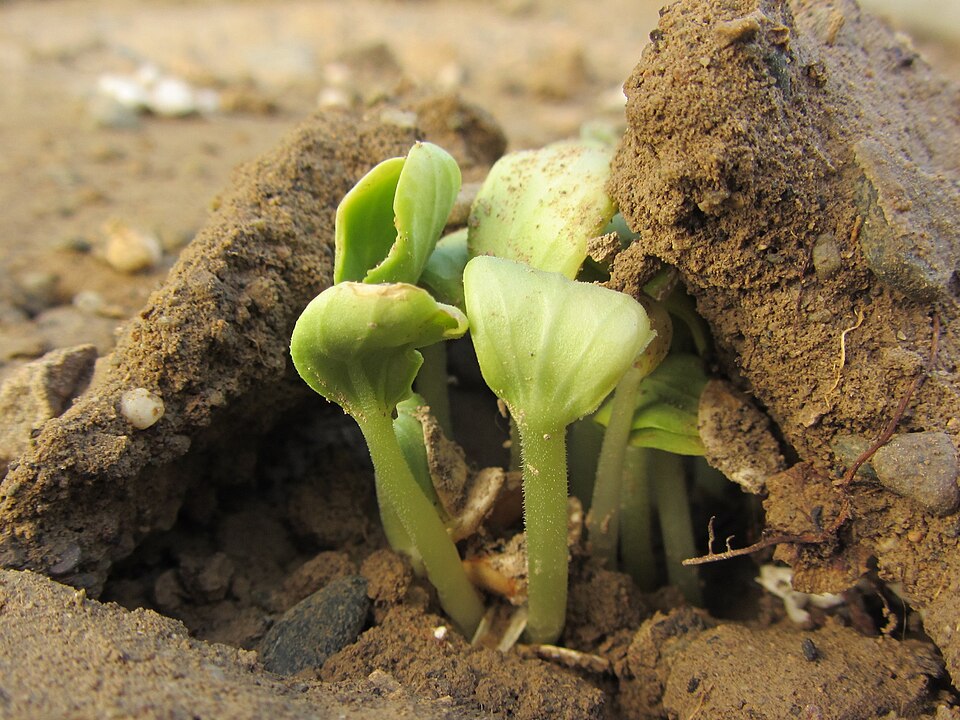
Sow seed in early to mid spring in a greenhouse in rich soil; germination should occur within 2 weeks. Sow 2 or 3 seeds per pot and thin to the strongest plant. Grow on quickly and plant out after the last expected frosts, providing cloche or frame protection for at least the first few weeks if growing outdoors.
Other Uses
The seed is rich in oil.
Other Information
It is a commercially cultivated vegetable.
Notes
There are 25-27 Cucurbita species.
Synonyms
Also Known As
Ayote, Calabaza, Calabaza alargada, Calabaza pinta, Chigua, Pipian, Pipitoria, Saquil
References (32)
- Arellanes, Y., et al, 2013, Influence of traditional markets on plant management in the Tehuacan Valley. Journal of Ethnobiology and Ethnomedicine 9:38
- Brouk, B., 1975, Plants Consumed by Man. Academic Press, London. p 132 (As Cucurbita mixta)
- Cobley, L.S. (rev. Steele, W.M.) 2nd Ed., 1976, An Introduction to the Botany of Tropical Crops. Longmans. p 137 (As Cucurbita mixta)
- D'Ambrosio, U., & Puri, R. K., 2016, Foodways in transition: food plants, diet and local perceptions of change in a Costa Rican Ngäbe community. Journal of Ethnobiology and Ethnomedicine (2016) 12:3 p 22
- Facciola, S., 1998, Cornucopia 2: a Source Book of Edible Plants. Kampong Publications, p 86 (As Cucurbita mixta)
Show all 32 references Hide references
- Farfan, B., et al, 2007, Mazahua Ethnobotany and Subsistence in the Monarch Butterfly Biosphere Reserve, Mexico. Economic Botany 61(2) 2007, pp 173-191
- Gentes Herb. 6:285. 1943 (As Cucurbita sororia)
- Hermandez Bermejo, J.E., and Leon, J. (Eds.), 1994, Neglected Crops. 1492 from a different perspective. FAO Plant Production and Protection Series No 26. FAO, Rome. p18, 63
- C. Huber freres & Co., Catalogue de graines pour 1867:8. 1867
- Kays, S. J., and Dias, J. C. S., 1995, Common Names of Commercially Cultivated Vegetables of the World in 15 languages. Economic Botany, Vol. 49, No. 2, pp. 115-152
- Kiple, K.F. & Ornelas, K.C., (eds), 2000, The Cambridge World History of Food. CUP p 1857 (As Cucurbita mixta)
- Lira, R. & Caballero, J., 2002, Ethnobotany of the Wild Mexican Cucurbitaceae. Economic Botany 56(4) pp. 380-398
- Macmillan, H.F. (Revised Barlow, H.S., et al) 1991, Tropical Planting and Gardening. Sixth edition. Malayan Nature Society. Kuala Lumpur. p 334
- Nabhan, G.P. & Felger, R.S., Wild desert relatives of crops: their direct uses as food in Wickens, G.E., Goodin, J.R., and Field, D.V.,(Eds.) 1985, Plants for Arid Lands. Unwin Hyman, London, p 27 (As Cucurbita sororia)
- Nee, M., 1990, The Domestication of Cucurbita (Cucurbitaceae). Economic Botany, Vol. 44, No. 3, Supplement: New Perspectives on the Origin and Evolution of New World Domesticated Plants. pp. 56-68 (Also as Cucurbita sororia)
- Pascual-Mendoza, S. et al, 2021, Traditional knowledge of edible plants in an indigenous community in the Sierra Norte of Oaxaca, Mexico. Plant Biosystems - An International Journal Dealing with all Aspects of Plant Biology
- Piedra-Malagón, E. M. et al, 2022, Edible native plants of the Gulf of Mexico Province. Biodiversity Data Journal 10: e80565 p 17
- Plants for a Future database, The Field, Penpol, Lostwithiel, Cornwall, PL22 0NG, UK. http://www.scs.leeds.ac.uk/pfaf/
- Purseglove, J.W., 1968, Tropical Crops Dicotyledons, Longmans. p 120 (As Cucurbita mixta)
- Schneider, E., 2001, Vegetables from Amaranth to Zucchini: The essential reference. HarperCollins. p 602
- Small, E., 2009, Top 100 Food Plants. The world's most important culinary crops. NRC Research Press. p 449
- Tindall, H.D., 1983, Vegetables in the tropics. Macmillan p. 164 (As Cucurbita mixta)
- Torre, de la, L., et al, 2008, Enciclopedia de las Plantas Útiles del Ecuador. Herbario QCA. Pontificia Universidad Católica del Ecuador. p 298 (As Cucurbita mixta)
- Ulian, T., et al, 2020, Unlocking plant resources to support food security and promote sustainable agriculture. Plants, People, Planet. 2020;2:421–445.
- USDA, ARS, National Genetic Resources Program. Germplasm Resources Information Network - (GRIN). [Online Database] National Germplasm Resources Laboratory, Beltsville, Maryland. Available: www.ars-grin.gov/cgi-bin/npgs/html/econ.pl (10 April 2000)
- van Wyk, B., 2005, Food Plants of the World. An illustrated guide. Timber press. p 162
- Walters, T. W., 1989, Historical Overview on Domesticated Plants in China with Special Emphasis on the Cucurbitaceae. Economic Botany 43(3): 297-313 (As Cucurbita mixta)
- Whitaker,T.W., & Bemis,W.P., 1979, Cucurbits, in Simmonds N.W.,(ed), Crop Plant Evolution. Longmans. London. p 64 (As Cucurbita mixta)
- Wickens, G.E., 1995, Edible Nuts. FAO Non-wood forest products. FAO, Rome. p 119 (As Cucurbita mixta)
- Wiersema, J. H. & Leon, B., 2013, World Economic Plants. A Standard Reference CRC Press. 2nd Ed. p 216
- World Checklist of Useful Plant Species 2020. Royal Botanic Gardens, Kew
- Yang, Si-Lin and Walters, T. W., 1992, Ethnobotany and the Economic role of the Cucurbitaceae of China. Economic Botany, Vol. 46, No. 4, pp. 349-367