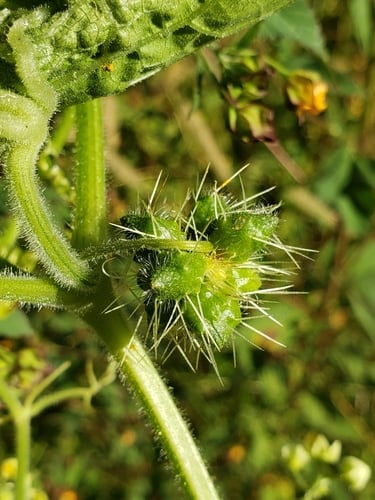
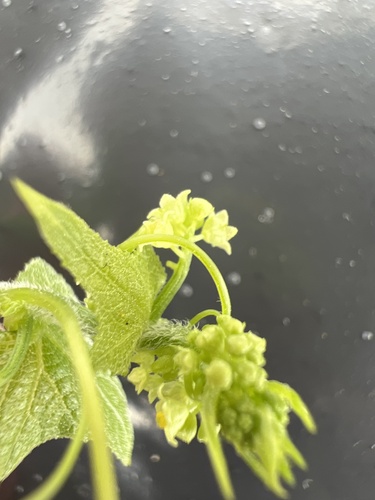
Cucumis sativus var. xishuangbannanensis
Qi & Yuan ex S. S. Renner
Xishuangbanna cucumber, Shihuo
iNaturalist· cc-by-sa
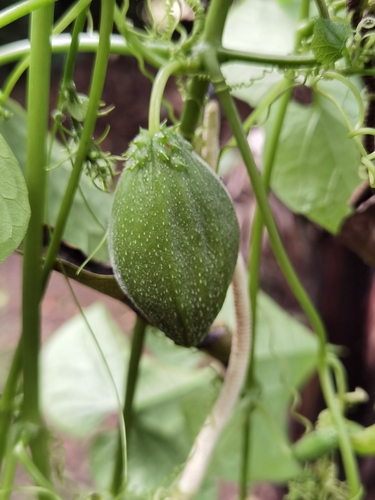
(c) Bff, some rights reserved (CC BY-SA)
iNaturalist· cc-by-nc
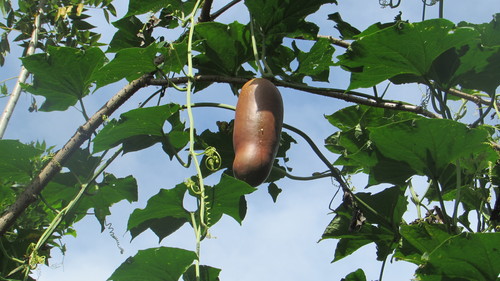
(c) Jennie_B_From_SC, some rights reserved (CC BY-NC), uploaded by Jennie_B_From_SC
iNaturalist· cc-by
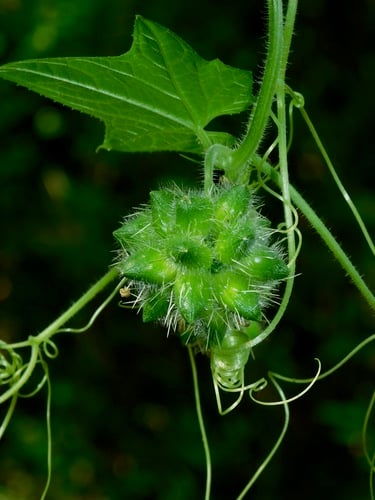
(c) 陈霆, some rights reserved (CC BY)
Description
A pumpkin family plant. The stems are 6-7 m long. They have 20-40 side branches. Male and female flowers are separate. The fruit are thick and cylinder shape. It has orange fruit pulp.
Edible Uses
The fruit is eaten raw, boiled, sliced, and spiced, and is rich in beta-carotene or provitamin A.
Traditional Uses
The fruit are eaten raw, boiled, sliced and spiced.
This uses section is brief — help expand it
Distribution
It is a tropical plant. It grows above 1,000 m above sea level.
Where It Grows
Asia, China, Laos, Myanmar, SE Asia, Vietnam,
Cultivation
Plants are grown from seeds.
Notes
There are about 25 Cucumis species. It is rich in B-carotene or proVitamin A.
References (3)
- Arora, R. K., 2014, Diversity in Underutilized Plant Species - An Asia-Pacific Perspective. Bioversity International. p 48
- USDA, ARS, National Genetic Resources Program. Germplasm Resources Information Network - (GRIN). [Online Database] National Germplasm Resources Laboratory, Beltsville, Maryland. Available: www.ars-grin.gov/cgi-bin/npgs/html/econ.pl (10 April 2000)
- Yang, Si-Lin and Walters, T. W., 1992, Ethnobotany and the Economic role of the Cucurbitaceae of China. Economic Botany, Vol. 46, No. 4, pp. 349-367