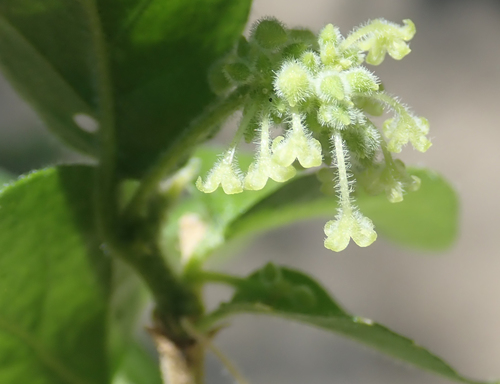
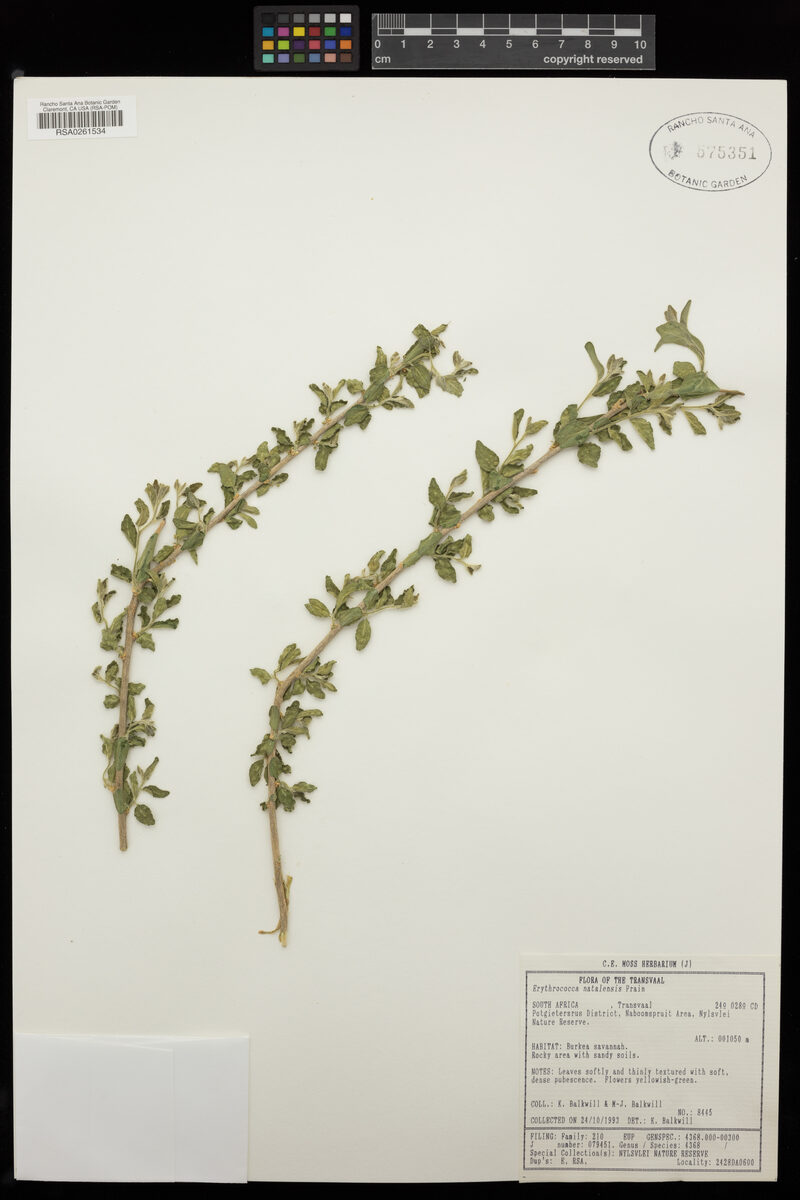
Euphorbia monteiroi
Hook.f.
iNaturalist· cc-by-nc
(c) Malcolm Douglas, some rights reserved (CC BY-NC)
iNaturalist· cc-by-nc
(c) Malcolm Douglas, some rights reserved (CC BY-NC)
iNaturalist· cc-by-nc
(c) Malcolm Douglas, some rights reserved (CC BY-NC)
Description
A succulent herb. It can develop a rhizome or underground runner, The leaves are 12 cm long by 1.3 cm wide.
This description is brief — help expand it
Edible Uses
The roots are used as a milk curdler.
Traditional Uses
The roots are used to curdle milk.
This uses section is brief — help expand it
Medicinal Uses
The thick, lateral roots are cut into slices and added to boiling milk. This liquid is said to purify the blood and to be a tonic for the metabolism. An infusion of the crushed roots is drunk as an emetic and purgative. A leaf and root decoction is taken to treat biliousness. A latex obtained at points of damage to the plant is applied to decaying teeth.
Known Hazards
Although we have seen no specific information for this plant, the latex in most, if not all Euphorbias is caustic and toxic - skin contact often causing irritation and blistering; contact with the eyes causing temporary or even permanent blindness; whilst ingestion can cause purging or more severe problems.
Distribution
It is a subtropical plant.
Where It Grows
Africa, South Africa, Southern Africa,
Cultivation
Requires a sunny position. Requires a well-drained soil. Found mainly on sandy soils in the wild.
Other Uses
A white latex is exuded from points of injury anywhere on the plant.
Synonyms
References (2)
- Ruiters-Welcome, A. K., 2019, Food plants of southern Africa. Ph.D. thesis. Univ. of Johannesburg p 54
- Welcome, A. K. & Van Wyk, B.-E., 2019, An inventory and analysis of the food plants of southern Africa. South African Journal of Botany 122 (2019) 136–179