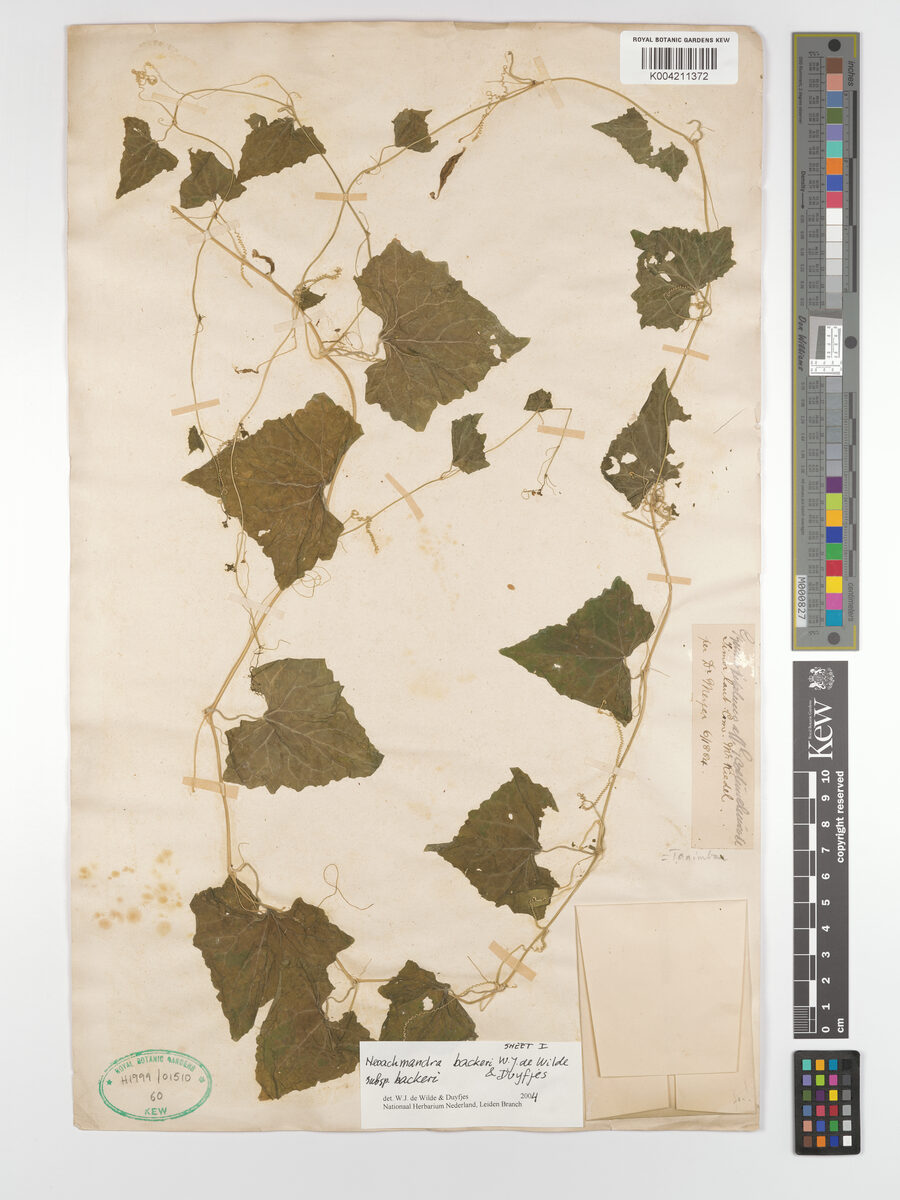
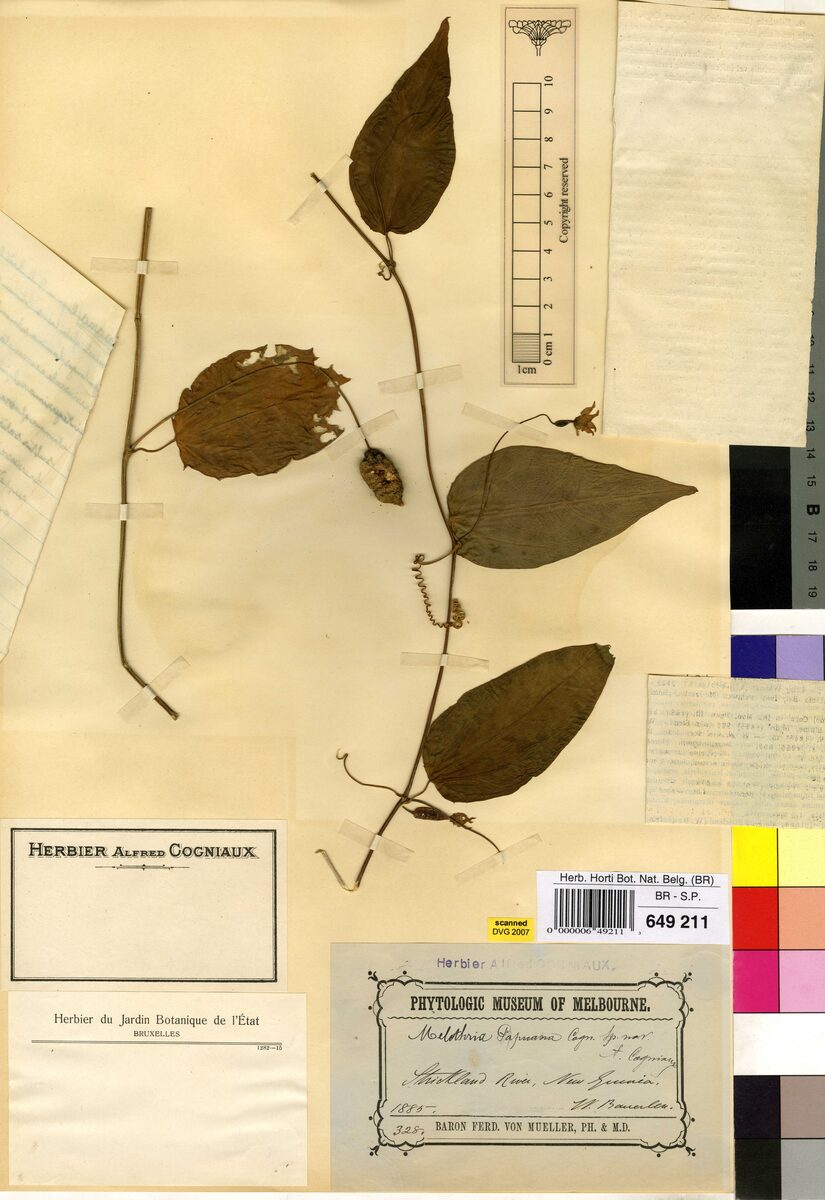
Cucumis hystrix
Chakravarty
iNaturalist· cc-by-nc
(c) 小铖/Smalltown, some rights reserved (CC BY-NC), uploaded by 小铖/Smalltown
Summary
Source: WikipediaCucumis hystrix is a monoecious annual climbing vine in the family Cucurbitaceae. The specific epithet (hystrix) is Neo-Latin for "porcupine".
Description
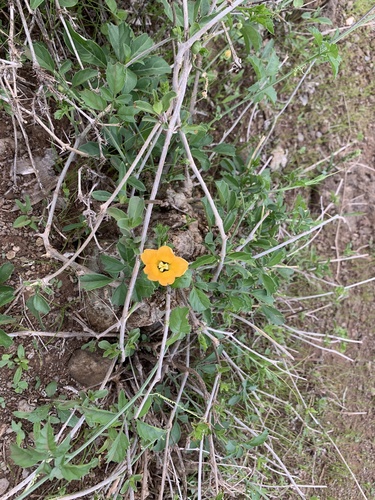
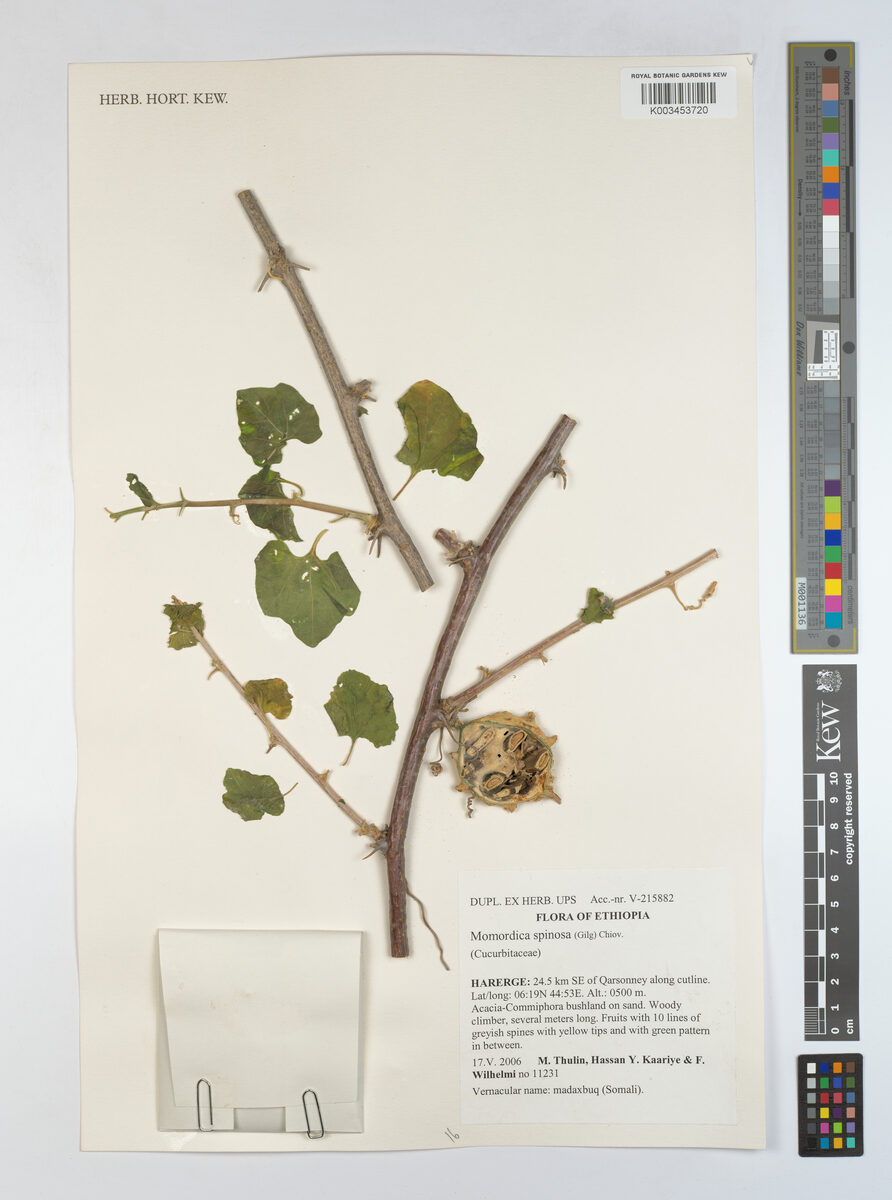
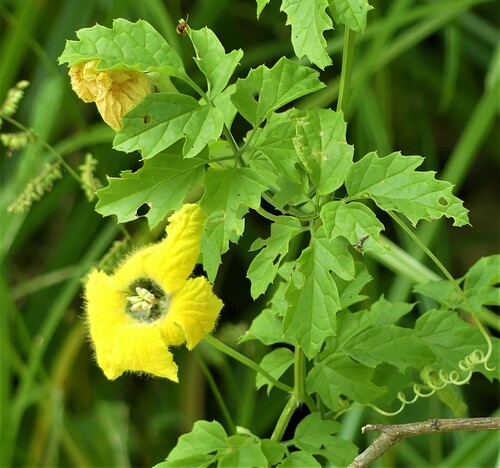
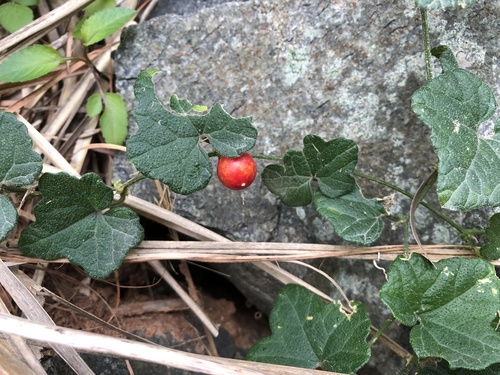
A pumpkin family plant. It is a vine. The stems are angular. It has simple, narrow tendrils. The leaves are oval or triangle shaped and 6-13 cm long by 6-10 cm wide. They have 3-5 irregular lobes. There are teeth along the edge. Male and female flowers occur singly. They are yellow. The fruit are oblong and 4-5 cm long by 1-2 cm wide. The seeds are narrowly oval.
Edible Uses
The fruits are eaten fresh as a vegetable and used in salads, while the leaves are boiled and eaten.
Traditional Uses
The fruit are eaten fresh as a vegetable. They are used in salads. The leaves are boiled and eaten.
This uses section is brief — help expand it
Distribution
It is a tropical plant. It grows in forests between 800-1,500 m above sea level. In Yunnan.
Where It Grows
Asia, Bangladesh, China, India, Indochina, Laos, Myanmar, SE Asia, Thailand,
Other Information
It is sold in local markets.
Notes
There are about 25 Cucumis species.
Also Known As
A yao shuo kuo, Dian song, Kanta shasha, Lu gua biu
References (6)
- BARC, 2016, State of Biodiversity for Food and Agriculture in Bangladesh. Bangladesh Agricultural Research Council.
- Cao, Y., et al, 2020, Ethnobotanical study on wild edible plants used by three trans-boundary ethnic groups in Jiangcheng County, Pu’er, Southwest China. Journal of Ethnobiology and Ethnomedicine (2020) 16:66
- Ghorbani, A., et al, 2012, A comparison of the wild food plant use knowledge of ethnic minorities in Naban River Watershed Nature Reserve, Yunnan, SW China. Journal of Ethnobiology and Ethnomedicine; 8:17
- J. Bombay Nat. Hist. Soc. 50(4):896. 1952
- Xu, You-Kai, et al, 2004, Wild Vegetable Resources and Market Survey in Xishuangbanna, Southwest China. Economic Botany. 58(4): 647-667.
Show all 6 references Hide references
- Yang, Si-Lin and Walters, T. W., 1992, Ethnobotany and the Economic role of the Cucurbitaceae of China. Economic Botany, Vol. 46, No. 4, pp. 349-367