Momordica trifoliolata
Hook. f.
iNaturalist· cc-by-nc
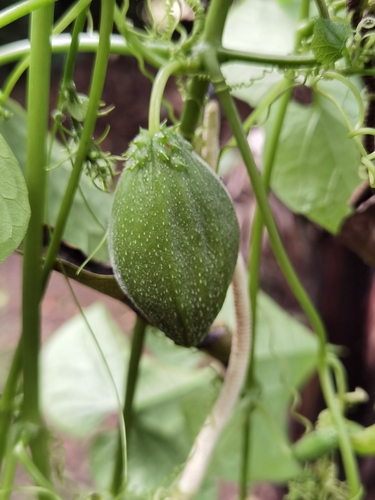
(c) GLENN STOCKIL, some rights reserved (CC BY-NC), uploaded by GLENN STOCKIL
iNaturalist· cc-by-nc
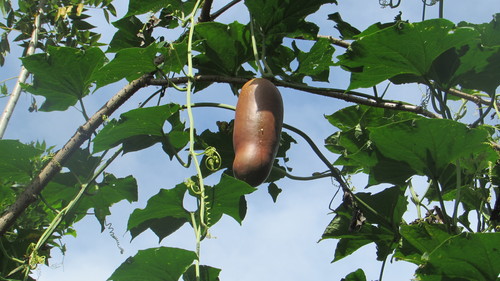
(c) GLENN STOCKIL, some rights reserved (CC BY-NC)
Description
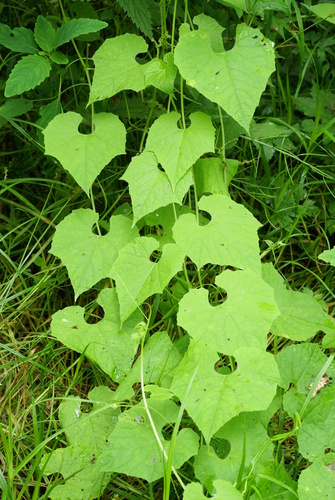
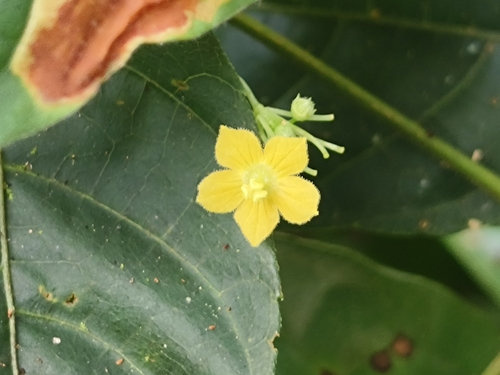
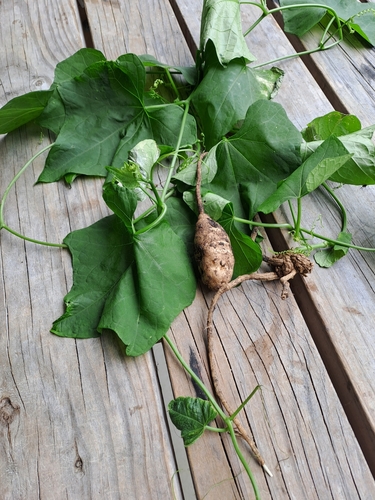
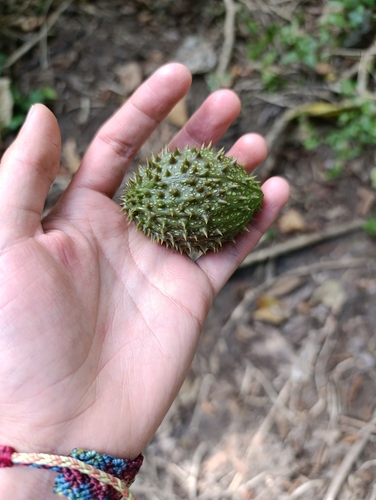
A herb. It is a pumpkin family plant. It is a climber. The stems can be 6 m long. It keeps growing from year to year. Male and female flowers are on separate plants. The fruit are oval and bright red with paler spots. They are 4-6 cm long by 3-4 cm wide. The seeds are wrapped in white pulp. They are oval and 13 mm long by 7 mm wide and 4 mm thick.
Edible Uses
The fruit are eaten raw, particularly by children.
Traditional Uses
The fruit are eaten raw.
This uses section is brief — help expand it
Distribution
It is a tropical plant. It can grow in salty and sandy soils. It is often over limestone materials. It grows in woodland and near watercourses. It grows between 35-1,560 m above sea level. It can grow in arid places.
Where It Grows
Africa, East Africa, Ethiopia, Kenya, Madagascar, Mozambique, Somalia, Tanzania, Uganda,
Other Information
The fruit are eaten especially by children.
Also Known As
Ankaiserariai, Erikoi, Koricha aja, Macurumbi, Saar-saare
References (8)
- Bahru, T., et al, 2013, Wild Edible Plants: Sustainable Use and Management by Indigenous Communities in and the Buffer Area of Awah National Park, Ethiopia. Ethiop. J. Sci., 36(2): 93-108
- Glover et al, 1966b,
- Mbuvi, M. T. E., et al, 2019, Annonated checklist of plant species of Loita Forest Narok County, Kenya. Int. J. Adv. Res. Biol. Sci. (2019). 6(3): 54-110
- Morgan, W. T. W., 1981, Ethnobotany of the Turkana: Use of plants by a Pastoral People and Their Livestock in Kenya. Economic Botany 35(1):96-130
- Mutie, F. M., et al, 2023, Important Medicinal and Food Taxa (Orders and Families) in Kenya, Based on Three Quantitative Approaches. Plants 2023, 12, 1145
Show all 8 references Hide references
- Peters, C. R., O'Brien, E. M., and Drummond, R.B., 1992, Edible Wild plants of Sub-saharan Africa. Kew. p 103
- Royal Botanic Gardens, Kew (1999). Survey of Economic Plants for Arid and Semi-Arid Lands (SEPASAL) database. Published on the Internet; http://www.rbgkew.org.uk/ceb/sepasal/internet [Accessed 16th April 2011]
- World Checklist of Useful Plant Species 2020. Royal Botanic Gardens, Kew