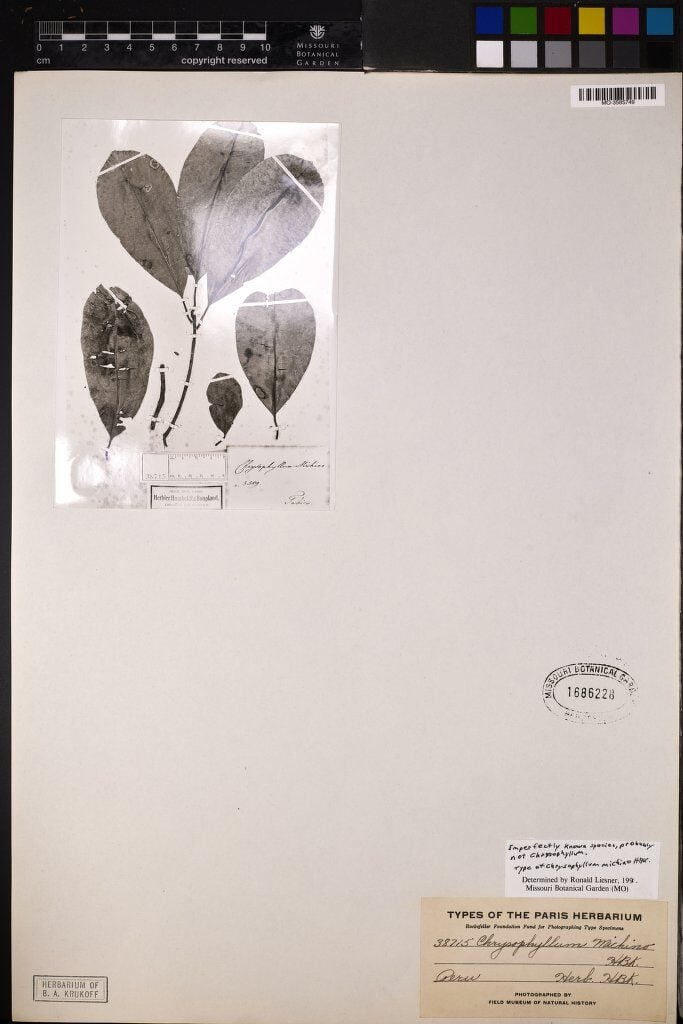
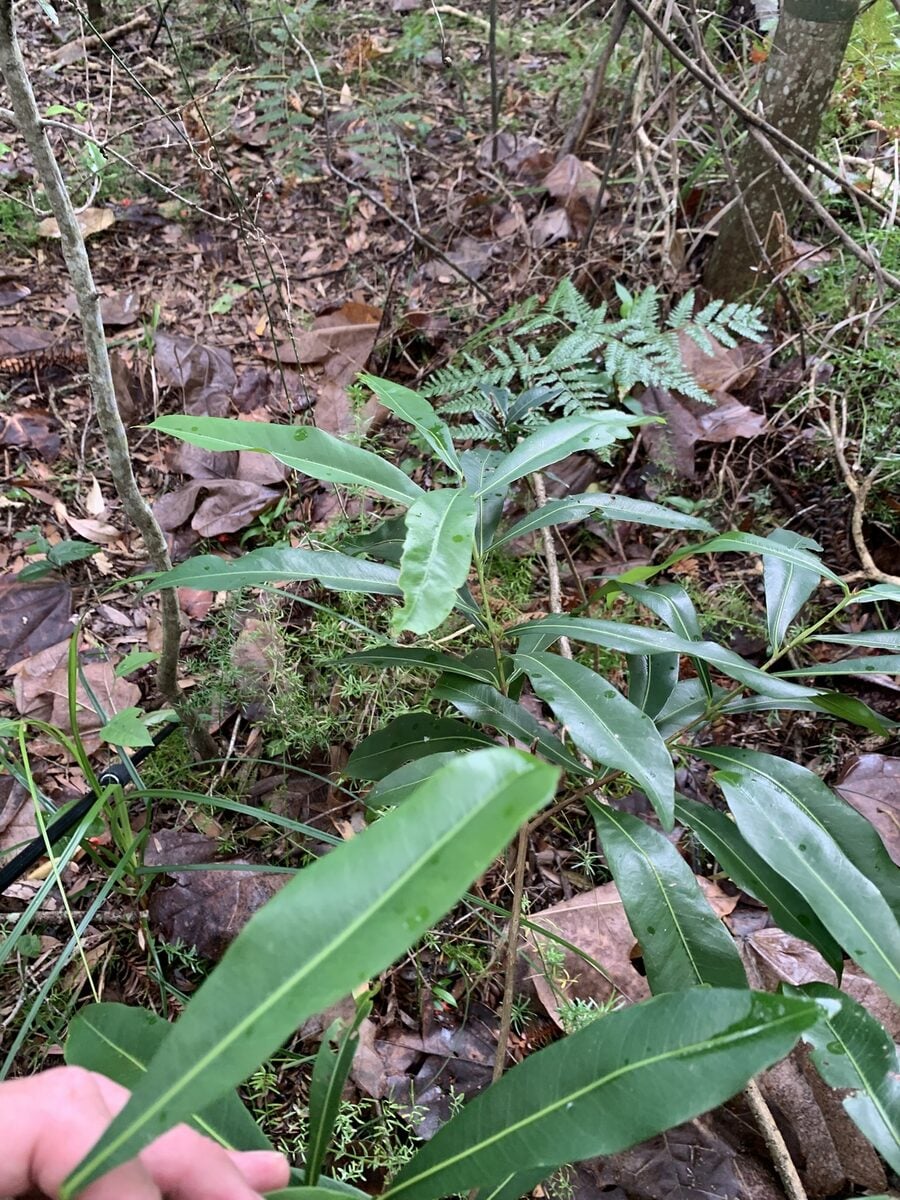
Palaquium leiocarpum
Boerl.
wikimedia· cc-by-sa
Wikimedia Commons (via Wikimedia Commons)
Summary
Source: WikipediaPalaquium leiocarpum is a tree in the family Sapotaceae. The specific epithet leiocarpum means 'smooth fruit'.
Description
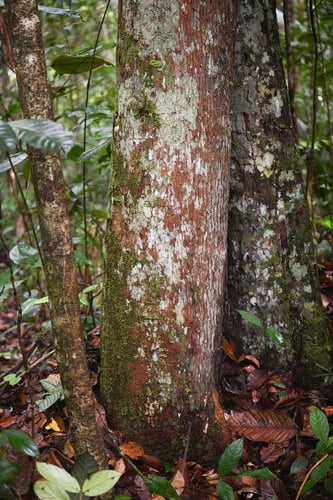
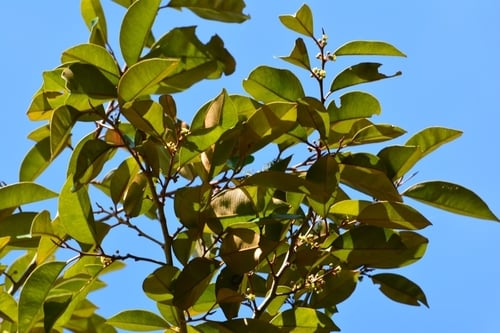
A tree. It grows 35 m tall. The leaves can be loosely clustered at the tip of the twigs. The flowers are in clusters of 3-5 flowers. The fruit is round or oval and 1.5-2.5 cm long.
Distribution
It is a tropical plant. It grows in lowland swamp forest.
Where It Grows
Asia, Indonesia, Malaysia, SE Asia,
Other Uses
The tree is a source of gutta-percha. It is considered to be inferior to the gutta percha obtained from Palaquium gutta and some other species, and so is more commonly used to adultuerate the superior forms. Gutta-percha is a natural latex obtained from the sap of the tree. Allowing this fluid to evaporate and coagulate in the sun produces a hard, durable, non-brittle but non-elastic latex which can be made flexible again when heated to temperatures over 50°c, and then retains any form given while cooling. Prior to the advent of synthetic materials, gutta-percha had a wide range of uses - most particularly as an insulating material for electricity wiring and for underwater telegraph wires, a purpose for which it is very well suited since it is bio-inert and so is not attacked by marine plants or animals. Gutta-percha can be moulded into any shape and has been used to make items such as ornate furniture, pistol grips, acid-resistant receptacles and ‘mourning’ jewellery, where its dark colour was an advantage. It has been widely used as the core of golf balls and is still used in modern dentistry where its bio-inertness makes it ideal as a temporary filling for teeth and as a filling material inside tooth fillings. It is used locally for fixing tools into their handles. Wood. We do not have any more specific information on the wood of this species, but it belongs to a group of timbers collectively called 'Nyatoh'. The general description of nyatoh wood is as follows:- The heartwood is a dark pink to a red-brown; it is clearly demarcated from the 4 - 9cm wide band of lighter-coloured sapwood. The texture is medium; the grain straight or interlocked, sometimes wavy. The wood is light in weight, soft to moderately hard; strong, somewhat durable, being resistant to dry wood borers, moderately resistant to fungi but susceptible to termites. It seasons somewhat slowly, with a high risk of checking and distortion; once dry it is stable in service. There is a very variable content of silica according to the species, but in general the wood has a high blunting effect so stellite-tipped and tungsten-carbide tools are recommended; nailing and screwing are good, but require pre-boring; gluing is correct. The wood has a range of applications, including for high class furniture and cabinet making, solid doors, panelling, joinery, parquet flooring, boat decking, light carpentry, turnery, moulding and veneer.
Synonyms
Also Known As
Hangkang, Jangkai, Jangkar, Jongkang
References (2)
- Wiersema, J. H. & Leon, B., 2013, World Economic Plants. A Standard Reference CRC Press. 2nd Ed. p 490
- World Checklist of Useful Plant Species 2020. Royal Botanic Gardens, Kew