Madhuca obovatifolia
(Merr.) Merr.
wikimedia· cc-by-sa
Wikimedia Commons (via Wikimedia Commons)
gbif· cc0
Botanical Research Institute of Texas
Summary
Source: WikipediaMadhuca obovatifolia is a species of plant in the family Sapotaceae. It is endemic to the Philippines, where it is confined to Luzon. It is threatened by habitat loss.
Description
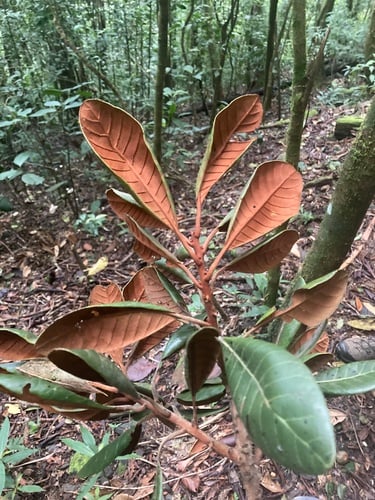
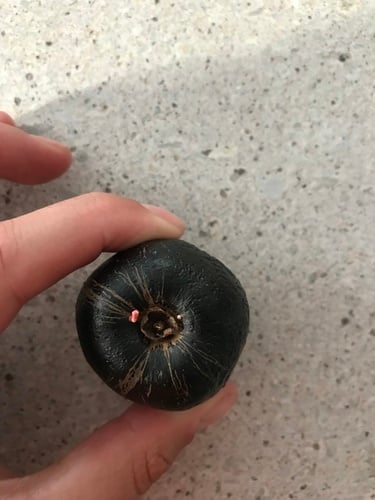
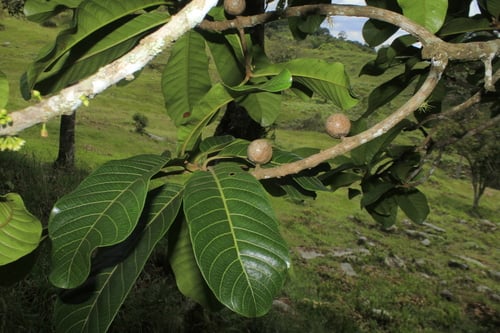
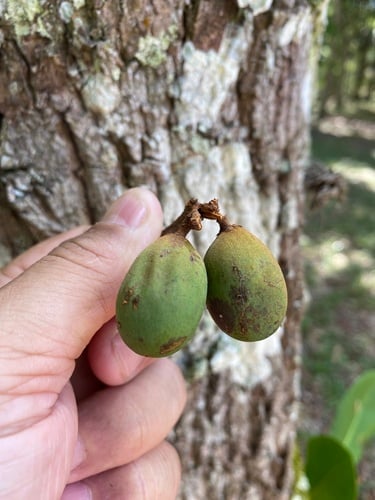
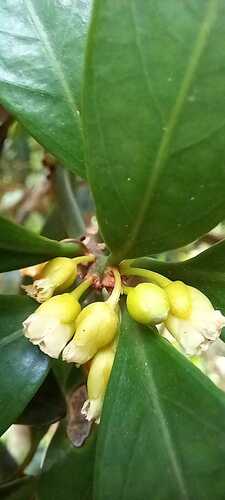
A tree. It grows about 20 m tall. The leaves are simple and leathery and clustered at the tip of the twigs. They are oval and 6-13 cm long by 3-7 cm wide. The flowering shoots are on the lowest part of the leafy branches and there are 5-7 flowers. The fruit is an oval berry about 2 cm across. It has a thin rough skin.
Edible Uses
Fruit - raw. The thin-skinned fruit resembles the sapodilla (Manilkara zapota) in taste and consistency, but is said to be larger. The fruit is a subglobose to ellipsoid berry, about 2cm in diameter.
Distribution
It is a tropical plant. It grows at low altitudes in the Philippines. It grows in Luzon.
Where It Grows
Asia, Philippines, SE Asia,
Other Uses
All parts of the tree contain latex. Wood. We do not have any more specific information on the wood of this species, but it belongs to a group of timbers collectively called 'Bitis'. The general description of bitis wood is as follows:- The heartwood is red-brown to purple- or chocolate-red-brown; it is sharply demarcated from the yellow-brown to purple-grey-brown sapwood. The texture is moderately fine and even, with straight or shallowly interlocked grain. The wood is strong, heavy and durable. It is very difficult to treat with preservatives. It is slightly difficult to difficult to resaw, easy to slightly difficult to crosscut. Planing is slightly difficult but the planed surface is smooth. Nailing property is rated as poor. The timber seasons slowly with moderate end-checking, splitting and surface-checking as the major sources of defects. Shrinkage is high. The timber is likely to be fairly difficult to dry. The wood is suitable for all forms of heavy construction, bridges, wharves, piers, piling, posts, railway sleepers, parquet flooring and heavy flooring.
Notes
It is an at risk species.
Synonyms
Also Known As
Dulitan, Maninik, Nato, Pianga
References (4)
- PROSEA
- Soerianegara, I. & Lemmens, R. H. M. L., (Eds.) 1993, Timber trees: Major commercial timbers. Plant Resources of South-East Asia. Wageningen. No. 5(1). p 283
- Useful Tropical Plants
- World Checklist of Useful Plant Species 2020. Royal Botanic Gardens, Kew