Chrysophyllum cainito
L.
Star apple, Caimito
iNaturalist· cc0
no rights reserved, uploaded by 葉子
iNaturalist· cc-by-nc
(c) mavc, some rights reserved (CC BY-NC)
iNaturalist· cc-by-nc
(c) petercalverley, some rights reserved (CC BY-NC), uploaded by petercalverley
Summary
Source: WikipediaChrysophyllum cainito is a tropical tree of the family Sapotaceae. It is native to the Isthmus of Panama, where it was domesticated. It has spread to the Greater Antilles and the West Indies and is now grown throughout the tropics, including Southeast Asia. It grows rapidly and reaches 20 meters in height.
Description
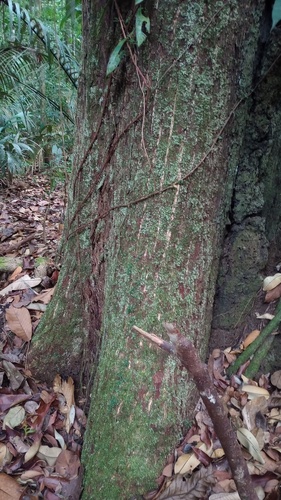
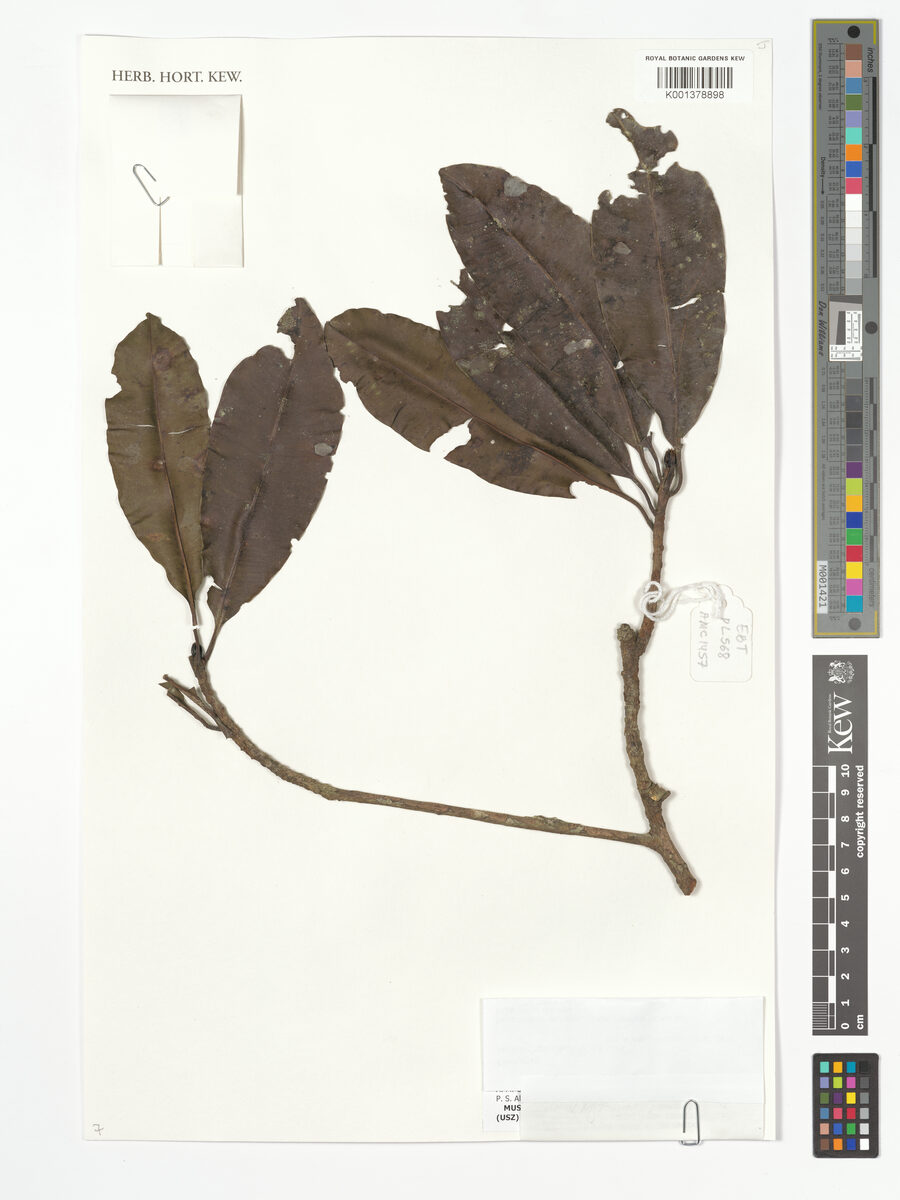
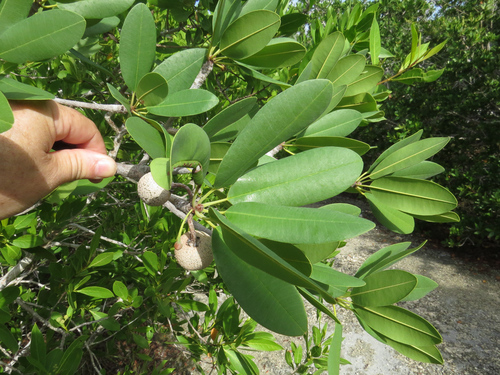
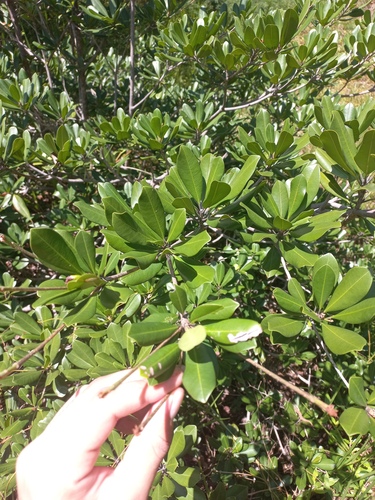
An evergreen tree up to 12-25 m high. It spreads 4-8 m across. The stem is erect but the branches hang down. Leaves are small, hairy, shiny and dark green on top and red/yellow underneath. Young parts of the plant are hairy, with soft silky rust coloured hairs. The flowers are mauve and small. They occur in clusters scattered among the mature twigs. The fruit are smooth skinned and 5-10 cm across. Fruit are oval shaped, yellow at first and light purple when ripe. When the fruit is cut crossways the star shape can be seen. The fruit pulp is white and sweet. The flesh can be purple in some kinds. It contains up to 10 shiny dark seeds.
Edible Uses
The fruit can be eaten raw or made into preserves and has a sweet flavour with pleasantly acidic flesh that is high in carbohydrate. Fruits are about 10cm in diameter. The fruit must be left on the tree until fully ripe; immature fruit is astringent and contains a sticky white latex. The skin must be removed before eating, as biting into it leaves a persistent stickiness in the mouth, and care should be taken to prevent any bitter latex from the skin contacting the flesh. The best way to serve the fruit is to cut around its middle through the rind, then hold it stem-end down and gently twist the top back and forth until the flesh frees itself from the lower rind half, which pulls away along with most of the core. Alternatively, cut it in half and spoon out the flesh, leaving the seed cells and core. An emulsion of the slightly bitter seed kernels is used to make imitation milk-of-almonds, nougat, and other confections.
Traditional Uses
The flesh of the fruit is eaten fresh when fully ripe. The skin has a gummy substance so the flesh of the fruit should be spooned out. The flesh of the fruit is sometimes added to salads and drinks. The fruit can be parboiled and also made into preserves. The seeds are sometimes eaten in confectionary. An emulsion of the kernels can be made into a sweets. Caution: The seeds contain a cyanogenic glucoside.
Medicinal Uses
The ripe fruit is eaten to soothe inflammation in laryngitis and pneumonia, and is given as a treatment for diabetes mellitus. As a decoction it is gargled to relieve angina, and the fruit is used to treat haemorrhage or cooked and used for fever. A decoction of the rind or leaves is taken as a pectoral. The undersides of the leaves are grated and applied as a poultice to wounds, and a decoction of the leaves is taken orally to treat hypoglycaemia. A decoction of the tannin-rich, astringent bark is drunk as a tonic and stimulant and is taken to halt diarrhoea, dysentery, and haemorrhages, and as a treatment for gonorrhoea and catarrh of the bladder. The pulverized, bitter seed is taken as a tonic, diuretic, and febrifuge. The tree's latex is applied to abscesses and, when dried and powdered, is given as a potent vermifuge, and is also taken as a diuretic, febrifuge, and remedy for dysentery.
Known Hazards
The seeds contain a cyanogenic glucoside.
Distribution
A tropical plant. It suits the hot, tropical lowlands with medium to high rainfall. It is native to tropical America. They are suitable for damp districts probably below 400 m altitude. They are grown at Kerevat in Papua New Guinea. It is drought and frost tender. It suits well drained soils, in a protected sunny position. Humid atmosphere and high temperatures throughout the year, suit the tree best. It has been grown up to 1,000 m altitude in South India. Young trees need cold protection but mature trees can survive cool temperatures. In XTBG Yunnan. It suits hardiness zones 11-12.
Where It Grows
Africa, Amazon, Argentina, Asia, Australia, Bangladesh, Barbados, Belize, Bermuda, Brazil, Cambodia, Cameroon, Caribbean, Cayman Islands, Central Africa, Central America*, China, Colombia, Cook Islands, Costa Rica, Côte d'Ivoire, Cuba, Dominican Republic, East Africa, El Salvador, Fiji, FSM, Ghana, Guatemala, Guiana, Guianas, Guyana, Haiti, Hawaii, Honduras, India, Indochina, Indonesia, Ivory Coast, Jamaica, Laos, Liberia, Malaysia, Mariana Islands, Marquesas, Mexico, Mozambique, Myanmar, Nauru, Nicaragua, North America, Northeastern India, Pacific, Pakistan, Panama, Papua New Guinea, PNG, Peru, Philippines, Pohnpei, Puerto Rico, Samoa, SE Asia, Sierra Leone, Singapore, Solomon Islands, South America, Sri Lanka, St Lucia, Suriname, Tanzania, Thailand, Tonga, Trinidad & Tobago, USA, Vanuatu, Venezuela, Vietnam, Virgin Islands, West Africa, West Indies*,
Cultivation
Star apple grows successfully in a range of tropical or near tropical areas. Throughout Southeast Asia it thrives in the lowlands, up to 400 metres elevation, and in areas with a distinct dry season. If the dry period is most pronounced, undue loss of leaves and less juicy or even shrivelled fruit are evident, which indicates that the drought is too severe and irrigation is needed. The temperature range for growth is reported to be 12 - 35c with the optimum between 22 - 38c. Mature trees are seriously injured by temperatures below -2c and recover slowly. Young trees may be killed by even short exposure to -0.5c. The annual rainfall range for growth is reported to be 800 - 2,200mm with the optimum between 1,000 - 1,400mm. Requires a moist, well-drained soil. Prefers a deep, rich loam. Fertile, well drained and slightly acid soils are ideal for good growth, though the plant can succeed on almost all types of soil. Prefers a sunny position. Established plants are tolerant of drought. Trees take about 5 - 10 years to produce fruit from seed. Grafted plants can start to fruit in 2 - 4 years. Some trees yield heavy crops of fruit, others bear little. Yields of 70 kg or fruit per tree per year have been recorded. The fruit do not drop and must be picked. They can be stored for 3 weeks at cool temperatures. Young trees are sensitive to water stress in their first year, and growth during that time is slow. Once the tree is established, growth rate and development become more rapid. Deep mulching with straw or lawn clippings, application of fertilizer and frequent dry-season watering all seem necessary for success with this species. The trees do not drop their fruit, making it necessary to climb the tree in order to harvest the crop. There are many named varieties. Star apple flowers are hermaphrodite, and the plants are usually self-fertile.
Propagation
Sow seed in a light, sandy loam. Germination rate is 70% and takes up to six weeks. Seed retains viability for several months, and seedlings bear fruit in 5–10 years. Greenwood cuttings taken from mature stems root well when placed over strong moist heat. Air layering takes 4–7 months. Grafted trees have been known to begin bearing fruit in their first year.
Other Uses
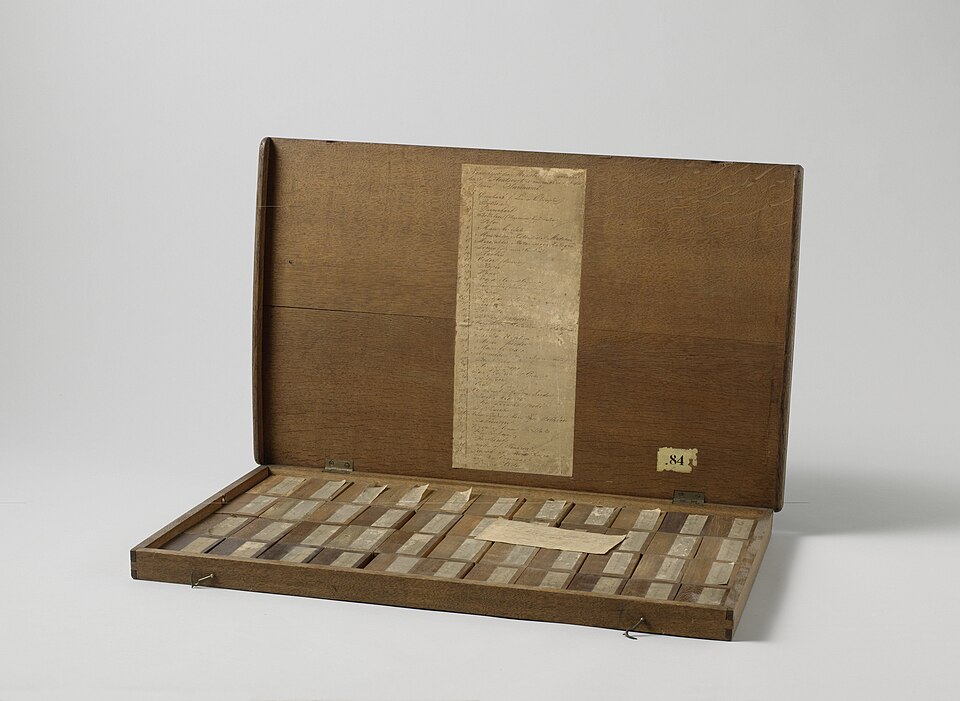
Suitable as a large shade tree, street tree, screening plant, specimen, backyard tree, large planter, or conservatory plant. It is also grown as an ornamental for the attractive golden undersides of its leaves. The branches serve as an orchid-growing medium. Good-quality paper can be obtained from the wood pulp, and tannins are extracted from the bark. The sapwood and heartwood are reddish-brown to dark brown, strong, hard but not durable, with fine to medium texture and fairly straight grain, and a specific gravity of 0.70. The wood is used for general indoor construction including planking, light framing, flooring, interior trim, lining, shelving, cladding, panelling, and partitioning, and is also suitable for mouldings, light tool handles, inlaying, carving, joinery, furniture, and cabinet making. Good-quality veneer and plywood can be obtained from it. The wood is sometimes used as fuel.
Production
It is a slow growing tree. Trees planted from seed come into bearing in 5-9 years. Grafted trees bear in 4-5 years. Fruit mature in about 180 days. Yields of 70 kg or fruit per tree per year have been recorded. The fruit do not drop and must be picked. They can be stored for 3 weeks at cool temperatures.
Other Information
It is a cultivated food plant. At present not widely grown or used in Papua New Guinea. It is cultivated throughout Thailand.
Notes
The tree is often grown as an ornamental because of the attractive golden underside to the leaves. There are about 80-150 Chrysophyllum species. They are mostly in tropical America. There are 44 species in tropical America.
Nutrition
| Part | Moisture | kJ | kcal | Protein | Vit A | Vit C | Iron | Zinc |
|---|---|---|---|---|---|---|---|---|
| Fruit | 82.8 | 284 | 68 | 1.8 | 20 | 11 | 0.5 | — |
Synonyms
Also Known As
Aguay, Ajara, Apra, Buis, Caimite, Caimitero, Caimitier, Caimito-roxo, Caimo, Caini, Cainit, Cainito, Caymito, Chicle durian, Damsel, Epal feleppin, Estrella, Guayabillo, Hnin-thagya, Isi, 'istal 'apel, Kaimit, Kenitu, Macoucou, Murucuja, Olivoa, Pied caimite, Pipi O Eva, Pohon sawo duren, Pomme surette, Rata lawulu, Star'apra, Sterappel, Star plum, Suli krie, Taroka phol, Thituy, Tuk dah koo, Vu sua
References (88)
- Abbiw, D.K., 1990, Useful Plants of Ghana. West African uses of wild and cultivated plants. Intermediate Technology Publications and the Royal Botanic Gardens, Kew. p 42
- Ambasta, S.P. (Ed.), 2000, The Useful Plants of India. CSIR India. p 122
- Arora, R. K., 2014, Diversity in Underutilized Plant Species - An Asia-Pacific Perspective. Bioversity International. p 62
- Ashton, M. S., et al 1997, A Field Guide to the Common Trees and Shrubs of Sri Lanka. WHT Publications Ltd. pdf p 361
- Barwick, M., 2004, Tropical and Subtropical Trees. A Worldwide Encyclopedic Guide. Thames and Hudson p 112
Show all 88 references Hide references
- Blench, R., 2004, Fruits and Arboriculture in the Indo-Pacific Region. Indo-Pacific Prehistory Association Bulletin 24. (Taipei Papers Volume 2) p 36
- Bodkin, F., 1991, Encyclopedia Botanica. Cornstalk publishing, p 256
- Bodner, C. C. and Gereau, R. E., 1988, A Contribution to Bontoc Ethnobotany. Economic Botany, 43(2): 307-369
- Burkill, H. M., 1985, The useful plants of west tropical Africa, Vol. 5. Kew.
- Call, C. A., et al, 2004, Participatory Rural Appraisal in the Upland Ecosystem of Mt Malindang, Misamis Occidental, Philippines. Biodiversity Research Programme for Development in Mindanao. p 60
- Chakraborty, S. & Chaturbedi, H. P., 2014, Some Wild Edible Fruits of Tripura- A Survey. Indian Journal of Applied research. (4) 9
- Chandrashekara, U. M., 2009, Tree species yielding edible fruit in the coffee-based homegardens of Kerala, India: their diversity, uses and management. Food Sec. 1:361-370
- Chatterjee, A. S., 1997, Fruit Trees in Cambodian Home Gardens. Trainers' training manual. Home garden series No.3 p 23
- Chizmar Fernandez, C., et al, 2009, Plantas comestibles de Centroamerica. Instituto de Biodiversidad, Costa Rica. p 285
- Coe, F. G., and Anderson, G. J., 1996, Ethnobotany of the Garifuna of Eastern Nicaragua. Economic Botany 50(1) pp 71-107
- Coe, F. G. and Anderson, G. J., 1999, Ethnobotany of the Sumu (Ulwa) of Southeastern Nicaragua and Comparisons with Miskitu Plant Lore. Economic Botany Vol. 53. No. 4. pp. 363-386
- Condit, R., et al, 2011, Trees of Panama and Costa Rica. Princeton Field Guides. p 436
- Coronel, R.E., 1982, Fruit Collections in the Philippines. IBPGR Newsletter p 6
- Cundall, P., (ed.), 2004, Gardening Australia: flora: the gardener's bible. ABC Books. p 377
- D'Ambrosio, U., & Puri, R. K., 2016, Foodways in transition: food plants, diet and local perceptions of change in a Costa Rican Ngäbe community. Journal of Ethnobiology and Ethnomedicine (2016) 12:3 p 27
- Darley, J.J., 1993, Know and Enjoy Tropical Fruit. P & S Publishers. p 104
- Ekman Herbarium records Haiti
- Engel, D.H., & Phummai, S., 2000, A Field Guide to Tropical Plants of Asia. Timber Press. p 97
- Etherington, K., & Imwold, D., (Eds), 2001, Botanica's Trees & Shrubs. The illustrated A-Z of over 8500 trees and shrubs. Random House, Australia. p 211
- Facciola, S., 1998, Cornucopia 2: a Source Book of Edible Plants. Kampong Publications, p 226
- Ferns, Useful Tropical Plants
- Flora of Pakistan. www.eFloras.org
- Flowerdew, B., 2000, Complete Fruit Book. Kyle Cathie Ltd., London. p 162
- Food Composition Tables for use in East Asia FAO http://www.fao.org/infoods/directory No. 1003
- French, B.R., 1986, Food Plants of Papua New Guinea, A Compendium. Asia Pacific Science Foundation p 295
- Garner, R.J., and Chaudhri, S.A., (Ed.) 1976, The Propagation of Tropical fruit Trees. FAO/CAB. p 314
- Hearne, D.A., & Rance, S.J., 1975, Trees for Darwin and Northern Australia. AGPS, Canberra p 43
- Hedrick, U.P., 1919, (Ed.), Sturtevant's edible plants of the world. p 188
- Hermandez Bermejo, J.E., and Leon, J. (Eds.), 1994, Neglected Crops. 1492 from a different perspective. FAO Plant Production and Protection Series No 26. FAO, Rome. p 17
- Hibbert, M., 2002, The Aussie Plant Finder 2002, Florilegium. p 67
- Hu, Shiu-ying, 2005, Food Plants of China. The Chinese University Press. p 619
- Hwang, L. C., et al, 2020, Traditional Botanical Uses of Non-Timber Forest Products (NTFP) in Seven Counties in Liberia. ACS Symposium Series; American Chemical Society: Washington, DC, 2020.
- Jackes, B.R., 2001, Plants of the Tropics. Rainforest to Heath. An Identification Guide. James Cook University. p 81
- Jardin, C., 1970, List of Foods Used In Africa, FAO Nutrition Information Document Series No 2.p 127
- John, L., & Stevenson, V., 1979, The Complete Book of Fruit. Angus & Robertson p 267
- Kiple, K.F. & Ornelas, K.C., (eds), 2000, The Cambridge World History of Food. CUP p 1858
- Lazarides, M. & Hince, B., 1993, Handbook of Economic Plants of Australia, CSIRO. p 59
- Lembaga Biologi Nasional, 1977, Buah-Buahan, Balai Pustaka, Jakarta. p 116
- Little, E. L., et al, 1974, Trees of Puerto Rico and the Virgin Islands. USDA Handbook 449. Forestry Service. p 780 (As Chrysophyllum bicolor)
- Lorenzi, H., Bacher, L., Lacerda, M. & Sartori, S., 2006, Brazilian Fruits & Cultivated Exotics. Sao Paulo, Instituto Plantarum de Estuados da Flora Ltda. p 616
- Macmillan, H.F. (Revised Barlow, H.S., et al) 1991, Tropical Planting and Gardening. Sixth edition. Malayan Nature Society. Kuala Lumpur. p 296
- Mapes, C. & Basurto, F., 2016, Biodiversity and Edible Plants of Mexico. Chapter 5 in R. Lira, et al. (eds.), Ethnobotany of Mexico, Ethnobiology, Springer. p 99
- Martin, F. W., et al, 1987, Perennial Edible Fruits of the Tropics. USDA Handbook 642 p 59
- Martin, M.A., 1971, Introduction L'Ethnobotanique du Cambodge. Centre National de la Recherche Scientifique. Paris.
- McLaughlin, J., Woody and Herbaceus Plants Native to Haiti. University of Florida. p 19
- Melander, M., 2007, Endangered plants on the market in Havana City, Cuba. Uppsala University, Sweden p 19
- Miguel, E., et al, 1989, A checklist of the cultivated plants of Cuba. Kulturpflanze 37. 1989, 211-357
- Morton, Julia F., 1987, Fruits of Warm Climates. Creative Resources Systems, Inc. . p. 408
- Mutchnick, P. A. and McCarthy, B. C., 1997, An Ethnobotanical Analysis of the Tree Species Common to the Subtropical Moist Forests of the Peten, Guatemala. Economic Botany, Vol. 51, No. 2, pp. 158-183
- Norrington, L., & Campbell, C., 2001, Tropical Food Gardens. Bloomings Books. p 117
- NYBG herbarium "edible"
- Omawale, 1973, Guyana's edible plants. Guyana University, Georgetown p 46
- Parham, B. E. V., 1972, Plants of Samoa. New Zealand Department of Scientific and Industrial Research. Information Series. No. 85 p 101
- Pasha, M. K. & Uddin, S. B., 2019, Minor Edible Fruits of Bangladesh. Bangladesh J. Plant Taxon. 26(2): 299–313
- Paz, F. S., et al, 2021, Edible Fruit Plant Species in the Amazon Forest Rely Mostly on Bees and Beetles as Pollinators. Journal of Economic Entomology, XX(XX), 2021, 1–13
- Pham-Hoang Ho, 1999, An Illustrated Flora of Vietnam. Nha Xuat Ban Tre. p 630
- Phon, P., 2000, Plants used in Cambodia. © Pauline Dy Phon, Phnom Penh, Cambodia. p 152
- Plants of Haiti Smithsonian Institute http://botany.si.edu/antilles/West Indies
- Priyadi, H., et al, Five hundred plant species in Gunung Halimun Salak National Park West Java. A checklist including Sundanese names, distribution and use. CIFOR, FFPRI, SLU p 153
- Purseglove, J.W., 1968, Tropical Crops Dicotyledons, Longmans. p 646
- Roa, J. A. G. & Boada, D. S. G., 2018, Fundación para el Fortalecimiento de la Fruticultura y Plantas Alimenticias no Convencionales en Colombia.
- Segura, S., et al, 2018, The edible fruit species in Mexico. Genet Resour Crop Evol (2018) 65:1767–1793
- Slik, F., www.asianplant.net
- Solomon, C., 2001, Encyclopedia of Asian Food. New Holland. p 364
- Solomon Islands Ministry of Agriculture, 1996, Solomon Islands: Country report to the FAO International Technical Report of Plant Genetic Resources. Leipzig. p 23
- Sosef, M. S. M., Hong, L. T., & Prawirohatmodjo, S., (Eds.), 1998, Timber tree: Lesser-known timbers. Plant Resources of South-East Asia, 5(3), p 140
- Sp. pl. 1:192. 1753
- Staples, G.W. and Herbst, D.R., 2005, A tropical Garden Flora. Bishop Museum Press, Honolulu, Hawaii. p 518
- Sukarya, D. G., (Ed.) 2013, 3,500 Plant Species of the Botanic Gardens of Indonesia. LIPI p 195
- Tankard, G., 1990, Tropical fruit. An Australian Guide to Growing and using exotic fruit. Viking p 30
- Thaman, R. R., et al, 1994, The Flora of Nauru. Atoll Research Bulletin No. 392. Smithsonian Institute p 194
- Triono, T., et al, 2007, A phylogeny of Pouteria (Sapotaceae) from Malesia and Australasia. Australian. Systematic Botany. 20:107-118
- USDA, ARS, National Genetic Resources Program. Germplasm Resources Information Network - (GRIN). [Online Database] National Germplasm Resources Laboratory, Beltsville, Maryland. Available: www.ars-grin.gov/cgi-bin/npgs/html/econ.pl (10 April 2000)
- Van Sam, H. et al, 2008, Uses and Conservation of Plant Species in a National Park. A case study of Ben En, Vietnam. Economic Botany 62:574-593
- van Roosmalen, M.G.M., 1985, Fruits of the Guianan Flora. Utrecht Univ. & Wageningen Univ. p 404
- Van Roosmalen, M.G.M., & Garcia, O. M., 2000, Fruits of the Amazonian Forest. Part 2: Sapotaceae. Acta Amazonica 30(2): 187-290
- Vivien, J., & Faure, J.J., 1996, Fruitiers Sauvages d'Afrique. Especes du Cameroun. CTA p 327
- Wiersema, J. H. & Leon, B., 2013, World Economic Plants. A Standard Reference CRC Press. 2nd Ed. p 173
- World Checklist of Useful Plant Species 2020. Royal Botanic Gardens, Kew
- Yuncker, T.G., 1959, Plants of Tonga, Bernice P. Bishop Museum, Hawaii, Bulletin 220. p 212
- www.worldagroforestrycentre.org/treedb/
- Zaldivar, M. E., et al, 2002, Species Diversity of Edible Plants Grown in Homegardens of Chibehan Amerindians from Costa Rica. Human Ecology, Vol. 30, No. 3, pp. 301-316
- Zawiah, N. & Othaman, H., 2012, 99 Spesies Buah di FRIM. Institut Penyelidikan Perhutanan Malaysia. p 78