Begonia sutherlandii
Hook.f.
iNaturalist· cc-by-nc
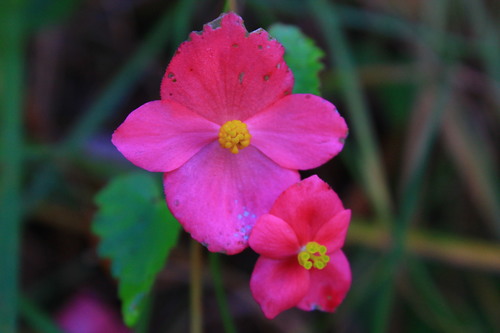
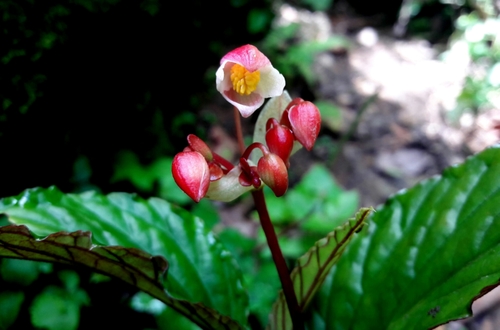
(c) riana60, some rights reserved (CC BY-NC), uploaded by riana60
iNaturalist· cc-by-nc
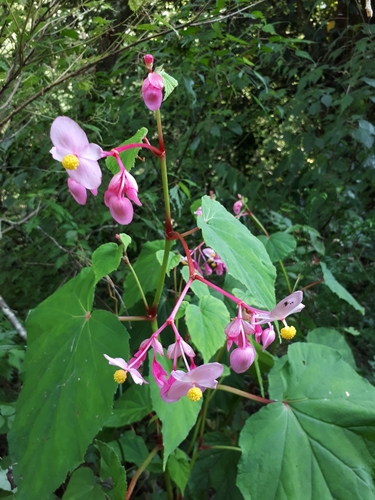
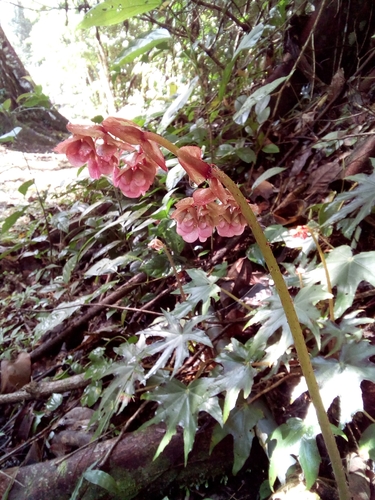
(c) Sylvain Piry, some rights reserved (CC BY-NC), uploaded by Sylvain Piry
iNaturalist· cc0
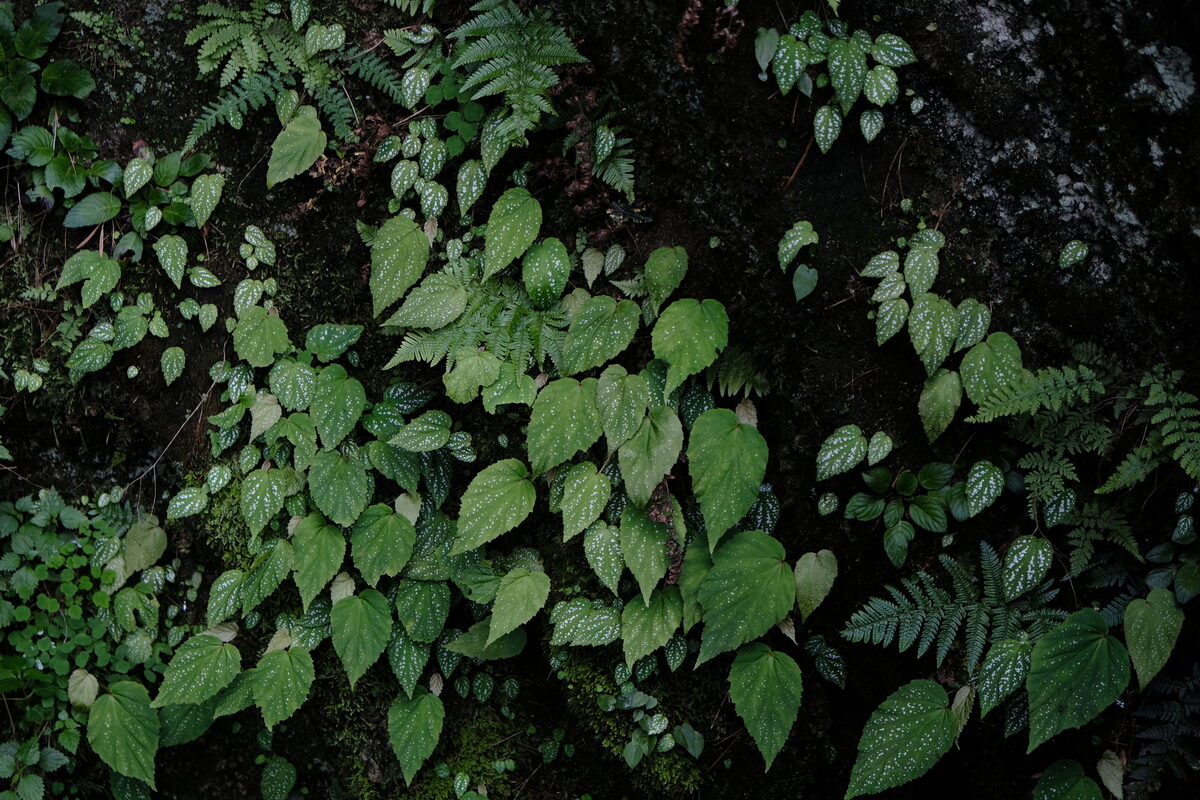
no rights reserved, uploaded by Jimmy Whatmore
Summary
Source: WikipediaBegonia sutherlandii, known as the Sutherland begonia and as iwozya in Kimalila, Tanzania, is a tuberous flowering perennial plant in the family Begoniaceae, growing to 0.5 metres (20 in) with fleshy pink stems from 10 to 80 centimetres (4 to 31 in) long. Leaves are commonly dark green and veined with red and covered with short hairs on the underside. They are asymmetrical in shape and the margin is toothed. Flowers, produced in pendent panicles throughout summer, are 20–26 millimetres (0.8–1.0 in) in diameter, and are usually orange or orange–red with yellow anthers. The plant is native to the southern highlands of Tanzania and is often found hanging over rocks in damp shady situations or on trees. It is also present in the Democratic Republic of the Congo and in South Africa. Begonia sutherlandii can be cultivated outdoors in frost-free areas. It has gained the Royal Horticultural Society's Award of Garden Merit.
Description
A herb. It has one or several stems from a tuber. These are 1 m long. They are slender, fleshy and leafy. The leaves are oval to sword shape and 25 cm long by 15 cm wide.
Edible Uses
The fruit are eaten as a snack.
Traditional Uses
The fruit are eaten as a snack.
This uses section is brief — help expand it
Distribution
It is a tropical plant.
Where It Grows
Africa, Eswatini, South Africa, Southern Africa, Swaziland, Tanzania, Zambia, Zimbabwe,
Synonyms
References (2)
- Ruiters-Welcome, A. K., 2019, Food plants of southern Africa. Ph.D. thesis. Univ. of Johannesburg p 38
- Welcome, A. K. & Van Wyk, B.-E., 2019, An inventory and analysis of the food plants of southern Africa. South African Journal of Botany 122 (2019) 136–179