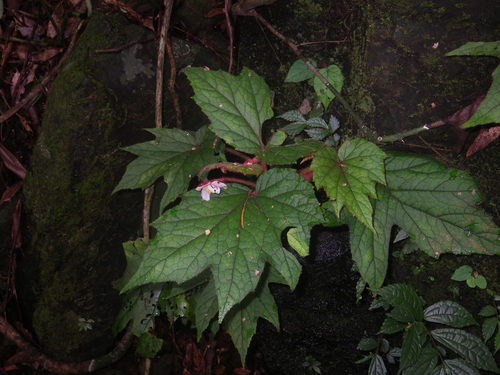
Begonia grandis
Dryand.
Hardy begonia
iNaturalist· cc-by-nc
(c) Samantha Leigh, some rights reserved (CC BY-NC), uploaded by Samantha Leigh
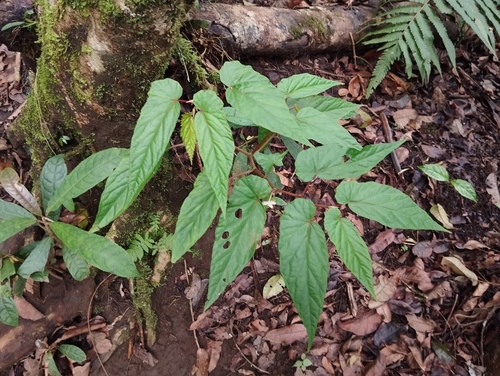
iNaturalist· cc-by-sa
(c) KENPEI, some rights reserved (CC BY-SA)
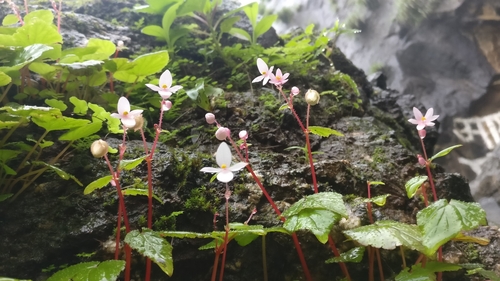
iNaturalist· cc-by
(c) Marco Mussita, some rights reserved (CC BY), uploaded by Marco Mussita
Summary
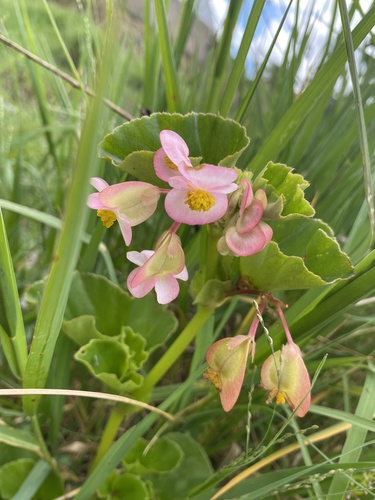
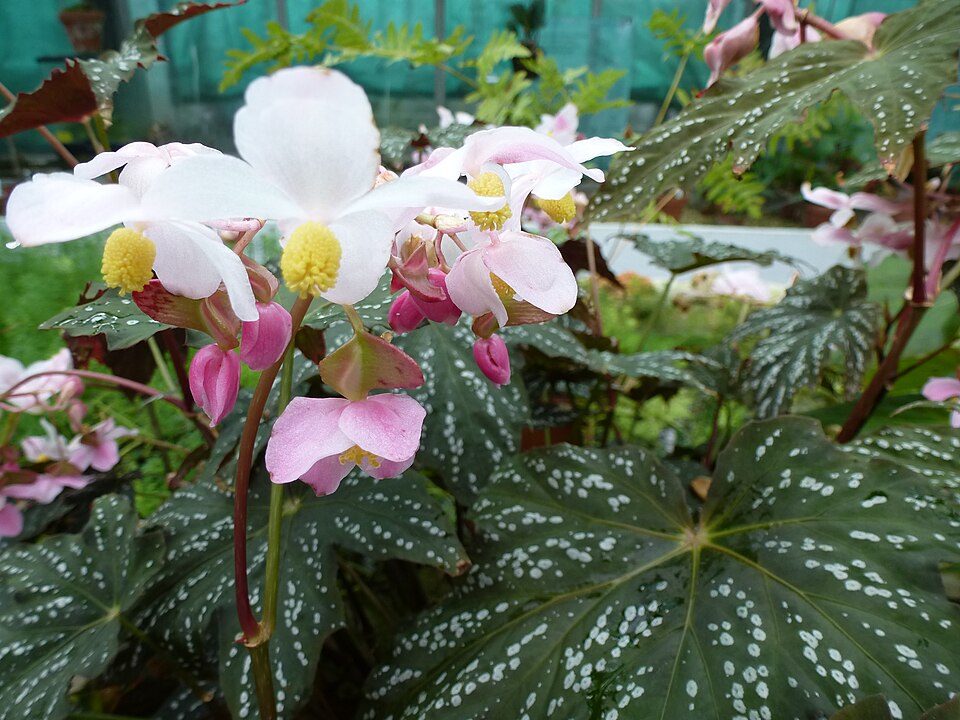
Source: WikipediaBegonia grandis, the hardy begonia, is a species of flowering plant in the family Begoniaceae. This herbaceous perennial has alternate, simple leaves on arching stems. The flowers are pink or white, borne in dichotomously branching cymes from late summer through fall in USDA U.S. Hardiness Zone 7. As the common name "hardy begonia" implies, it is winter hardy in some temperate regions. It can overwinter well in hardiness zone 9a in southwestern Japan as tuberous roots or bulbils (bulbils are formed in axils). Above-ground parts of this plant eventually die as temperature lowers. However, it is generally regarded as hardy to zones 5-6. The varietIes Begonia grandis subsp. evansiana and Begonia grandis subsp. evansiana var. alba have gained the Royal Horticultural Society's Award of Garden Merit.
Description
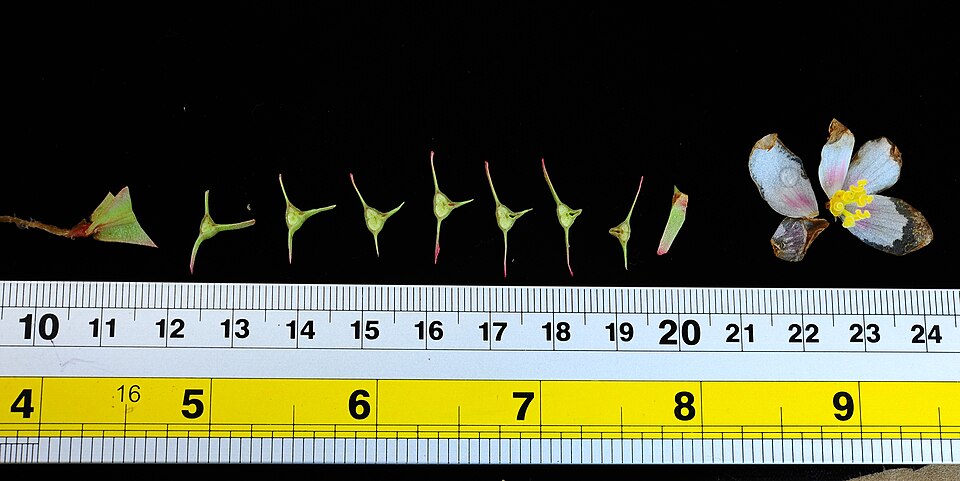
A herb. It loses its leaves during the year. It has round tubers 8-12 mm across. The stems are 28-60 cm tall. The leaf stalks are 4-20 cm long. The leaves are on the stem and are broadly oval and unequal on opposite sides. The flowers are in stalks 7-16 cm tall at the ends of the stems and in the axils of leaves. The flowers are white or pink.
Edible Uses
The young leaves are eaten raw, and the flowers, leaves, and stems are edible.
Traditional Uses
The young leaves are eaten raw.
This uses section is brief — help expand it
Distribution
It is a subtropical plant. It grows in forests and beside stream and well as in damp cracks in limestone and moist shady places. It grows between 100-3,400 m above sea level. In Sichuan and Yunnan.
Where It Grows
Asia, China*, India, Indonesia, Japan, Korea, SE Asia,
Cultivation
Plants can be grown from seeds, stem or leaf cuttings and tubers.
Synonyms
Also Known As
Akangzi, Begonia grandis
References (4)
- Chen, B. & Qiu, Z., Consumer's Attitudes towards Edible Wild Plants, Ishikawa Prefecture, Japan. p 22 www.hindawi.com/journals/ijfr/aip/872413.pdf
- Geng, Y., et al, 2016, Traditional knowledge and its transmission of wild edibles used by the Naxi in Baidi Village, northwest Yunnan province. Journal of Ethnobiology and Ethnomedicine. 12:10
- Liu, Yi-tao, & Long, Chun-Lin, 2002, Studies on Edible Flowers Consumed by Ethnic Groups in Yunnan. Acta Botanica Yunnanica. 24(1):41-56
- Sukarya, D. G., (Ed.) 2013, 3,500 Plant Species of the Botanic Gardens of Indonesia. LIPI p 1073