Begonia heracleifolia
Cham. & Schldl.
Star begonia, Starleaf begonia
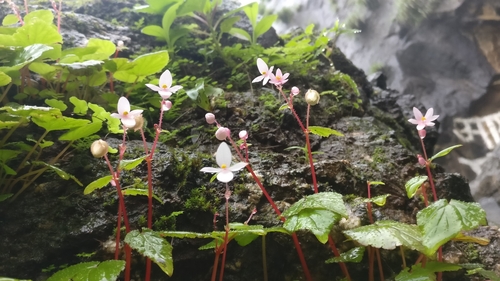
iNaturalist· cc-by-nc
(c) Stefano Doglio, some rights reserved (CC BY-NC), uploaded by Stefano Doglio
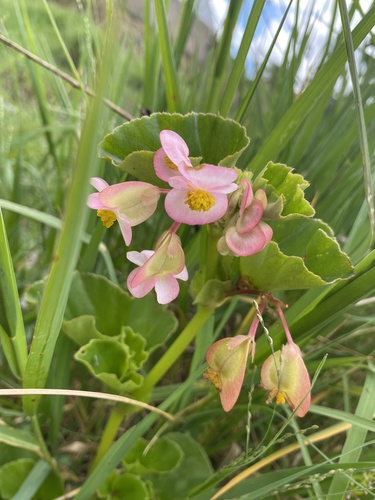
iNaturalist· cc-by
(c) Alan Rockefeller, some rights reserved (CC BY), uploaded by Alan Rockefeller
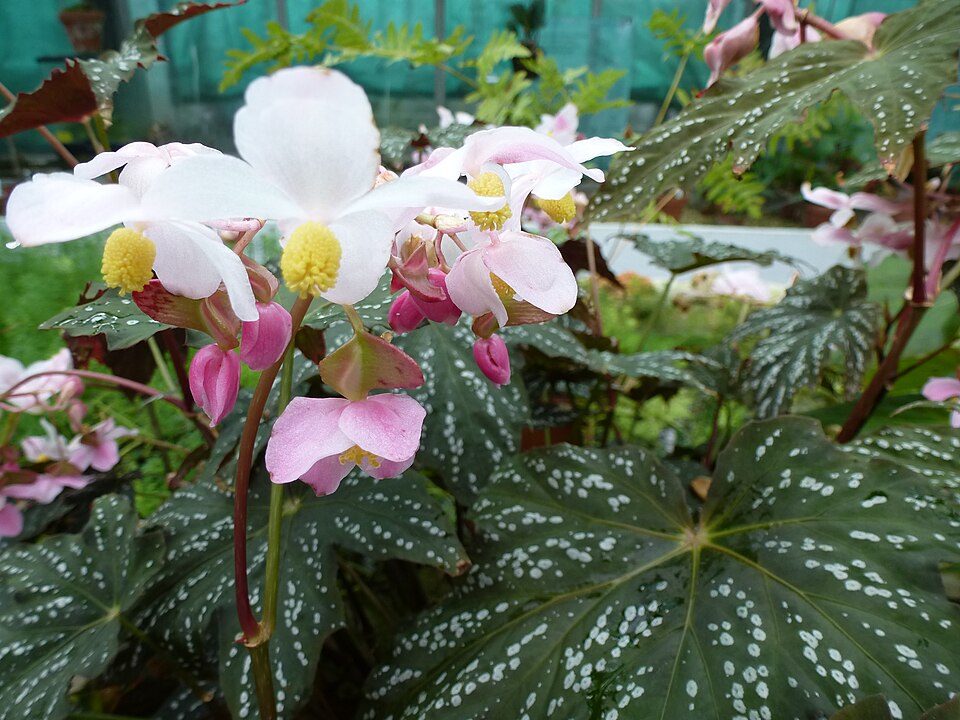
iNaturalist· cc-by-nc
(c) Karely Lagunes, some rights reserved (CC BY-NC), uploaded by Karely Lagunes
Summary
Source: WikipediaBegonia heracleifolia, the star begonia, is a species of flowering plant in the family Begoniaceae. It is native to Mexico and northern Central America, and has been introduced to Cuba, Hispaniola, Puerto Rico, and Trinidad and Tobago. A widespread species that is adapted to drought, it possesses considerable genetic and morphological variation, particularly in leaf shape and patterning.
Description
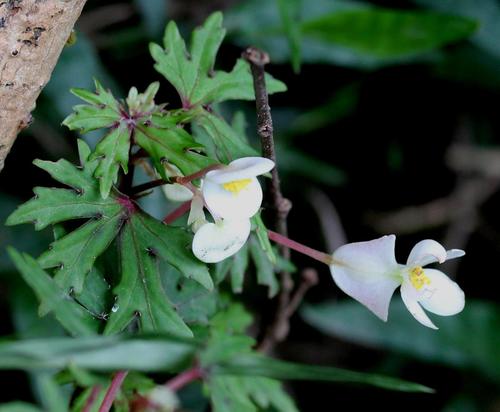
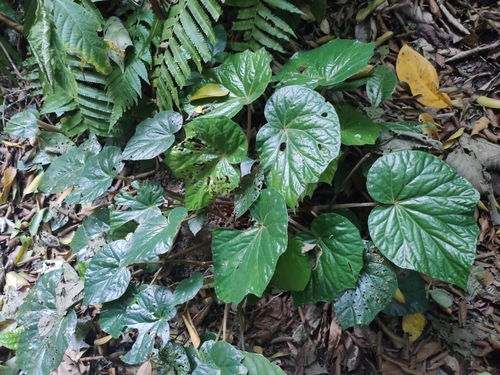
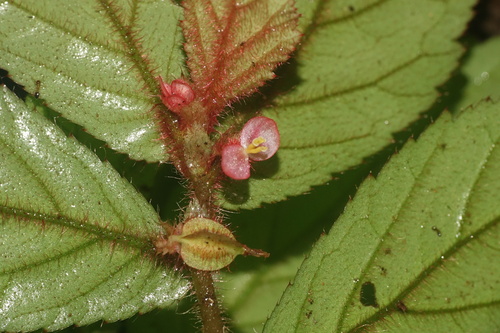
A herb. It grows 75 cm tall. It has rhizomes. The stems are creeping and branched. They are very hairy. The leaves are almost round and 26 cm across. They have lobes with pointy tips and arranged in a star shape or like fingers on a hand. There are 5-9 lobes. The base is deeply heart shaped. There are double teeth along the edge. They are dark green above and dark red underneath. The leaf stalk is 45 cm long. The flowers are in dense groups and are pink. They are in the axils of leaves. The fruit is oval and green and with 3 sections.
Edible Uses
The leaf stalks are edible and are sold in markets.
Distribution
It is a tropical plant. It grows between 800-1,300 m altitude in Mexico.
Where It Grows
Asia, Central America, Cuba, Dominican Republic, Haiti, Indonesia, Mexico*, North America, Puerto Rico, SE Asia, Vietnam, Virgin Islands, West Indies,
Cultivation
Plants can be grown from offsets. It can also be grown from seeds or stem cuttings.
Other Information
The leaf stalks are sold in markets.
Also Known As
Begonia daun bintang, Pesoxocoyolli, Spililixcutnie, Thuhaiduong la-thau-dau, Xkutn, Xocoyolli
References (7)
- Basurti-Pena, F., et al, 2003, Edible Begonias from the North of Puebla, Mexico. Economic Botany, Vol. 57, No. 1, pp. 48-53
- Kermath, B. M., et al, 2014, Food Plants in the Americas: A survey of the domesticated, cultivated and wild plants used for Human food in North, Central and South America and the Caribbean. On line draft. p 124
- Mapes, C. & Basurto, F., 2016, Biodiversity and Edible Plants of Mexico. Chapter 5 in R. Lira, et al. (eds.), Ethnobotany of Mexico, Ethnobiology, Springer. p 114
- Pena, F. B., et al, 1998, Los quelites de la Sierra Norte de Puebla, Mexico: Inventory Y Formas de Preparacion. Bol. Soc. Bot. Mexico 62:49-62
- Piedra-Malagón, E. M. et al, 2022, Edible native plants of the Gulf of Mexico Province. Biodiversity Data Journal 10: e80565 p 13
Show all 7 references Hide references
- Plants of Haiti Smithsonian Institute http://botany.si.edu
- Sukarya, D. G., (Ed.) 2013, 3,500 Plant Species of the Botanic Gardens of Indonesia. LIPI p 1074