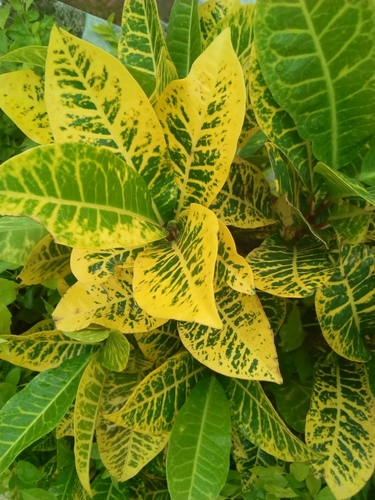
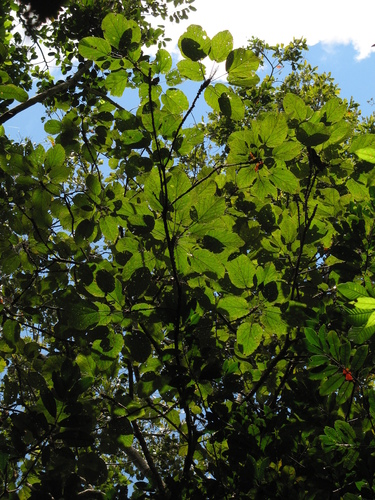
Acalypha hispida
Burm.f.
Copperleaf chenille, Red cattail
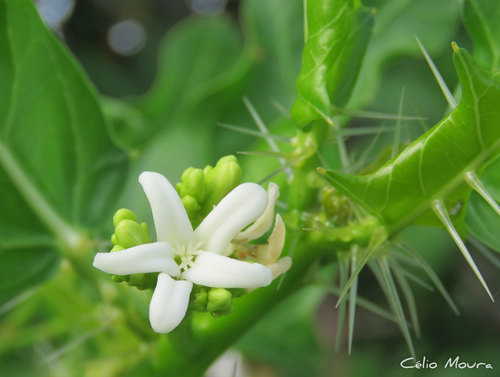
iNaturalist· cc-by-nc
(c) swgarnett, some rights reserved (CC BY-NC), uploaded by swgarnett
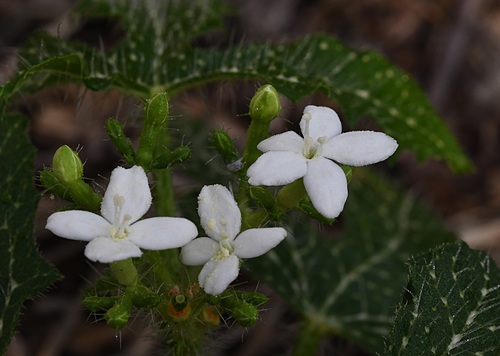
iNaturalist· cc-by-nc
(c) Parth Naik, some rights reserved (CC BY-NC)
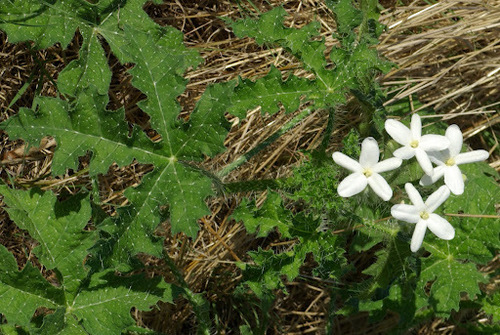
iNaturalist· cc-by-nc
(c) yariflores, some rights reserved (CC BY-NC)
Summary
Source: WikipediaAcalypha hispida, the chenille plant, is a flowering shrub which belongs to the family Euphorbiaceae, the subfamily Acalyphinae, and the genus Acalypha. Acalypha is the fourth largest genus of the family Euphorbiaceae, and contains many plants native to Oceania.
Description
A shrub or small tree. It grows 5 m tall. There are prickles along the stem. The leaves are twice divided and there are 8-18 pairs of pinnae. There are up to 50 pairs of pinnules on each pinnae. The flowers are yellow. They are in large clusters at the ends of branches. The pods are flattened.
Edible Uses
The leaves are edible.
Medicinal Uses
In Indonesia, the roots and flowers, fresh or in decoction, are considered a remedy for haemoptysis. The leaves and young shoots are antimicobial. They are used to treat thrush and skin rashes. Macerated in combination with green tobacco leaves (Nicotiana species) and an infusion of rice, they are used to treat inveterate ulcers. A poultice of the leaves is used in the treatment of leprosy. In Malaysia a decoction of the leaves and flowers is externally applied as an emollient to wounds and ulcers. Internally, it is used as a laxative and diuretic in treating gonorrhoea. The flowers are said to be specific in the treatment of diarrhoea and similar disorders, either boiled in water or administered in the form of a conserve. The bark is applied as an expectorant in the treatment of asthma.
Known Hazards
All parts of the plant are poisonous if ingested. The plant contains diterpene esters. Ingestion of the milky sap from the leaves and stems can cause nausea, vomiting, and diarrhoea, though toxicity is usually low. Skin irritation, however, can be severe. The sap can cause acute dermatitis after contact. Toxic Principle
Distribution
A tropical plant. It suits sheltered sites. It needs a warm location. It does not tolerate salt spray. It is damaged by frost and drought. It suits hardiness zones 10-12. In South America, it grows form sea level to 2,000 m above sea level. Adelaide Botanical Gardens. In XTBG Yunnan. Slovenia Botanical Gardens.
Where It Grows
Africa, Asia, Australia, Burkina Faso, Central America, China, Costa Rica, Dominican Republic, East Africa, Fiji, Haiti, Hawaii, India, Indochina, Indonesia, Kiribati, Malaysia, Marquesas, Mozambique, Myanmar, Niue, Pacific, Pakistan, Papua New Guinea*, PNG, Philippines, Rotuma, SE Asia, Taiwan, Thailand, Tuvalu, USA, Vanuatu, Vietnam, West Indies,
Cultivation
Plants can be grown from seeds. It can be grown by tip cuttings. It can be pruned back.
Propagation
Seed - only female forms of this plant are known, so seed is not produced. Cuttings of green shoots. Cuttings of semi-ripe wood.
Other Uses
The plant can be grown as a hedge.
Notes
There are over 450 Acalypha species. They are tropical. There are 225 in tropical America. This one is used in medicine.
Synonyms
Also Known As
Buntot pusa, Buntut kuching, Cola de gato, Ekur kuching, Ekor kucing merah, Hahng-kra-rok-daeng, Kabi, Kyaung-hmi-pan, Moorukonda, Red-hot cat-tail, Tai tuong duoi chon, Vattattali
References (18)
- Ambasta S.P. (Ed.), 2000, The Useful Plants of India. CSIR India. p 8
- Bodkin, F., 1991, Encyclopedia Botanica. Cornstalk publishing, p 38
- Brickell, C. (Ed.), 1999, The Royal Horticultural Society A-Z Encyclopedia of Garden Plants. Convent Garden Books. p 62
- Burkill, I.H., 1966, A Dictionary of the Economic Products of the Malay Peninsula. Ministry of Agriculture and Cooperatives, Kuala Lumpur, Malaysia. Vol 1 (A-H) p
- Cabalion, P. and Morat, P., 1983, Introduction le vegetation, la flore et aux noms vernaculaires de l'ile de Pentcoste (Vanuatu), In: Journal d'agriculture traditionnelle et de botanique appliquee JATBA Vol. 30, 3-4
Show all 18 references Hide references
- Cundall, P., (ed.), 2004, Gardening Australia: flora: the gardener's bible. ABC Books. p 81
- Engel, D.H., & Phummai, S., 2000, A Field Guide to Tropical Plants of Asia. Timber Press. p 122
- Etherington, K., & Imwold, D., (Eds), 2001, Botanica's Trees & Shrubs. The illustrated A-Z of over 8500 trees and shrubs. Random House, Australia. p 58
- Llamas, K.A., 2003, Tropical Flowering Plants. Timber Press. p 186
- Lord, E.E., & Willis, J.H., 1999, Shrubs and Trees for Australian gardens. Lothian. p 203
- Martin, F.W. & Ruberte, R.M., 1979, Edible Leaves of the Tropics. Antillian College Press, Mayaguez, Puerto Rico. p 48
- McMakin, P.D., 2000, Flowering Plants of Thailand. A Field Guide. White Lotus. p 16
- Plants of Haiti Smithsonian Institute http://botany.si.edu/antilles/West Indies
- Smith, A.C., 1981, Flora Vitiensis Nova, Lawaii, Kuai, Hawaii, Volume 2 p 462
- Staples, G.W. and Herbst, D.R., 2005, A tropical Garden Flora. Bishop Museum Press, Honolulu, Hawaii. p 280 (Drawing)
- Sukarya, D. G., (Ed.) 2013, 3,500 Plant Species of the Botanic Gardens of Indonesia. LIPI p 577
- Thaman, R. R, 2016, The flora of Tuvalu. Atoll Research Bulletin No. 611. Smithsonian Institute p 83
- Young, J., (Ed.), 2001, Botanica's Pocket Trees and Shrubs. Random House. p 51