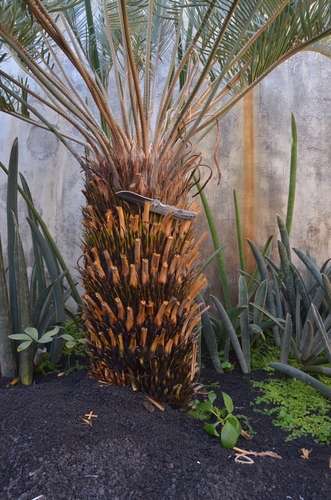
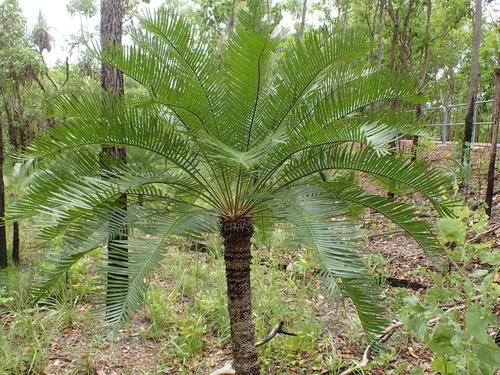
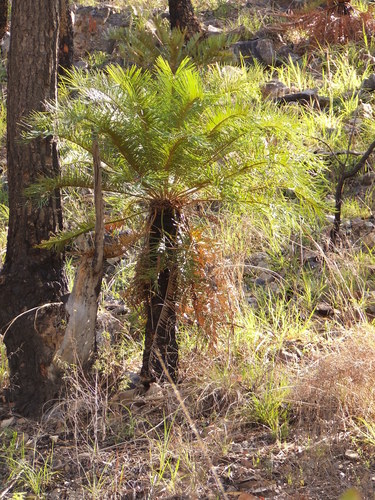
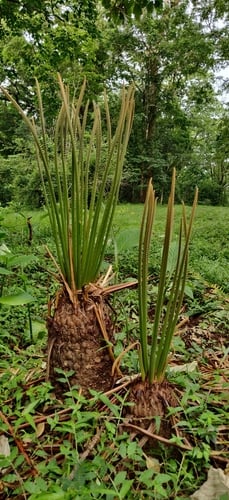
Cycas micronesica
K. D. Hill
iNaturalist· cc-by-nc
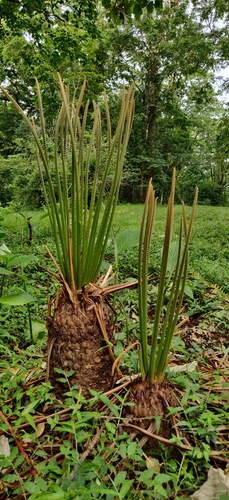
(c) USFWS - Pacific Region, some rights reserved (CC BY-NC)
iNaturalist· cc-by-nc
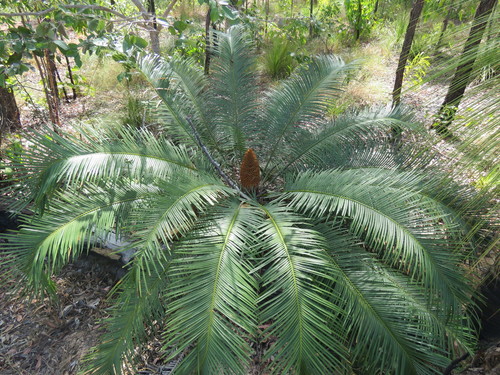
(c) nina.peck, some rights reserved (CC BY-NC)
Summary
Source: WikipediaCycas micronesica is a species of cycad found on the island of Yap in Micronesia, the Mariana islands of Guam and Rota, and The Republic of Palau. It is commonly known as federico nut or fadang in Chamorro. The species, previously lumped with Cycas rumphii and Cycas circinalis, was described as a unique species in 1994 by Ken Hill. Paleoecological studies have determined that Cycas micronesica has been present on the island of Guam for about 9,000 years. It has been implicated as a factor in Lytico-Bodig disease, a condition similar to amyotrophic lateral sclerosis (ALS), due to the presence of the neurotoxin BMAA found in its seeds. Seeds were a traditional food source on Guam until the 1960s. The neurotoxin is present due to a symbiosis with cyanobacteria.
Description
A palm-like tree native to tropical regions, with edible seeds in the Cycadaceae family.
This description is brief — help expand it
Edible Uses
Species in this genus are generally toxic unless the food is prepared correctly. See notes above on toxicity. On Guam and Rota in the Mariana Islands, the Chamorro Indians have traditionally used Cycas micronesica as a source of food and medicine. Although the local population was warned of the possible hazards involved with eating starch derived from cycads, its use persists. A flour is produced from the central pith of the stem or the endosperm of the seed. This substance is rich in starch but also contains a poisonous constituent that can cause paralysis in humans and other animals. The Chamorro first learned how to process and detoxify the seed and stem of this cycad from the Spanish around 1800 CE. Processing the material consists of chopping up the seeds or pith, soaking in water for 10 days, then drying and grinding into a powder. From this flour, tortillas can be made. The ovoid to subglobose, flattened, seeds are 50 - 60mm long, 45 - 50mm in diameter.
Traditional Uses
The seeds need to be fully mature and a leaching process undertaken.
This uses section is brief — help expand it
Known Hazards
We have no specific information for this species, but most if not all members of this genus are believed to contain toxins. The two main toxic compounds that have been identified are cycasin and macrozamin. When ingested in sufficient quantities, these compounds are extremely poisonous to humans and many other animals, and have been shown to cause liver damage and cancer. Cycasin and macrozamin have a cumulative effect upon the body and are suspected of causing neurological disorders when ingested in small amounts over long periods of time. There is a long history of human use of this genus as a starch-rich food, but it should be noted that the plants needed to be treated in various ways in order to remove any toxic principles. Caution should be exercised even with properly prepared foods, since even then regular consumption may lead to severe health problems and death. Since many of these species are becoming increasingly rare in the wild, this is probably a food best left to times of food shortage when other, better foods, are not available.
Distribution
It is a tropical plant.
Where It Grows
Guam, Pacific,
Cultivation
Cycas micronesica is a plant of tropical regions and is sensitive to frosts. An almost universal requirement for cycads is a well-drained but moisture-retentive soil, and by far the best soils are sandy gravels and light loams which provide the required drainage and aeration necessary for good growth. Cycads will generally not grow well in clay soils unless those soils are heavily amended with sand and organic matter. A neutral soil (pH 7), is generally best for most species of cycads and allows the proper absorption of nutrients. A slightly acid soil is better for most cycads than a basic one. In cultivation, this species is one of the fastest growing in the genus, and under the right conditions it will form large specimens in a very few years. Species in this genus can usually be transplanted easily even when quite large. The best time for moving them is just before the beginning of a new growing season, the roots being trimmed if they are damaged and perhaps some leaves being removed. New roots should develop quickly as the season progresses. Species in this genus form structures known as coralloid roots. These roots branch off from the taproot or secondary roots and are distinctive in that they grow laterally or upward, forming a nodular mass at the apex. These coralloid roots occur slightly below or slightly above the soil surface and generally contain cyanobacteria, also known as blue-green algae. These are able to fix atmospheric nitrogen and make it available as a nutrient to the plant. The ability to extract this important nutrient from the air explains how many cycad species are able to survive on almost sterile soils. A dioecious species, with individual plants producing either all male or all female cones. Therefore both male and female forms of the plant need to be grown if seed is required. On very rare occasions, usually when a plant has been under severe stress, it can change sex and produce either all female or all male cones.
Propagation
Seeds - best sown as soon as they are ripe, though the seeds of many species will take a few months to finish maturing the embryo before they are ready to germinate. The seeds can sometimes take 2 years to germinate. Sow the seeds in a tray in a freely-draining medium and place in moderate shade. Bottom heat at about 27°c will hasten seed germination dramatically. Young roots are quite brittle and once germination takes place, the root grows rapidly. It is important to pot up the seedlings at this time in order to give them enough root-space. Grow on the plants in pots until large enough to plant out. Division of off-sets or suckers is best carried out just before the plant comes in to new growth at the start of the growing season.
Synonyms
References (2)
- Marler, T. E., & Shaw, C. A., 2009, Free and glycosylated sterol bioaccumulation in developing Cycas micronesica seeds. Food Chem. 2009 July 15; 115(2): 615
- World Checklist of Useful Plant Species 2020. Royal Botanic Gardens, Kew