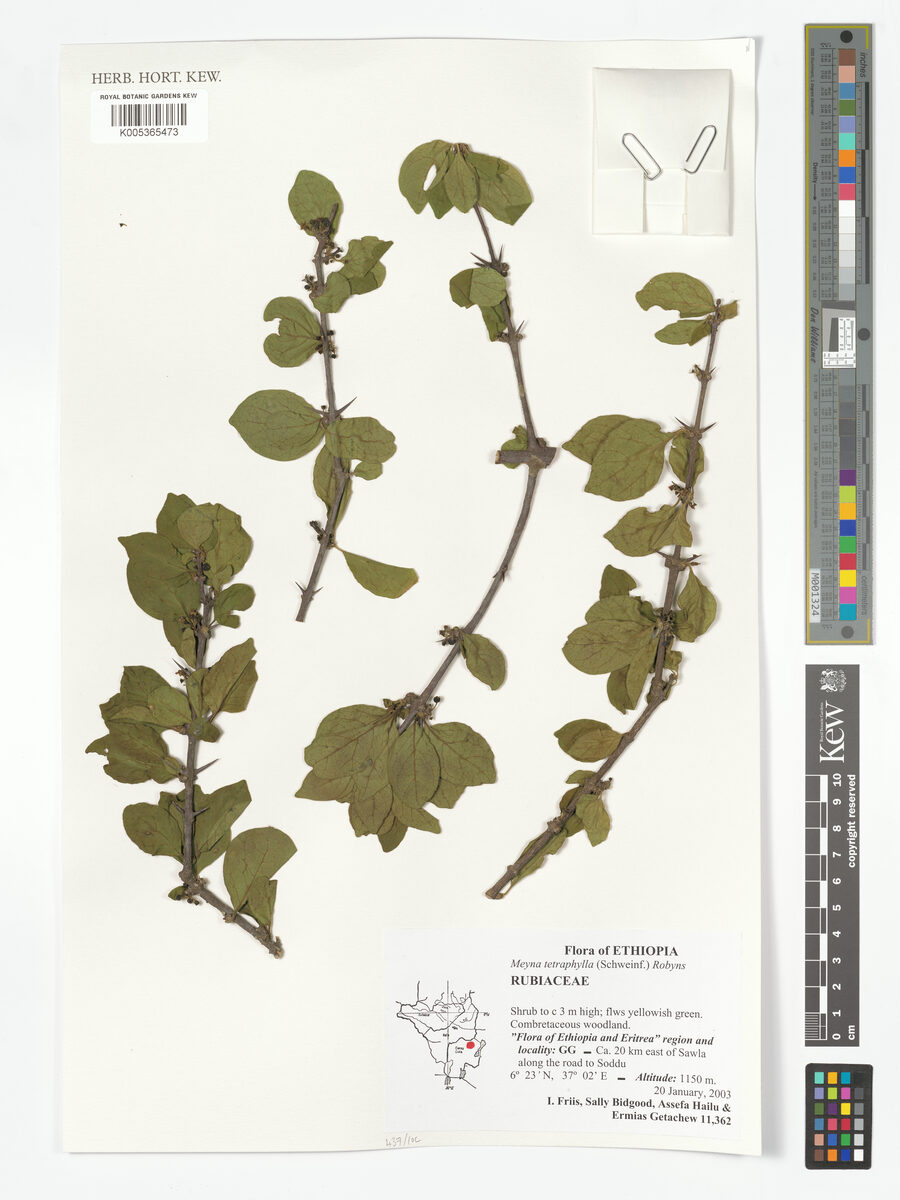
Bullockia setiflora
(Hiern) Razafim., Lantz & B. Bremer
Bristly canthium, Rough-leaved rock alder
iNaturalist· cc-by-nc
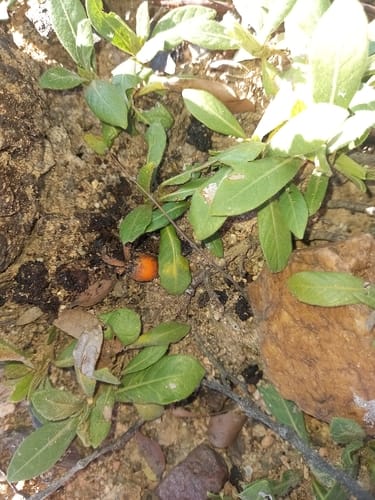
(c) Linda Loffler, some rights reserved (CC BY-NC), uploaded by Linda Loffler
iNaturalist· cc-by-nc
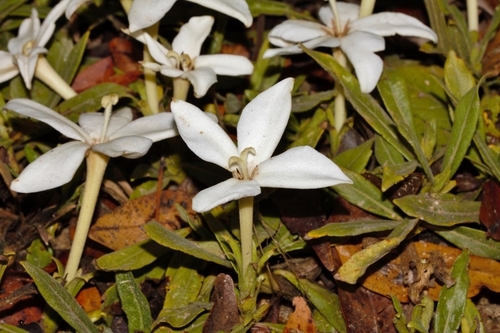
(c) Francois du Randt, some rights reserved (CC BY-NC), uploaded by Francois du Randt
Description
A small shrub or tree with several stems. It can be 4.5 m tall. They have smooth spreading branches. The bark is grey and smooth. The leaves are opposite and in clusters on small side shoots. They are sword shaped or oval. They are narrowly oval and 1-8 cm long by 1-2 cm wide. They are mid green above and more pale underneath. There are are pale hairs on both surfaces. The flowers are small, yellow and star like. There are 5-7 flowers together on slender stalks in the axils of leaves. The fruit are on short hairy stalks. They are pear shaped and 8-10 mm long. They have 2 lobes. They are black but yellow when ripe. They are edible.
Edible Uses
The fruit are eaten.
Traditional Uses
The fruit are eaten.
This uses section is brief — help expand it
Distribution
A tropical and subtropical plant. It occurs in deep sand and on the edges of forests along rivers. It can be in dune forest. It grows in deciduous woodland and sand forest. It is usually on rocky outcrops.
Where It Grows
Africa, East Africa, Eswatini, Kenya, Mozambique, South Africa, Southern Africa, Swaziland, Tanzania, Zimbabwe,
Notes
There are about 200 Canthium species.
Synonyms
Also Known As
Imejoi, Mng'orora, Rough-leaved turkey-berry
References (13)
- Cunningham, 1985, (As Canthium setiflorum)
- Fox, F. W. & Young, M. E. N., 1982, Food from the Veld. Delta Books. p 329 (As Canthium setiflorum)
- Ichikawa, M., 1980, The Utilization of Wild Food Plants by the Suiei Dorobo in Northern Kenya. J. Anthrop. Soc. Nippon. 88(1): 25-48 (As Canthium setiflorum)
- Johns, T., Mhoro, E. B. and Sanaya, P., 1996, Food Plants and Masticants of the Batemi of Ngorongoro District, Tanzania. Economic Botany, Vol. 50, No. 1, pp. 115-121 (As Canthium setiflorum)
- Long, C., 2005, Swaziland's Flora - siSwati names and Uses http://www.sntc.org.sz/flora/ (As Canthium setiflorum)
Show all 13 references Hide references
- Maundu, P. et al, 1999, Traditional Food Plants of Kenya. National Museum of Kenya. 288p (As Canthium setiflorum)
- Palgrave, K.C., 1996, Trees of Southern Africa. Struik Publishers. p 886 (As Canthium setiflorum)
- Palmer, E and Pitman, N., 1972, Trees of Southern Africa. Vol. 2. A.A. Balkema, Cape Town p 2105 (As Canthium setiflorum)
- Peters, C. R., O'Brien, E. M., and Drummond, R.B., 1992, Edible Wild plants of Sub-saharan Africa. Kew. p 168 (As Canthium setiflorum)
- Schmidt, E., Lotter, M., & McCleland, W., 2007, Trees and shrubs of Mpumalanga and Kruger National Park. Jacana Media p 620 (As Canthium setiflora)
- Swaziland's Flora Database http://www.sntc.org.sz/flora (As Canthium setiflorum)
- World Checklist of Useful Plant Species 2020. Royal Botanic Gardens, Kew
- www.theplant list.org