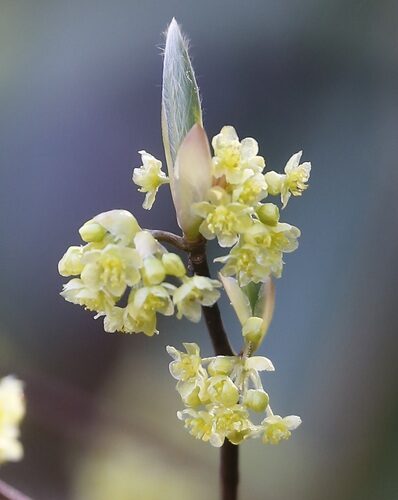
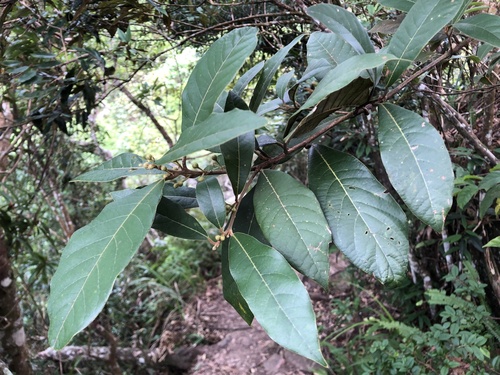
Litsea monopetala
(Roxb.) Pers.
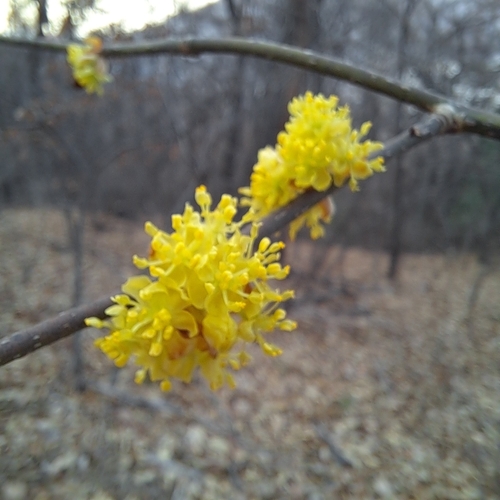
iNaturalist· cc-by-nc
(c) johnallcock, some rights reserved (CC BY-NC), uploaded by johnallcock
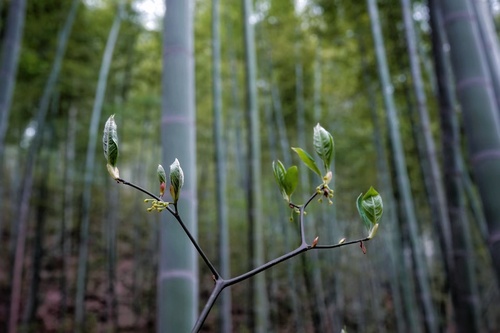
iNaturalist· cc-by-nc
(c) Hoi Wan MAK, some rights reserved (CC BY-NC)
Summary
Source: WikipediaLitsea monopetala is a plant in the family Lauraceae, native to China and tropical Asia. In Nepal, it is found in the regions from the Terai to 1450 m, in Shorea robusta forest and tropical evergreen forest. In India it is found in Assam, Odisha, Eastern Himalayas, Maharashtra (Pune, Sindhudurg) and Tamil Nadu (Coimbatore).
Description
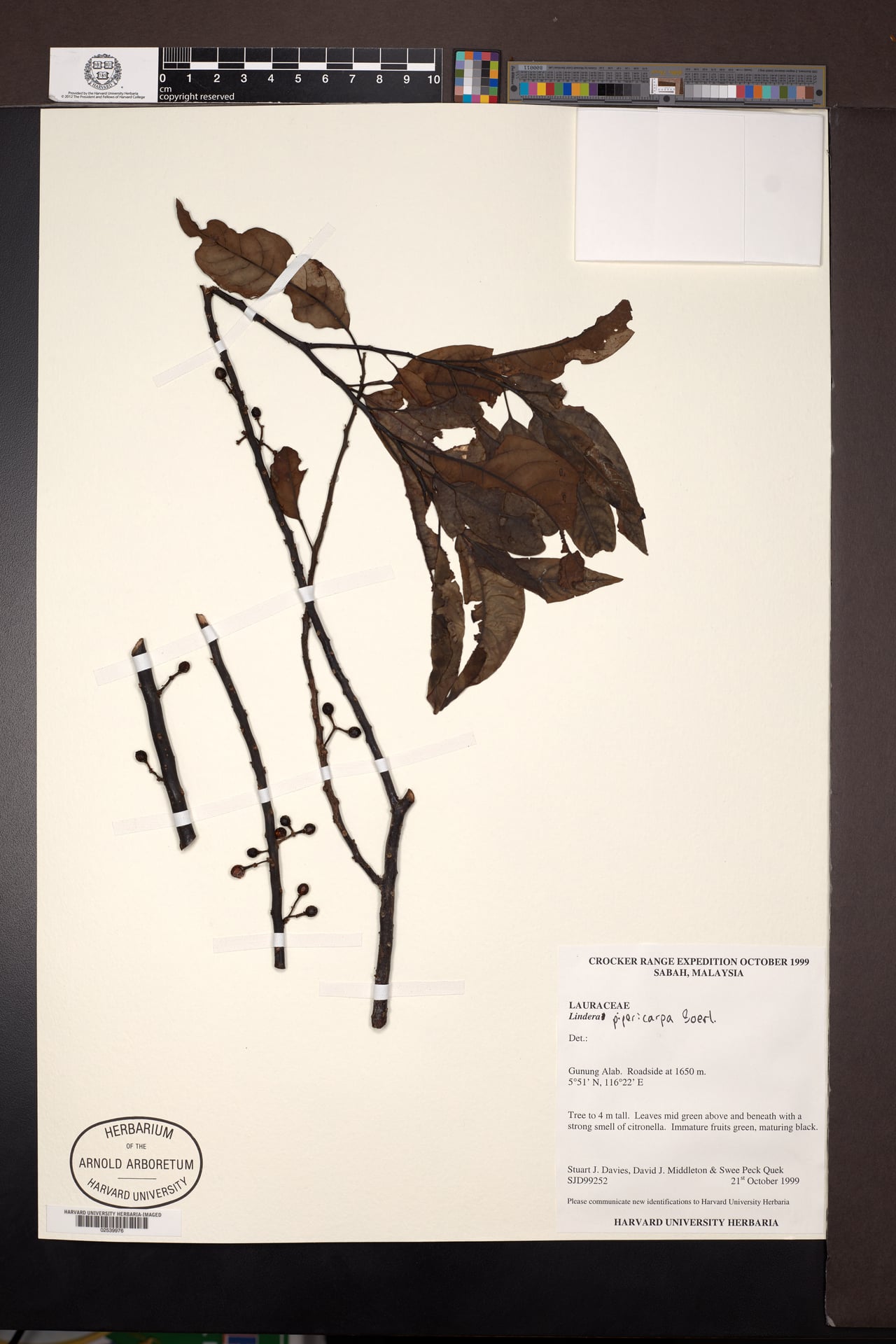
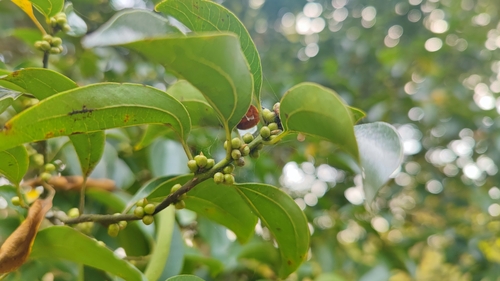
A tree. It grows 18 m tall. The trunk is 15 cm across. The branches are densely hairy. The leaves are alternate. They are broadly oval and 8-20 cm long by 4-12 cm wide. They are hairy underneath. There are 4-6 flowers in a group. The fruit are oval and 7 mm long by 5 mm wide and in a shallow tube.
Medicinal Uses
Litsea monopetala is a popular medicine in India, its medicinal properties being very similar to those of the better-known, and more largely employed, Litsea glutinosa (Lour.) C.B.Rob., the venacular names for which also strongly resemble and are sometimes identical with those of this species. The bark is mildly astringent, and has a considerable degree of balsamic sweetness. It is used by the hill people in the cure of diarrhoea. Together with the bark of Litsea glutinosa (Lour.) C.B.Rob., it is an officinal medication, being considered stimulant and, after being bruised, it is applied fresh or dry to contusions, and sometimes also mixed with milk and made into a plaster. The powdered bark is applied to the body as a remedy for pains arising from blows or bruises, or from hard work; it is also applied to fractures in animals. The leaves are used as a topical medicine for the treatment of arthritis, and for treating fractures and dislocations. The oil from the seed is used medicinally in India.
Distribution
It is a subtropical plant. In Sikkim it grows between 300-1,500 m above sea level.
Where It Grows
Asia, China, India, Nepal, Northeastern India, Sikkim,
Cultivation
A plant of the lowland tropics, able to succeed at elevations up to 1,500 metres. The leaves have a cinnamon-like smell when bruised. A dioecious species, both male and female forms need to be grown if fruit and seed are required.
Other Uses
The seed contains around 30% oil which is used for industrial purposes. An extract of the leaves is used as an ingredient in commercial cosmetic preparations as a skin conditioner. The olive-grey wood is soft, not durable, and is readily attacked by insects. Itis used for furniture, planks and tool handles. It is used as medang, e.g. for planks and tool handles.
Synonyms
Also Known As
Kutmero
References (2)
- Sundriyal, M. & Sundriyal, R. C., 2004, Structure, Phenology, Fruit Yield, and Future Prospects of some Prominent Wild Edible Plant Species of the Sikkim Himalaya, India. Journal of Ethnobiology 24(1): 113-138 (As Litsea polyantha)
- World Checklist of Useful Plant Species 2020. Royal Botanic Gardens, Kew