Litsea glutinosa
(Lour.) C. B. Robinson
Brown bollygum
iNaturalist· cc0
no rights reserved, uploaded by 葉子
iNaturalist· cc-by-nc
(c) camellialo, some rights reserved (CC BY-NC)
iNaturalist· cc-by-nc
(c) Russell Cumming, some rights reserved (CC BY-NC), uploaded by Russell Cumming
Summary
Source: WikipediaLitsea glutinosa is a rainforest tree in the laurel family, Lauraceae. Common names include soft bollygum, bolly beech, Bollywood, bollygum, brown bollygum, brown Bollywood, sycamore and brown beech. The powdered bark, known as jigat, may be used as an adhesive paste in incense stick production.
Description
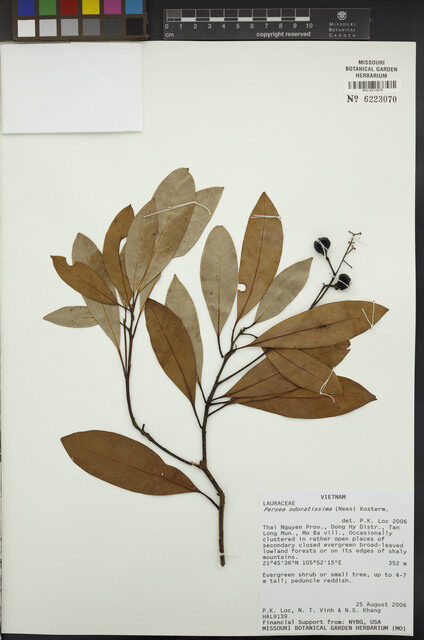
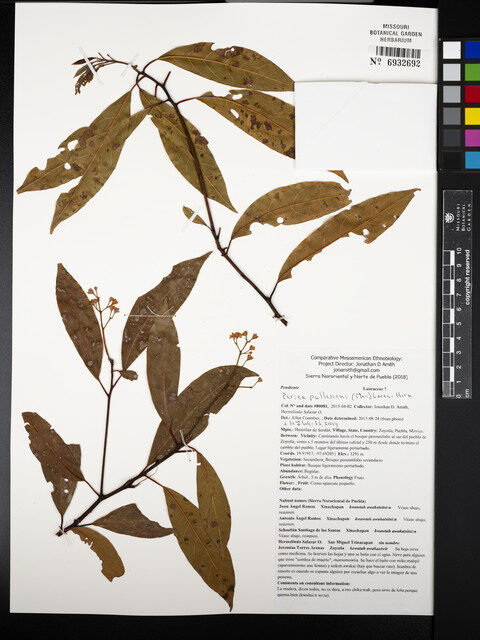
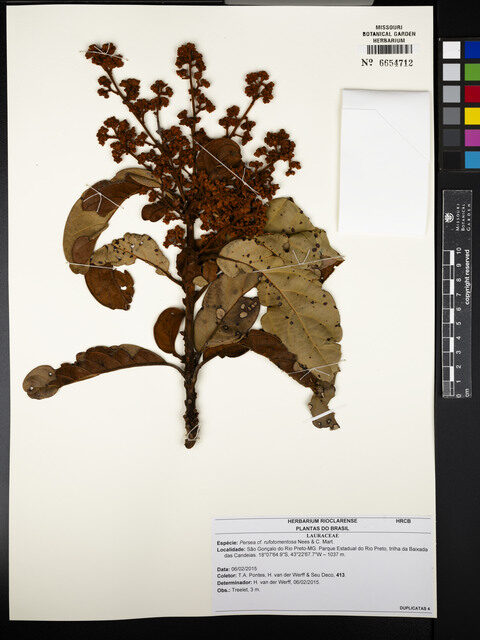
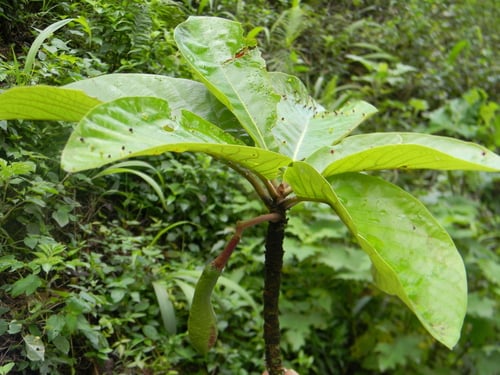
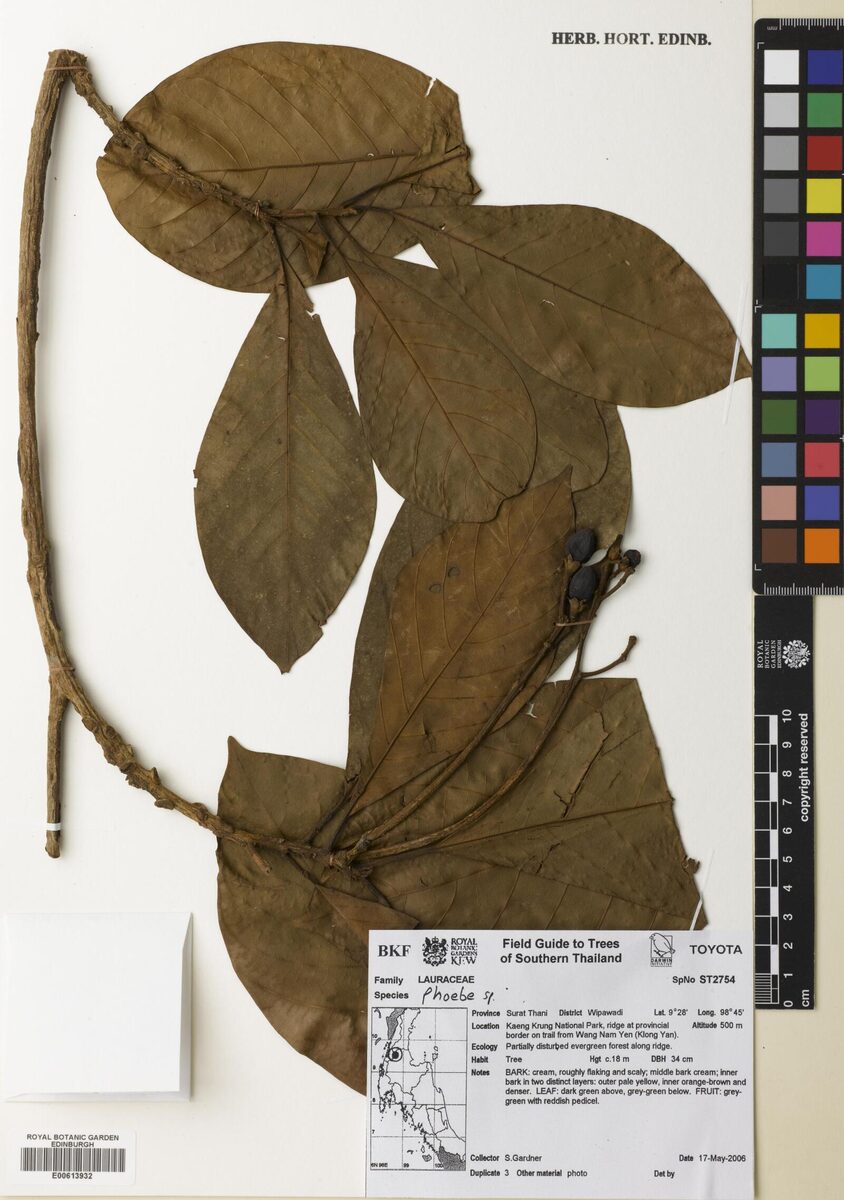
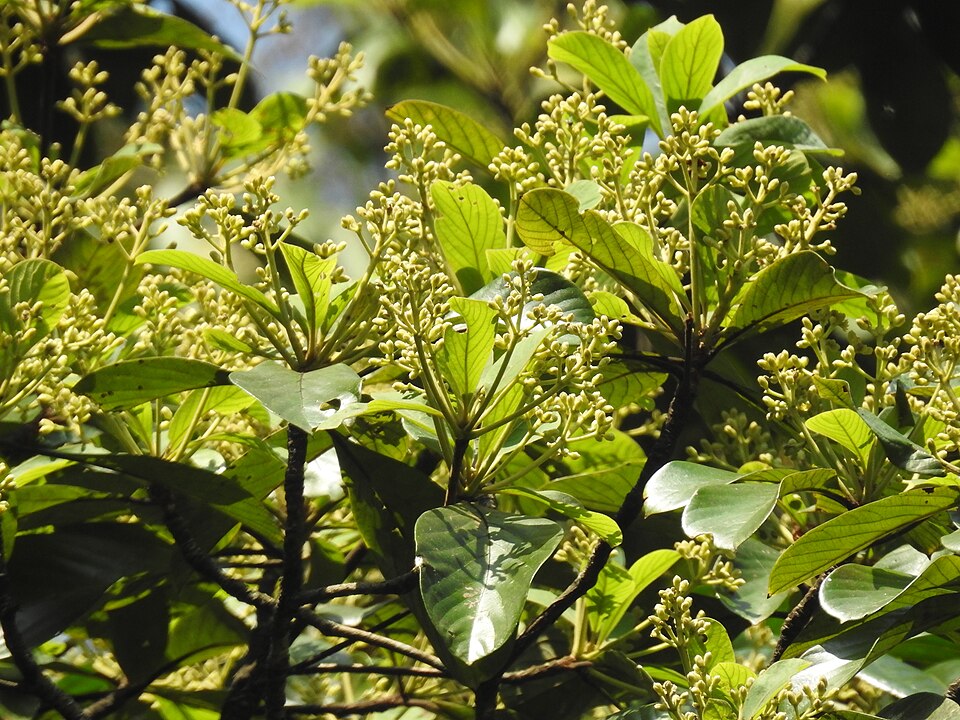
A tall shrub or small tree. It grows 6-10 m high and 3-5 m across. The young growth is sticky. The leaves are 7-28 cm long by 3-18 cm wide. They are dark green above and paler with white hairs underneath. They are leathery and taper to the tip. The flower groups are 1-4 cm long. There are 6-14 flowers clustered in the axils of the leaves. The flowers are 0.4 cm across and cream or green. They have a scent. The fleshy fruit is 0.8-1 cm long by 0.8-1.1 cm wide. They are black.
Edible Uses
The fruit has a sweet, creamy edible pulp.
Traditional Uses
The sweet pulp under the red skin is eaten.
This uses section is brief — help expand it
Medicinal Uses
The root bark and leaves are used to reduce fever, reduce swelling, and treat diarrhoea, and may also be used for furunculosis. The leaves and the mucilage from the bark gum have been made into poultices. The bark acts as a demulcent and mild astringent in treating diarrhoea and dysentery. Pounded seeds are applied externally to boils.
Distribution
It is a tropical plant. It northern Australia it grows from sea level to 600 m altitude. They need well drained soil and slight shade. It grows in coastal areas. In XTBG Yunnan.
Where It Grows
Asia, Australia, Bangladesh, Bhutan, Cambodia, China, East Timor, Himalayas, India, Indochina, Indonesia, Laos, Malaysia, Myanmar, Nepal, Northeastern India, Pacific, Papua New Guinea, PNG, Philippines, SE Asia, Sikkim, South Africa, Southern Africa, Sri Lanka, Thailand, Timor-Leste, Vietnam,
Cultivation
Plants can be grown from fresh seed. The seed are slow to germinate. This may take 6 months.
Propagation
Grow from seed; germination is not very rapid but around 85% germination is achieved within 15 to 45 days.
Other Uses
The bark and wood contain gluten and can be used as binders. The seed core contains around 50% oil, used in soap-making. The seeds also contain an aromatic oil used for candles and soap, though this likely refers to a fixed oil. The roots yield fibres suitable for rope manufacture and paper pulp. The yellow-brown wood is moderately hard and heavy, with a slightly crossed grain in narrow bands and a fine, dense texture; it is used for furniture. This species is among several southeast Asian Lauraceae that produce timber traded collectively as 'medang'. Medang heartwood ranges from light straw to red-brown and olive-brown, with an ill-defined sapwood. The texture is moderately fine and even, the grain interlocked or wavy, and the surface dull. The wood is soft to moderately hard and not very durable. It is easy to slightly difficult to resaw, easy to moderately easy to cross-cut, easy to plane, and yields a smooth to moderately smooth surface. It is suited to interior finishing, panelling, furniture, cabinet making, and plywood manufacture, with heavier specimens suitable for medium construction under cover. Use of this species as a fodder tree is particularly developed in Mayotte (Indian Ocean), where 93% of cattle farmers were reported to use its forage (Aubriot, 2011).
Production
Trees begin to bear fruit after 5-6 years.
Notes
There are 200 or 400 Litsea species.
Synonyms
Also Known As
Bagnara, Bolly beach, Chandra, Elumpurukki, Garbijaur, Garur, Heluka, Huru tangkalak, Jaisanda, Kawala, Kukur chita, Maeda lakari, Maida lakadi, Maida lakri, Mai-mi-myen, Mai-ong-tong, Malai, Malek, Meda lakri, Meda sak, Medh, Menda, Mushaippeyetti, Naramamidi, Narra alagi, Ondon, Pohon medang tangkalak, Ratun, Singrau, Soft bollygum, Suppatnyok, Tagu-shaw, Tulan, Uralli, Wuru lilin
References (16)
- Ambasta, S.P. (Ed.), 2000, The Useful Plants of India. CSIR India. p 334
- Burkill, I.H., 1966, A Dictionary of the Economic Products of the Malay Peninsula. Ministry of Agriculture and Cooperatives, Kuala Lumpur, Malaysia. Vol 2 (I-Z) p 1376
- Cooper, W. and Cooper, W., 2004, Fruits of the Australian Tropical Rainforest. Nokomis Editions, Victoria, Australia. p 264
- Cowie, I, 2006, A Survey of Flora and vegetation of the proposed Jaco-Tutuala-Lore National Park. Timor-Lests (East Timor) www.territorystories.nt/gov.au p 49
- Levitt, D., 1981, Plants and people. Aboriginal uses of plants on Groote Eylandt. Australian Institute of Aboriginal Studies, Canberra. p 97
Show all 16 references Hide references
- Melzer, R. & Plumb, J., 2011, Plants of Capricornia. Belgamba, Rockhampton. p 165
- Milow, P., et al, 2013, Malaysian species of plants with edible fruits or seeds and their evaluation. International Journal of Fruit Science. 14:1, 1-27
- Paczkowska, G. & Chapman, A.R., 2000, The Western Australian Flora. A Descriptive Catalogue. Western Australian Herbarium. p 278
- Palgrave, K.C., 1996, Trees of Southern Africa. Struik Publishers. p 177 (As Litsea sebifera)
- Pandy, R. K. & Saini, S. K., 2007, Edible plants of tropical forests among tribal communities of Madhya Pradesh. Indian Journal of Traditional Knowledge. 6(1), pp 185-190
- Pasha, M. K. & Uddin, S. B., 2019, Minor Edible Fruits of Bangladesh. Bangladesh J. Plant Taxon. 26(2): 299–313
- Singh, H.B., Arora R.K.,1978, Wild edible Plants of India. Indian Council of Agricultural Research, New Delhi. p 65
- Singh, V. B., et al, (Ed.) Horticulture for Sustainable Income and Environmental Protection. Vol. 1 p 217
- Sukarya, D. G., (Ed.) 2013, 3,500 Plant Species of the Botanic Gardens of Indonesia. LIPI p 363
- Wild edible plants of Himachal Pradesh
- World Checklist of Useful Plant Species 2020. Royal Botanic Gardens, Kew