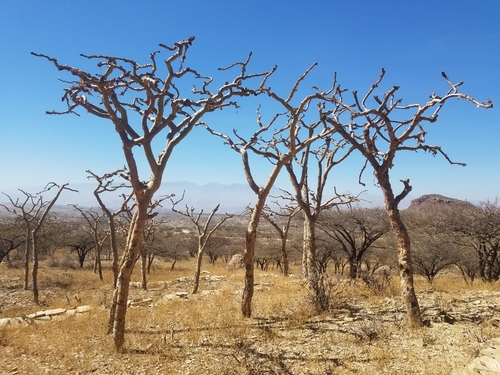
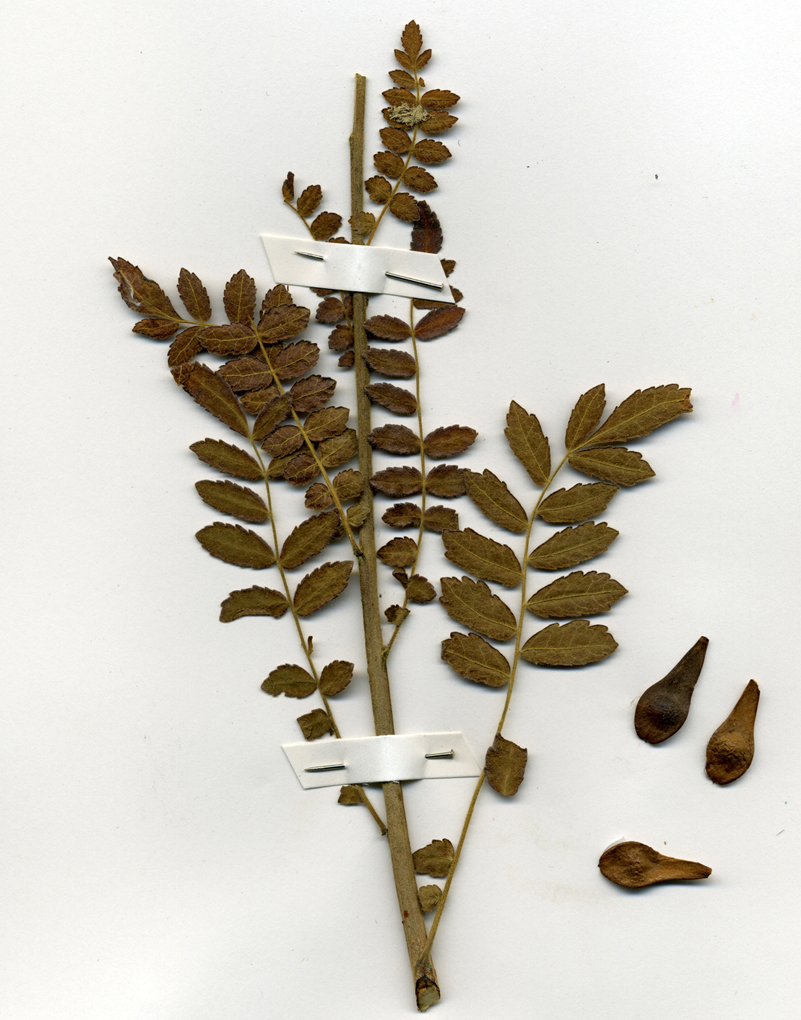
Dacryodes nitens
Cuatrec.
gbif· cc-by-sa
mila Dominici
Description
A tropical tree of the Burseraceae family that grows approximately 20 meters tall, with edible fruit.
This description is brief — help expand it
Edible Uses
We have seen no records regarding the edibility of this fruit, but most, if not all, members of the genus have a fruit with a soft, sweet flesh and are potentially edible. The fruit of this species is a light green, ovoid drupe up to 29mm long and 16mm wide. The flesh of the fruits in this genus usually adheres very strongly to the seed. When placed in hot (but not boiling) water at around 60 - 85°c the fruit softens and swells and all the flesh then slides easily off the seed.
Medicinal Uses
The bark is warmed and used as a bandage to bring relief to arthritic joints, swellings, and areas of muscular aches and pains. The juice of the inner bark is applied onto ringworm, sores on the skin, or other forms of skin rash as an antifungal agent. The inner bark is boiled and the water used as an antipruritic or as a herbal bath. The inner bark is used as a poultice to tie around persistent sores on the skin.
Distribution
It is a tropical plant.
Where It Grows
Amazon, Brazil, Colombia, Ecuador, Guyana, Peru, South America, Suriname,
Cultivation
A dioecious species, both male and female forms need to be grown if fruit and seed are required.
Other Uses
The wood is used as incense.
Also Known As
Ibapichuna, Tsaju kunchai
References (4)
- Jernigan, K. A., 1997, An Ethnobiological Exploration of Sensory and Ecological Aspects of Tree Identification among the Aguaruna Kivaro (Peru). PhD thesis. Athens, Georgia. p 201
- Kew Plants of the World onLine
- Lopez-Diago, D. & Garcia, N., 2021, Wild edible fruits of Colombia. Biota ColomBiana 22 (2) p 33
- Roa, J. A. G. & Boada, D. S. G., 2018, Fundación para el Fortalecimiento de la Fruticultura y Plantas Alimenticias no Convencionales en Colombia.