Lomatium parryi
(S. Wats.) J. F. Macbr.
Parry's biscuit root, Utah desert parsley
iNaturalist· cc-by-nc
(c) smccutch, some rights reserved (CC BY-NC), uploaded by smccutch
iNaturalist· cc-by-nc
(c) Remington Jackson, some rights reserved (CC BY-NC), uploaded by Remington Jackson
iNaturalist· cc-by-nc
(c) Corey Lange, some rights reserved (CC BY-NC), uploaded by Corey Lange
Summary
Source: WikipediaLomatium parryi, commonly known as Parry's biscuitroot and Utah desertparsley, is a perennial herb in the carrot family. It is a common herb in high altitude areas of deserts and common in desert national parks, such as the mountains surrounding Death Valley, in the western part of the United States. The species epithet parryi honors Charles Christopher Parry (1823–1890), the first official botanist for the U.S. Department of Agriculture who also served during the Union Pacific Eastern Division's 1867 survey of the American Southwest. During his survey expeditions, he gathered various species previously unknown to the scientific community.
Description
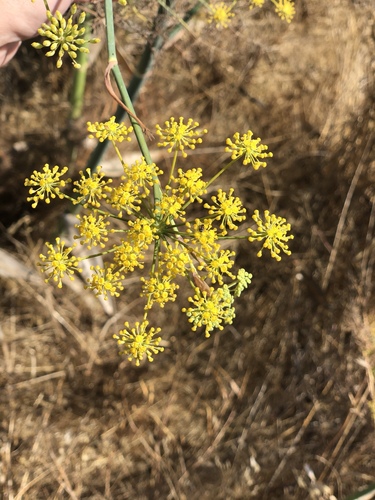
A herb with a taproot. It grows 20-40 cm tall. The leaves near the base are hairy and divided into many small segments. The flowers are yellow and in a rounded head 1-2 cm across. The fruit are flat and have side wings. This splits into two halves with one seed each.
Edible Uses
Lomatium parryi is a plant related to celery and carrots within the Apaceae family whose roots were harvested and consumed by early Native Americans. Lomatium parryi serves as a larval host plant for certain Papilio indra subspecies in their natural habitats and can be a food source in laboratory settings for rearing P. indra subspecies.
Distribution
It is a temperate plant. It grows at high altitudes in desert regions.
Synonyms
References (1)
- Wikipedia
More from Apiaceae
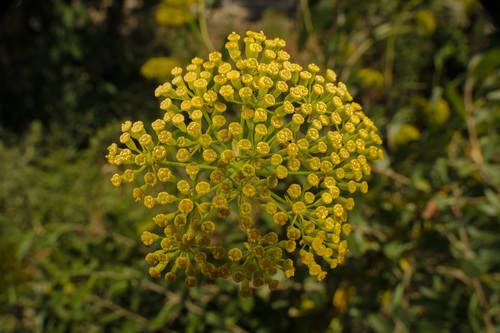
Foeniculum vulgare
Fennel, Common fennel
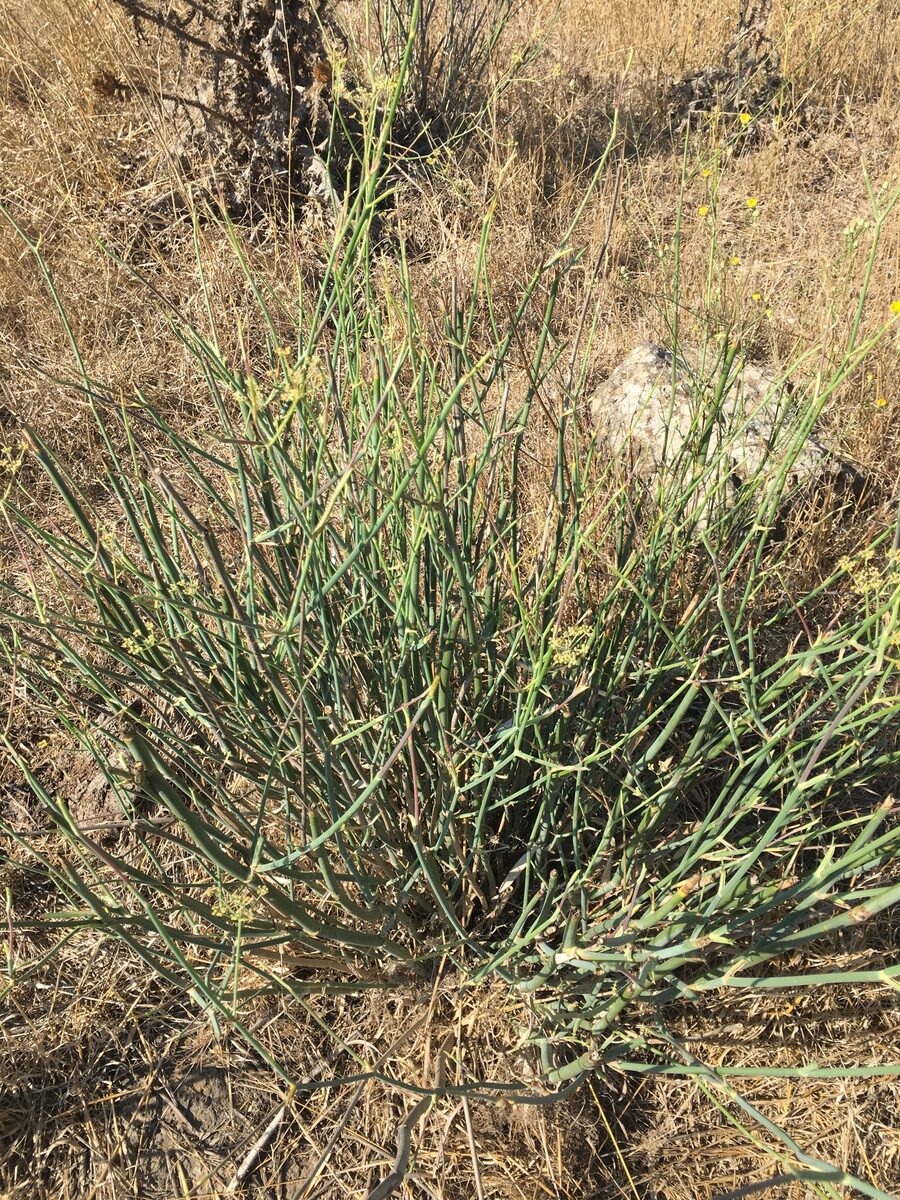
Foeniculum vulgare azoricum - (Mill.)Thell.
Florence Fennel
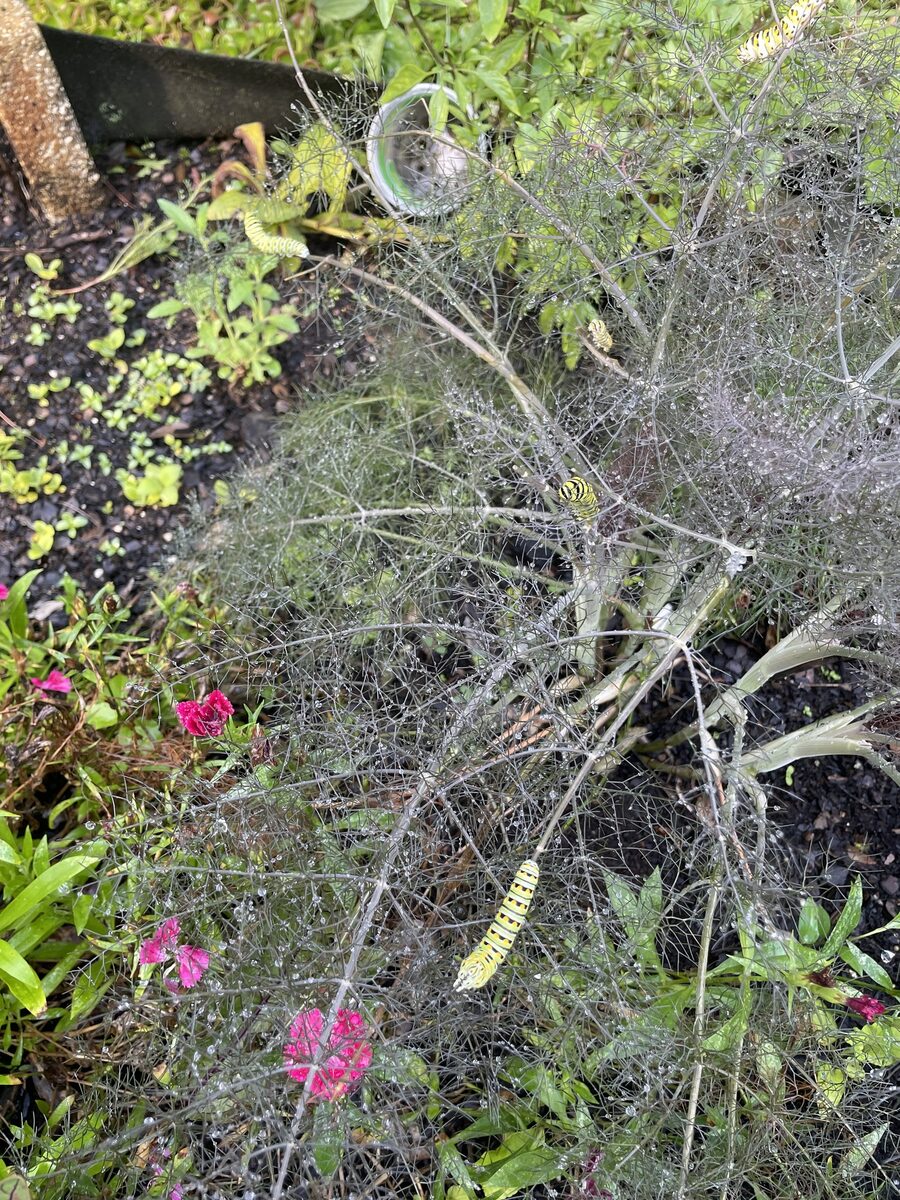
Foeniculum vulgare dulce - (Mill.)Batt.&Trab.
Sweet Fennel
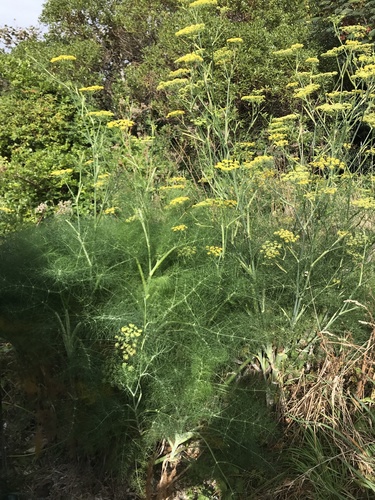
Foeniculum vulgare var. azoricum
Florence fennel, Fennochio, Finnochio
Foeniculum vulgare var. dulce
Sweet fennel, Finocchio
Geocaryum macrocarpum