Cuminum cyminum
L.
Cumin
iNaturalist· cc-by
(c) Herbolario Allium: www.alliumherbal.com, some rights reserved (CC BY)
iNaturalist· cc-by-sa
(c) राजू जांगिड़, some rights reserved (CC BY-SA)
iNaturalist· cc0
no rights reserved, uploaded by Peter de Lange
Summary
Source: WikipediaCumin is a fast-growing annual reaching 0.3 m (1 ft) tall and 0.2 m (8 inches) wide. It leafs from May to October with flowers appearing June to July, ripening seeds August to September. The plant is hermaphroditic and self-fertile, attracting insects. It thrives in light sandy, medium loamy, or heavy clay soils with good drainage, tolerating mildly acid to basic pH levels. Cumin requires full sun and can tolerate dry conditions or drought once established.
Description
A slender annual herb. It grows about 30-60 cm high. It spreads 30 cm wide. The stems are angular. The lower leaves have stalks and the upper leaves do not. The leaves are like fronds. They are divided into long narrow segments. The leaves are 10 cm long. The flowers are white. They occur in a compound umbel. The fruit is like a cylinder and has ridges. It is 4-5 mm long. It tapers at the ends and is only slightly curved.
Edible Uses
Cumin seed is used cooked as a flavouring. Once widely used in European cooking — the Romans ground it like pepper — it is now little used in Western cuisine but remains common in India. It has a hot, aromatic flavour and is an important ingredient in curries, used as a seasoning in soups and stews, and also used in biscuits, cakes, and bread, where it additionally aids digestion. Seeds are harvested fully ripe, then dried and stored in airtight jars. An essential oil from the seed is also used as a food flavouring. One tablespoon of cumin spice contains approximately 22 kcal (92 kJ), 1.34g fat, 2.63g carbohydrates, 0.6g fibre, and 1.07g protein.
Traditional Uses
The fruitlets are used as a spice. They are used whole or ground. They are common in curries and meat dishes. They are also used to flavour cheese, cakes and liqueurs. The oil is used to flavour sauces and sausages.
Medicinal Uses
Cumin is an aromatic, astringent herb that benefits the digestive system and acts as a stimulant to the sexual organs. It has been used for minor digestive complaints, chest conditions and coughs, as a painkiller, and to treat rotten teeth. Though largely superseded in Western herbal medicine by caraway — which has similar but more pleasant-flavoured properties — cumin remains widely used in India, where it is said to promote the assimilation of other herbs and improve liver function. The seed is antispasmodic, carminative, galactagogue, stimulant, and stomachic. As a general tonic to the digestive system, it treats flatulence and bloating, reduces intestinal gas, and relaxes the gut. In India it is also used for insomnia, colds, fevers, and improving milk production in nursing mothers. Ground into a powder and mixed into a paste with onion juice, it has been applied to scorpion stings. It is also used as a poultice externally to relieve stitch and pains in the side. The essential oil from the seed is antibacterial and larvicidal.
Known Hazards
May cause hypoglycaemia. Caution need for diabetics. Avoid if taking barbiturates
Distribution
A warm temperate to tropical plant. It suits hot climates. In Nepal it grows up to 400 m altitude. It needs full sun. It needs fertile, well-drained soils. It needs 3-4 warm months to ripen the seed. It suits hardiness zones 8-12.
Where It Grows
Afghanistan*, Africa, Algeria, Andaman Is., Arabia, Asia, Australia, Bangladesh, Benin, Britain, Bulgaria, Caucasus, China, East Africa, Egypt, Eritrea, Ethiopia, Europe, France, Greece, Himalayas, India, Indochina, Indonesia, Iran*, Iraq*, Japan, Kazakhstan, Laos, Lebanon, Libya, Madagascar, Malaysia, Mali, Malta, Mediterranean, Mexico, Middle East, Morocco, Myanmar, Nepal, Netherlands, North Africa, North America, Pakistan, Russia, Saudi Arabia, SE Asia, Sicily, Spain, Sri Lanka, Syria, Tasmania, Thailand, Tunisia, Turkey, Türkiye, USA, Uzbekistan, Middle East, West Africa, Xinjiang, Zambia,
Cultivation
An annual plant, it is cultivated from low elevations in the warm temperate to higher elevations in tropical zones. It does not do well in lowland areas of the tropics, but is successful at higher elevations, being grown up to 2,200 metres. It grows best in areas where annual daytime temperatures are within the range 17 - 26°c, but can tolerate 9 - 30°c. The plant is intolerant of frost. It prefers a mean annual rainfall in the range 1,200 - 1,800mm, but tolerates 800 - 2,700mm. Tolerant of most well-drained soils, though it prefers a warm fertile well-drained sandy loam in a sheltered sunny position. Prefers a pH in the range 5 - 6.5, tolerating 4.5 - 8.3. The plant can be harvested for its seed about 60 - 110 days after sowing. Seed yields can be 500 - 1,200 kilos per hectare. When bruised, the plant has a pungent aroma.
Propagation
Sow seed in early spring in individual pots in a greenhouse. Grow plants on quickly and plant out after the last expected frosts. Provide temporary protection such as a cloche for the first few weeks in open ground to maintain growth during the cooler weather of early summer.
Other Uses
The seed contains about 2.5% essential oil, which is used in perfumery and for flavouring beverages.
Production
The stems are harvested when the plant has finished flowering and before the fruit are ripe. These are dried before threshing. The seeds are rubbed to remove the hair like tails. The ground seeds produce a coarse textured, dark green, oily-feeling powder
Other Information
It is cultivated.
Notes
There are 2-4 Cuminum species.
Nutrition
| Part | Moisture | kJ | kcal | Protein | Vit A | Vit C | Iron | Zinc |
|---|---|---|---|---|---|---|---|---|
| Seed | 8.1 | 1567 | 375 | 17.8 | 127 | 7.7 | 66.4 | 4.8 |
Synonyms
Also Known As
Comino, Jeera, Jeerige, Jilakara, Jintan puteh, Jinten bodas, Jinten, Jira zeera, Jira, Jiraka jira, Jiraka, Jiregire, Jorekam, Kimyon, Komana, Kumin, Safed jeera, Siragam, Sududuru, Sulpha phul, Yeera, Zira-sufed
References (39)
- Ambasta, S.P. (Ed.), 2000, The Useful Plants of India. CSIR India. p 150
- Bianchini, F., Corbetta, F., and Pistoia, M., 1975, Fruits of the Earth. Cassell. p 100
- Bodkin, F., 1991, Encyclopedia Botanica. Cornstalk publishing, p 306
- Bremness, L., 1994, Herbs. Collins Eyewitness Handbooks. Harper Collins. p 245
- Brickell, C. (Ed.), 1999, The Royal Horticultural Society A-Z Encyclopedia of Garden Plants. Convent Garden Books. p 322
Show all 39 references Hide references
- Brown, D., 2002, The Royal Horticultural Society encyclopedia of Herbs and their uses. DK Books. p 186
- Burkill, I.H., 1966, A Dictionary of the Economic Products of the Malay Peninsula. Ministry of Agriculture and Cooperatives, Kuala Lumpur, Malaysia. Vol 1 (A-H) p 710
- Cheifetz, A., (ed), 1999, 500 popular vegetables, herbs, fruits and nuts for Australian Gardeners. Random House p 123
- Cobley, L.S. (rev. Steele, W.M.) 2nd Ed., 1976, An Introduction to the Botany of Tropical Crops. Longmans. p 249
- Cundall, P., (ed.), 2004, Gardening Australia: flora: the gardener's bible. ABC Books. p 442
- Esperanca, M. J., 1988. Surviving in the wild. A glance at the wild plants and their uses. Vol. 1. p 297
- Facciola, S., 1998, Cornucopia 2: a Source Book of Edible Plants. Kampong Publications, 18
- Fowler, D. G., 2007, Zambian Plants: Their Vernacular Names and Uses. Kew. p 76
- Gunes, S. et al, 2018, Survey of wild food plants for human consumption in Karaisali (Adana-Turkey). Indian Journal of Traditional Knowledge. Vol. 17(2), April 2018, pp 290-298
- Hedrick, U.P., 1919, (Ed.), Sturtevant's edible plants of the world. p 254
- Hemphill, I, 2002, Spice Notes. Macmillan. p 157
- Hibbert, M., 2002, The Aussie Plant Finder 2002, Florilegium. p 77
- Hutton, W., 1997, Tropical Herbs and Spices of Indonesia. Periplus. p 28
- Hu, Shiu-ying, 2005, Food Plants of China. The Chinese University Press. p 595
- Kew Plants of the World Online
- Khanal, R., et al, 2014, Documenting abundance and use of underutilized plant species in the mid hill region of Nepal. ECOPRINT 21: 63-71, 2014
- Kiple, K.F. & Ornelas, K.C., (eds), 2000, The Cambridge World History of Food. CUP p 433, 1765
- Kybal, J., 1980, Herbs and Spices, A Hamlyn Colour Guide, Hamlyn Sydney p 88
- Lazarides, M. & Hince, B., 1993, Handbook of Economic Plants of Australia, CSIRO. p 70
- Maiga, A., et al, 2005, Determination of Some Toxic and Essential Metal Ions in Medicinal and Edible Plants from Mali. Journal of Agricultural and Food Chemistry 53: 2316-2321
- Manandhar, N.P., 2002, Plants and People of Nepal. Timber Press. Portland, Oregon. p 179
- Menninger, E.A., 1977, Edible Nuts of the World. Horticultural Books. Florida p 81
- Ochse, J. J. et al, 1931, Vegetables of the Dutch East Indies. Asher reprint. p 709
- Owen, S., 1993, Indonesian Food and Cookery, INDIRA reprints. p 61
- Plants for a Future database, The Field, Penpol, Lostwithiel, Cornwall, PL22 0NG, UK. http://www.scs.leeds.ac.uk/pfaf/
- Purseglove, J.W., 1968, Tropical Crops Dicotyledons, Longmans. p 650
- Seidemann J., 2005, World Spice Plants. Economic Usage, Botany, Taxonomy. Springer. p 124
- Solomon, C., 2001, Encyclopedia of Asian Food. New Holland. p 112
- Sp. pl. 1:254. 1753
- Tyagi, R. K., et al, 2004, Conservation of Spices Germplasm in India. Indian J. Plant Genet. Resour. 17(3): 163-174
- van Wyk, B., 2005, Food Plants of the World. An illustrated guide. Timber press. p 164
- Wiersema, J. H. & Leon, B., 2013, World Economic Plants. A Standard Reference CRC Press. 2nd Ed. p 218
- World Checklist of Useful Plant Species 2020. Royal Botanic Gardens, Kew
- Zeven, A. C. & de West, J. M. J., 1982, Dictionary of cultivated plants and their regions of diversity. Wageningen. p 101, 119
More from Apiaceae
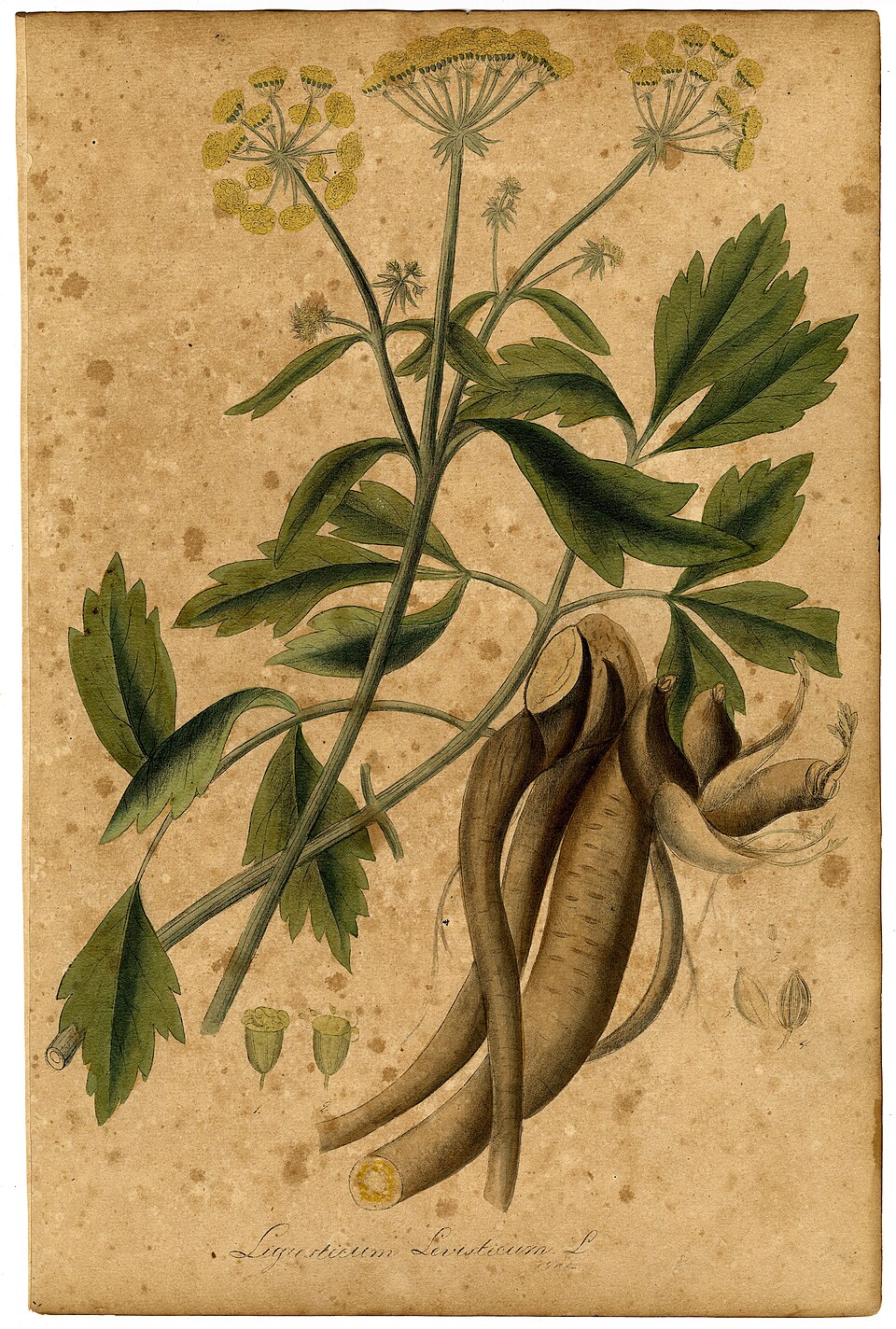
Ligusticum officinale
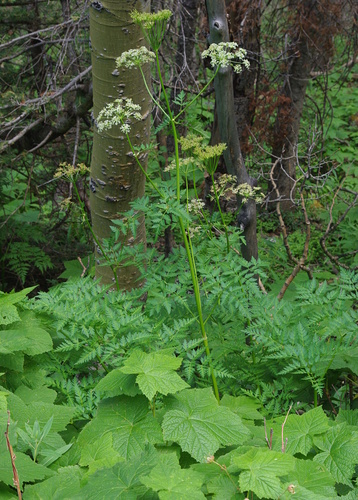
Ligusticum porteri
Porter's licorice root
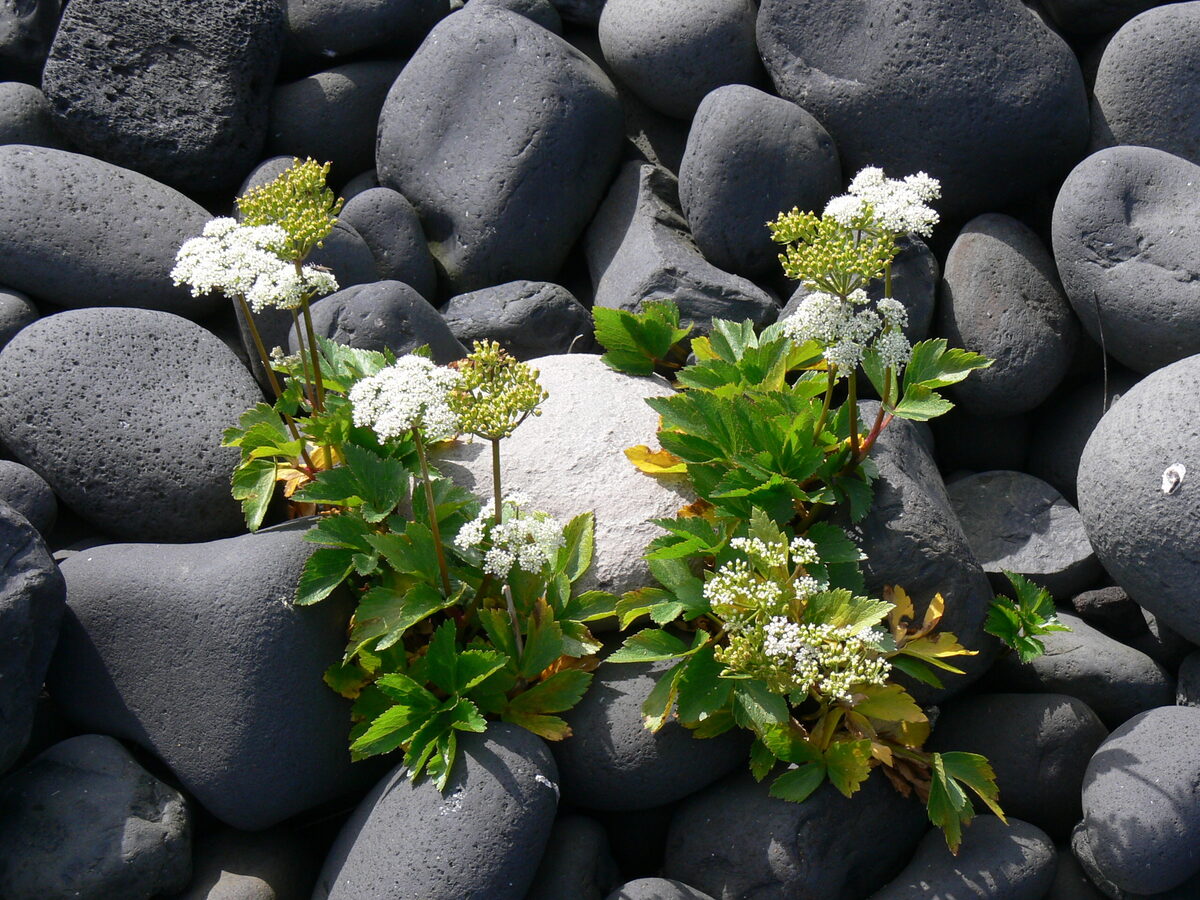
Ligusticum scoticum
Scottish Lovage, Scottish licorice-root, Hulten's licorice-root
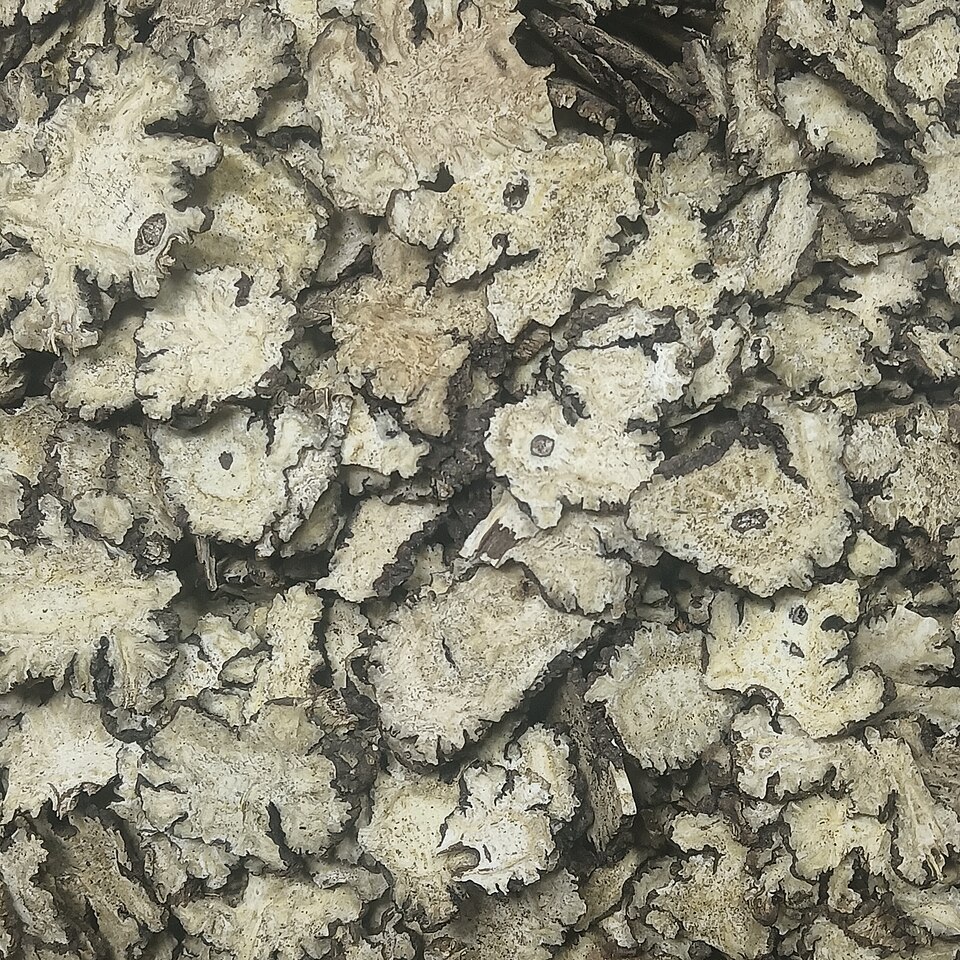
Ligusticum sinense
Chinese lovage, Mountain coriander
Ligusticum tenuissimum
Kobon
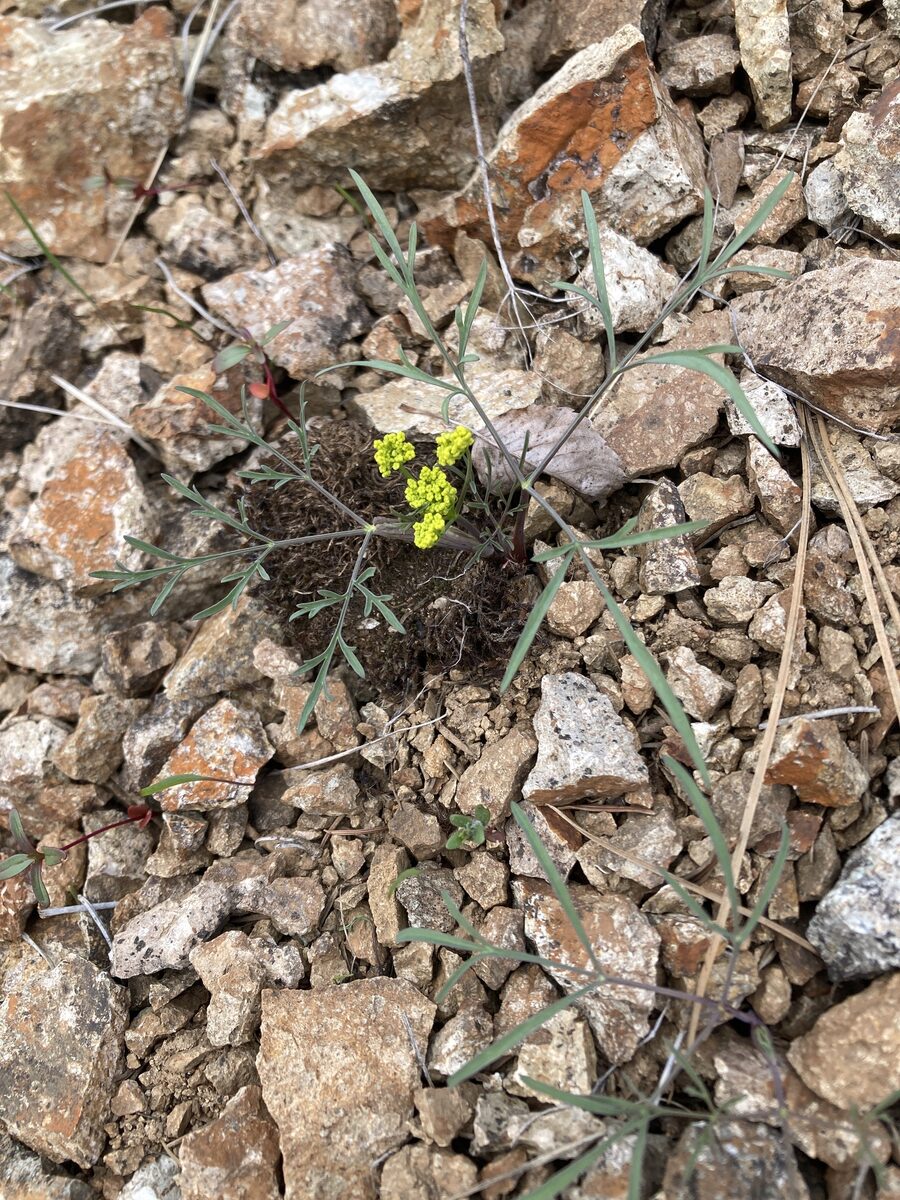
Lomatium ambiguum - (Nutt.)Coult.&Rose.
Biscuitroot, Wyeth biscuitroot