Capparis moonii
Wight
Large caper
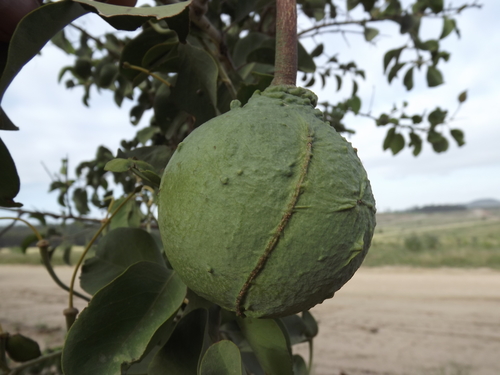
iNaturalist· cc-by-nc
(c) Mayuresh Kulkarni, some rights reserved (CC BY-NC), uploaded by Mayuresh Kulkarni
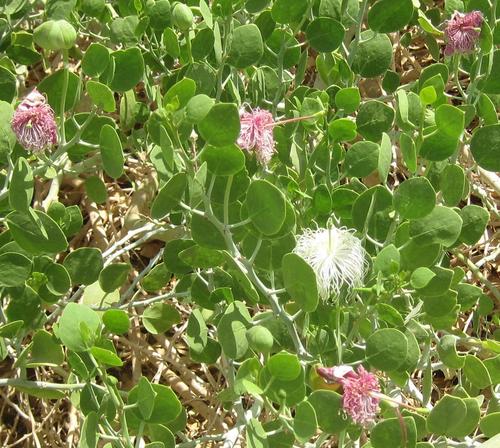
iNaturalist· cc-by-sa
(c) Dinesh Valke, some rights reserved (CC BY-SA)
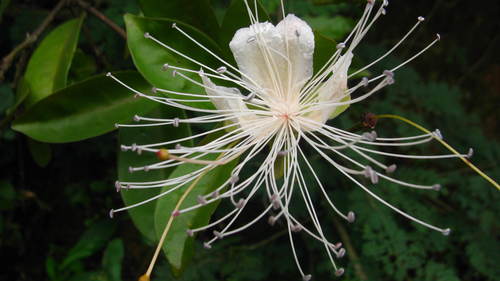
iNaturalist· cc-by-sa
(c) Dinesh Valke, some rights reserved (CC BY-SA)
Summary
Source: WikipediaCapparis moonii is a woody climber, belonging to the family Capparaceae which is native to India and Sri Lanka. It was described by Robert Wight in his Illustrations of Indian Botany in 1840.
Description
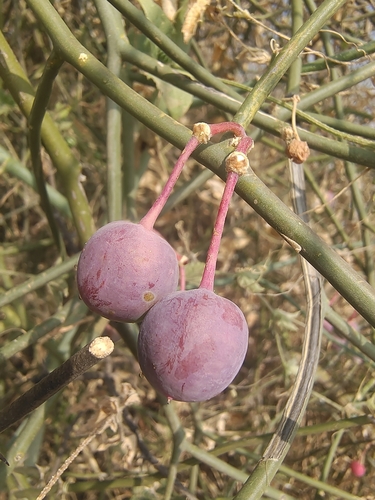
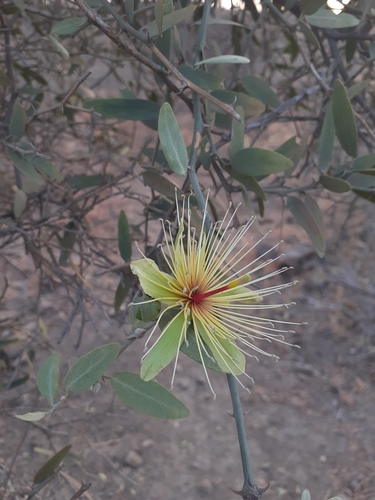
A woody climbing shrub. It grows 3-5 m tall and can spread 10 m wide. The stems are woody at the base and 10-15 cm across. The leaves are 9-12 cm long by 3-5 cm wide. The flowers are in corymbs at the ends of branches. The fruit are reddish-brown and round. The flesh is bright red.
Edible Uses
The leaves and bark are used in curries. The viscous, pulpy flesh of the fruit is white or creamy at first, turning deep scarlet upon exposure. The reddish-brown, globose or subglobose fruit is about 130mm long and 100mm wide. Whilst the fruits of many species in thei genus are eaten, there are no records of the fruit of this species being edible.
Traditional Uses
The leaves and bark are used in curries. The fruit is used as medicine.
This uses section is brief — help expand it
Medicinal Uses
The fruit is used medicinally and is considered to have benefits against bacteria and TB.
Distribution
It is a tropical plant. It occurs in the Western Ghats in India.
Where It Grows
Asia, India, Sri Lanka,
Other Uses
An extract of the fruit is used in commercial cosmetic preparations as an antimicrobial and antioxidant.
Notes
It is considered to have medicinal benefits against bacteria and TB.
Also Known As
Rudanti
References (2)
- Ferns, Useful Tropical Plants
- Indian J Medicinal Science 1962