Capparis sepiaria var. fischeri
L.; (Pax.) De Wolf.
Bumble
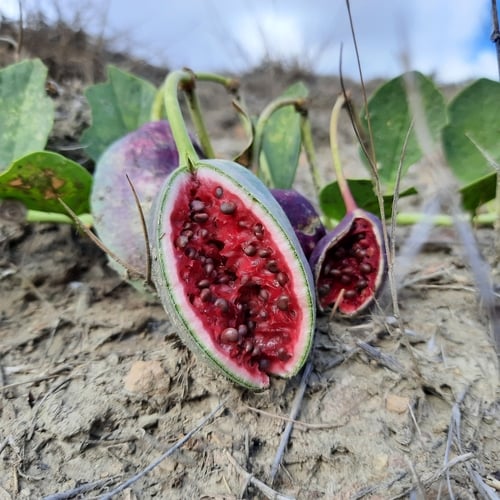
iNaturalist· cc-by-nc
(c) annaavinger, some rights reserved (CC BY-NC)
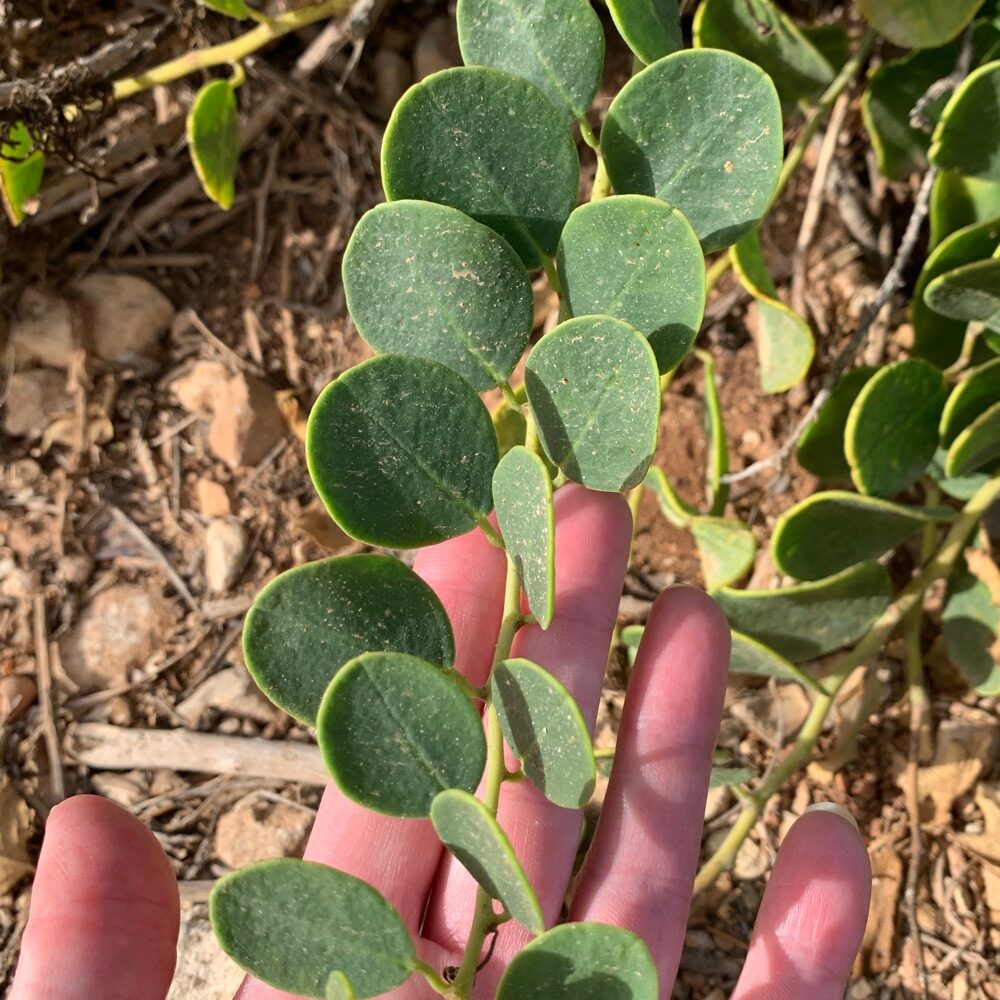
iNaturalist· cc-by-nc
(c) Bart Wursten, some rights reserved (CC BY-NC), uploaded by Bart Wursten
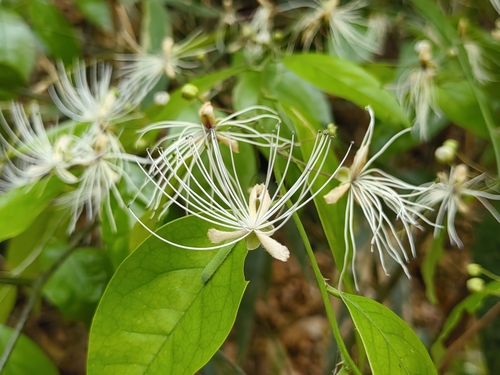
iNaturalist· cc-by-nc
(c) Sandra Falanga, some rights reserved (CC BY-NC), uploaded by Sandra Falanga
Summary
Source: WikipediaCapparis sepiaria, also commonly called hedge caper or wild caper bush, is a shrub that has a pantropical distribution, especially in dry deciduous forests, foothills and scrub jungles.
Description
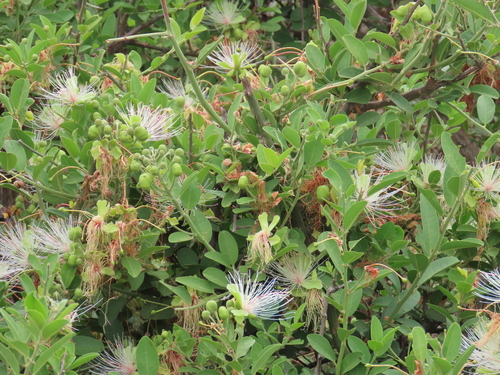
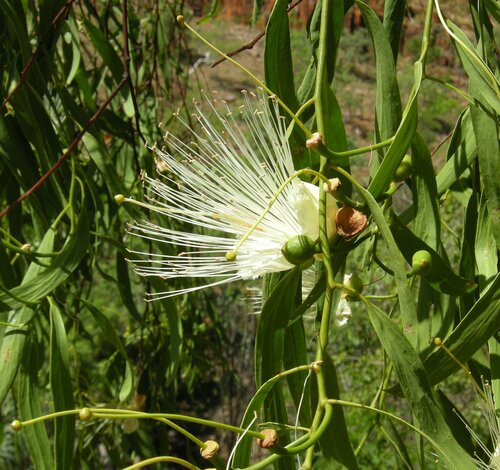
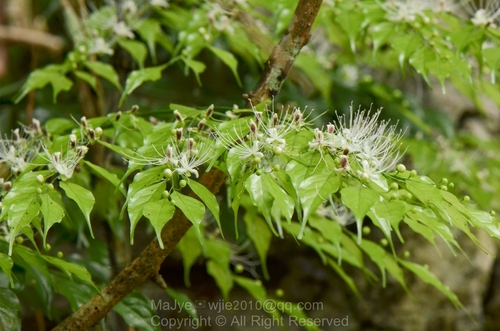
A shrub. It can be a scrambler. It grows 1-3 m high. The branches have small spines which curve backwards. The leaves are like membranes. They are oval and leathery. They are 2.5-7 cm long. The flowers are white or cream. They are 2 cm across. The flowers are on stalks 2 cm long and in clusters at the ends of branches. The fruit are berries. They are yellowish to black and 2 cm across. They contain 1-4 seeds. The seeds are kidney shaped and 4 mm long.
Edible Uses
The fruit are eaten and have been used as a famine food. The leaves are also listed as edible.
Traditional Uses
The fruit are eaten. CAUTION: There are reports that the leaves may be poisonous.
This uses section is brief — help expand it
Known Hazards
There are reports that the leaves may be poisonous.
Distribution
A tropical plant. It grows in coastal scrubs in tropical areas. It requires a well drained soil and sunny location. It grows in the Sahel savannah. It can grow from sea level to 1,600 m above sea level. It can grow in arid places.
Where It Grows
Africa, Asia, Australia, Burkina Faso, Cameroon, Central Africa, Chad, East Africa, Ghana, Kenya, India, Indochina, Mali, Mauritania, Niger, Nigeria, Sahel, SE Asia, Senegal, Sudan, Tanzania, Vietnam, West Africa, Zambia,
Cultivation
Plants can be grown from seed or cuttings.
Other Information
They are a famine food.
Notes
There are about 250 Capparis species. There are about 50 Capparis species in tropical America.
Synonyms
Also Known As
Diemar, Gedh-chala, Gora, Gurso, Itandamboo, Janibaibai, K 'abdobo, Muthandambogo, Silikoore
References (17)
- Burkill, H. M., 1985, The useful plants of west tropical Africa, Vol. 1. Kew.
- Cooper, W. and Cooper, W., 2004, Fruits of the Australian Tropical Rainforest. Nokomis Editions, Victoria, Australia. p 110
- Elliot, W.R., & Jones, D.L., 1982, Encyclopedia of Australian Plants suitable for cultivation. Vol 2. Lothian. p 460
- Facciola, S., 1998, Cornucopia 2: a Source Book of Edible Plants. Kampong Publications, p 71
- Flora of Australia, Volume 8, Lecythidales to Batales, Australian Government Publishing Service, Canberra (1982) p 214
Show all 17 references Hide references
- Fowler, D. G., 2007, Zambian Plants: Their Vernacular Names and Uses. Kew. p 78
- Grubben, G. J. H. and Denton, O. A. (eds), 2004, Plant Resources of Tropical Africa 2. Vegetables. PROTA, Wageningen, Netherlands. p 560
- Kenneally, K.E., Edinger, D. C., and Willing T., 1996, Broome and Beyond, Plants and People of the Dampier Peninsula, Kimberley, Western Australia. Department of Conservation and Land Management. p 80
- Levitt, D., 1981, Plants and people. Aboriginal uses of plants on Groote Eylandt, Australian Institute of Aboriginal Studies, Canberra. p 87
- MORTIMORE,
- Paczkowska, G. & Chapman, A.R., 2000, The Western Australian Flora. A Descriptive Catalogue. Western Australian Herbarium. p 194 (Capparis sepiaria)
- Pham-Hoang Ho, 1999, An Illustrated Flora of Vietnam. Nha Xuat Ban Tre. p 594
- Royal Botanic Gardens, Kew (1999). Survey of Economic Plants for Arid and Semi-Arid Lands (SEPASAL) database. Published on the Internet; http://www.rbgkew.org.uk/ceb/sepasal/internet [Accessed 7th April 2011]
- Singh, V. and Singh, P., 1981, Edible Wild Plants of Eastern Rajasthan. J. Econ. Tax. Bot. Vol 2 pp 197-207
- Townsend, K., 1994, Across the Top. Gardening with Australian Plants in the tropics. Society for Growing Australian Plants, Townsville Branch Inc. p 121
- Vivien, J., & Faure, J.J., 1996, Fruitiers Sauvages d'Afrique. Especes du Cameroun. CTA p 101
- Wheeler, J.R.(ed.), 1992, Flora of the Kimberley Region. CALM, Western Australian Herbarium, p 258