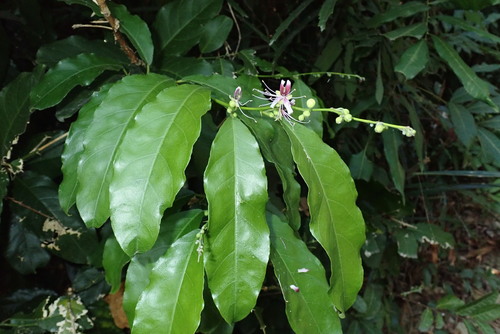
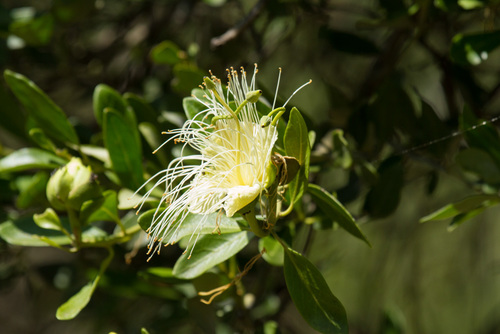
Capparis sarmentosa
A. Cunn. ex Benth.
Scrambling caper
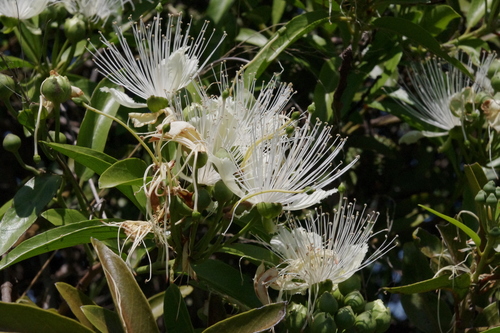
iNaturalist· cc-by-nc
(c) Sylvia Alexander, some rights reserved (CC BY-NC), uploaded by Sylvia Alexander
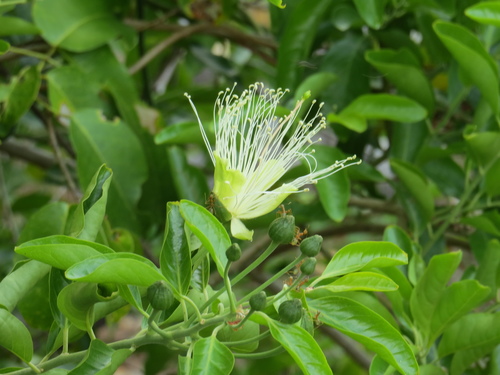
iNaturalist· cc-by-sa
(c) Greg Tasney, some rights reserved (CC BY-SA), uploaded by Greg Tasney
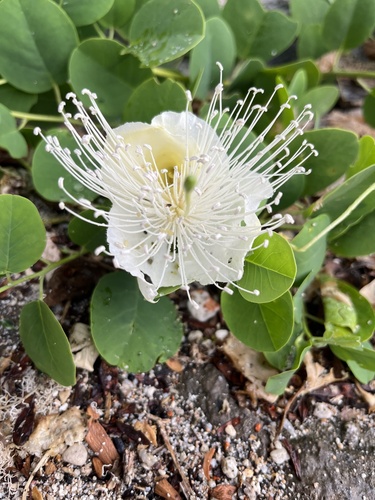
iNaturalist· cc-by-sa
(c) Greg Tasney, some rights reserved (CC BY-SA), uploaded by Greg Tasney
Description
A tall slender shrub. It grows 3-6 m high and 1-3 m wide. The young branches have a few rusty hairs. The leaves are 1-2 cm long by 1-1.5 cm wide. They are oval and shiny. The flowers occur singly or in pairs in the axils of leaves. The flower stalks are 1 cm long. The flowers are 2 cm across. They are yellow. The fruit is a berry 2-3 cm long. It is orange. The fruit are edible.
Edible Uses
The fruit are edible and can be eaten fresh. The flower buds are also edible.
Distribution
It is a warm temperate plant. It grows in coastal rainforest areas in New South Wales and Queensland in Australia.
Where It Grows
Australia*,
Cultivation
Plants can be grown from seed or cuttings.
Notes
There are about 250 Capparis species. There are about 50 Capparis species in tropical America.
Also Known As
Mulpup
References (6)
- Bailey, F. M., 1913, Comprehensive Catalogue of Queensland Plants. Queensland Government.
- Edible and Useful Native Plants (off internet)
- Elliot, W.R., & Jones, D.L., 1982, Encyclopedia of Australian Plants suitable for cultivation. Vol 2. Lothian. p 460
- Flora of Australia, Volume 8, Lecythidales to Batales, Australian Government Publishing Service, Canberra (1982) p 214
- Nicholson, N & H., 1994, Australian Rainforest Plants 4, Terania Rainforest Publishing. NSW. p 21
Show all 6 references Hide references
- World Checklist of Useful Plant Species 2020. Royal Botanic Gardens, Kew