Adansonia madagascariensis
Baill.
Madagascar boabab
iNaturalist· cc-by-nc-sa
(c) Marco Schmidt,保留部分权利(CC BY-NC-SA), 由 Marco Schmidt 上传
iNaturalist· cc-by-nc
(c) Andry.A.R,保留部分权利(CC BY-NC), 由 Andry.A.R 上传
Summary
Source: WikipediaAdansonia madagascariensis or Madagascar baobab is a small to large deciduous tree in the family Malvaceae. It is one of six species of baobab endemic to Madagascar, where it occurs in the Madagascar dry deciduous forests.
Description
A tree. The trunk is cylinder shaped and covered with reddish bark. The branches are short. The flowers are large. They are 15 cm long. They are white with hairs petals and sepals. The fruit are round and yellow. They have a reddish pulp. The seeds are kidney shaped.
Edible Uses
The fruit flesh is used for drinks. The seeds are used for cooking oil. The sap from cuts in the bark has an agreeable flavour and can be consumed. The leaves are eaten as a vegetable.
Traditional Uses
The flesh of the fruit is used for drinks. The seeds are used for cooking oil The sap from cuts in the bark has an agreeable flavour.
This uses section is brief — help expand it
Distribution
It is a tropical and subtropical plant. In Brisbane Botanical Gardens.
Where It Grows
Africa, Australia, Madagascar*,
Cultivation
Prefers a position in full sun. Found in the wild in well-drained soils. Established plants are drought tolerant. A fast-growing tree, it can be 12 - 15 metres tall with a bole 40 - 60cm in diameter after 12 years.
Other Uses
A fibre is obtained from the bark. The rapid growth rate of this tree has led to the wood being recommended as a potential commercial source of cellulose.
Notes
There are 6-8 Adansonia species. Also put in the family Bombacaceae. In the subfamily Bombacoideae.
Synonyms
Also Known As
Bontana, Bontona, Bozy
References (6)
- Adansonia 6:251. 1873-1876
- Bircher, A. G. & Bircher, W. H., 2000, Encyclopedia of Fruit Trees and Edible Flowering Plants in Egypt and the Subtropics. AUC Press. p 10
- Jardin, C., 1970, List of Foods Used In Africa, FAO Nutrition Information Document Series No 2. p 11
- Martin, F.W. & Ruberte, R.M., 1979, Edible Leaves of the Tropics. Antillian College Press, Mayaguez, Puerto Rico. p 179
- Terra, G.J.A., 1973, Tropical Vegetables. Communication 54e Royal Tropical Institute, Amsterdam, p 19
Show all 6 references Hide references
- World Checklist of Useful Plant Species 2020. Royal Botanic Gardens, Kew
More from Malvaceae
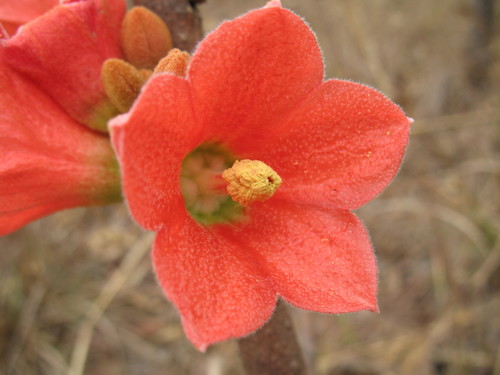
Brachychiton megaphyllus
Red flowered kurrajong
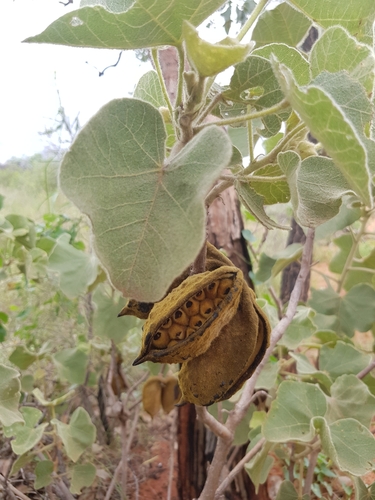
Brachychiton multicaulis
Wild curry kurrajong
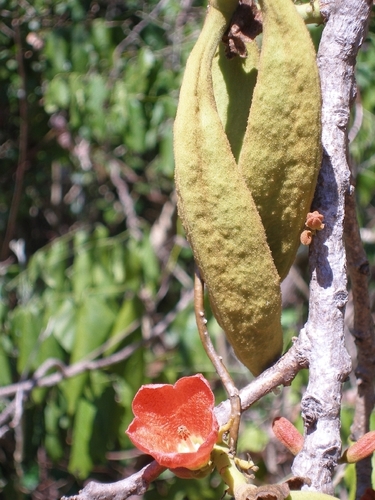
Brachychiton paradoxus
Red Kurrajong, Red-flowered Kurrajong
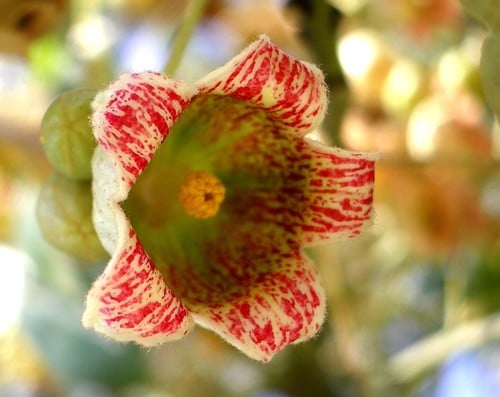
Brachychiton populneus
Black kurrajong
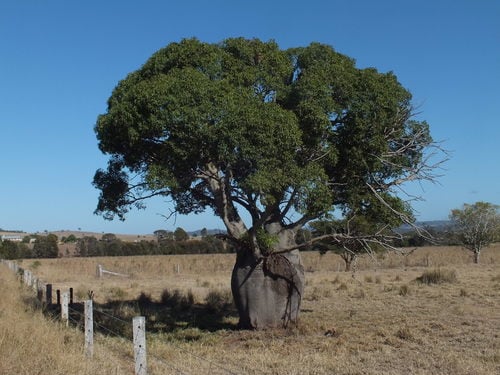
Brachychiton rupestris
Bottle tree, Narrow-leaved bottle tree, Queensland Bottle Tree, Barrel tree
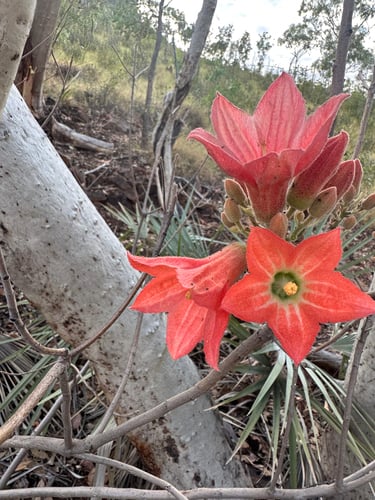
Brachychiton spectabilis