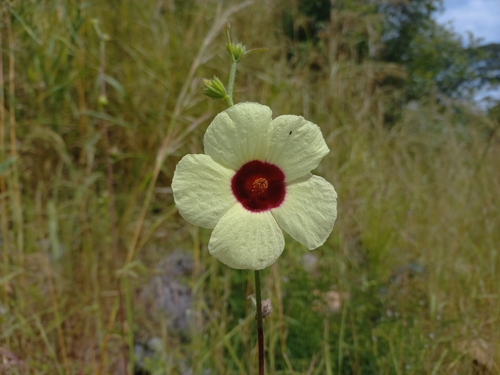
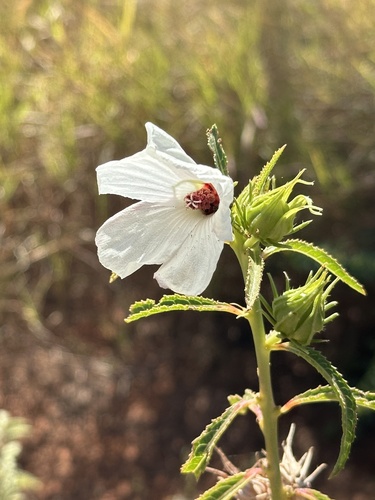
Hibiscus congestiflorus
Hochr.
gbif· cc-by
Meise Botanic Garden
gbif· cc-by-nc-sa
MBG
gbif· cc-by
Royal Botanic Gardens, Kew
Description
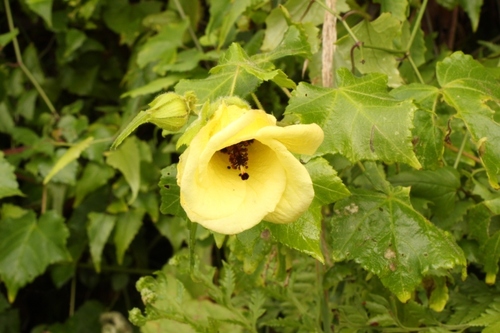
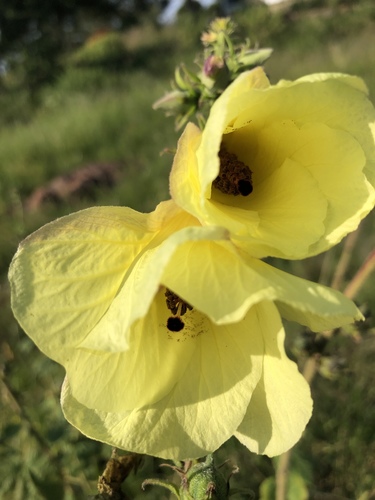
A tropical shrub of the Malvaceae family that can be climbing, with white flowers.
This description is brief — help expand it
Edible Uses
The leaves are eaten in soups and stews.
Traditional Uses
They are eaten in soups and stews.
This uses section is brief — help expand it
Distribution
It is a tropical plant.
Where It Grows
Africa, Asia, Burkina Faso, Côte d'Ivoire, Indochina, Ivory Coast, SE Asia, Vietnam, West Africa,
Propagation
Seed - sow in situ or in containers. Germination is usually quite rapid. Prick out container-grown seedlings into individual pots when they are large enough to handle and plant them out into their permanent positions when they are 10cm or more tall.
Other Uses
A fibre is obtained from the stem bark299, .
Nutrition
| Part | Moisture | kJ | kcal | Protein | Vit A | Vit C | Iron | Zinc |
|---|---|---|---|---|---|---|---|---|
| Leaves | 76.7 | 731 | — | 27.6 | — | — | — | — |
Also Known As
Bup hoa-khit
References (3)
- Herzog, F., Gautier-Beguin, D. & Muller, K., Uncultivated plants for human nutrition in Cote d'Ivoire. FAO Corporate Document repository. International Conference on Domestication and Commercialisaton of Non Timber species.
- Herzog, F., et al, 1993, Nutritive Value of Four Wild Leafy Vegetables in Côte d'Ivoire. Internat. J. Vit. Nutr. Res. 63 (1993) 234-238
- World Checklist of Useful Plant Species 2020. Royal Botanic Gardens, Kew