Adansonia gregorii
F. Muell.
Bottle Tree, Australian Boabab
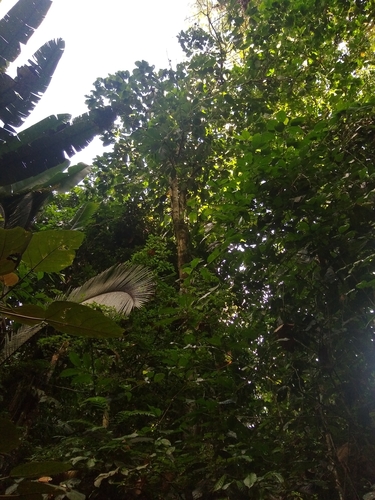
iNaturalist· cc-by-nc
(c) Ryne Rutherford, some rights reserved (CC BY-NC), uploaded by Ryne Rutherford
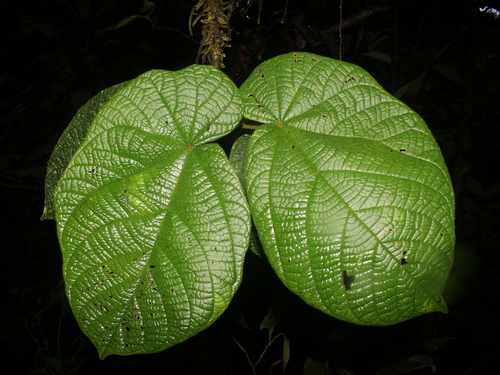
iNaturalist· cc-by-nc
(c) barbarasing, some rights reserved (CC BY-NC)
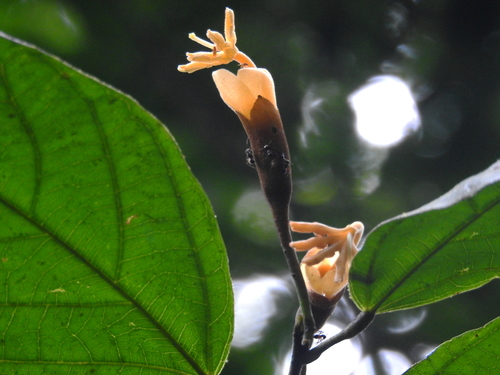
iNaturalist· cc-by-nc
(c) simono, some rights reserved (CC BY-NC), uploaded by simono
Summary
Source: WikipediaAdansonia gregorii, commonly known as the boab and also known by a number of other names, is a tree in the family Malvaceae, endemic to the northern regions of Western Australia and the Northern Territory of Australia.
Description
A large spreading tree. It grows to 15 m high. It loses its leaves in the dry season. The branches are thick and come from the top an an immense swollen trunk. The trunk can be 20 m around. The bark of the tree is smooth and grey-brown. The leaves are alternate and compound. They are deeply divided into 5-9 leaflets. The leaflet blade is 5-13 cm long by 2-3.5 cm wide. The leaves are dark green on top and pale underneath. The tip of the leaf is pointed. The flowers are large and cream. They have a scent. The petals are large and fleshy. The flowers are 8-12 cm by 10 cm. The fruit is a hairy oval woody capsule. It is 15-25 cm long by 10-20 cm wide. Inside there are many dark kidney shaped seeds. The seed are in a mealy pith.
Edible Uses
The plant has a wide variety of uses; most parts are edible and it is the source of a number of materials. Its medicinal products and the ability to store water through dry seasons has been exploited. Aboriginal Australians obtained water from the tree, owing to its ability to store huge amounts of water; some of the oldest and largest trees can hold more than 100,000 L (22,000 imp gal; 26,000 US gal) of water in their trunks. They also use the white powder that fills the seed pods (or pith, said to taste like sherbet or cream of tartar) as a food. Decorative paintings or carvings were sometimes made on the outer surface of the fruit. The bark and leaves are used medicinally, in particular for digestive ailments. The root fibres are used to create string. The 1889 book Useful Native Plants of Australia states that "The dry acidulous pulp of the fruit is eaten. It has an agreeable taste, like cream of tartar". European use of the trees has included letter boxes and jails. The leaves may see a future use prepared as food, due to their high iron content. The leaves can be boiled and eaten as a spinach; the seeds can be ground and used as a coffee-like beverage, and fermenting the pulp creates a type of beer.
Traditional Uses
The seeds are eaten raw or roasted. The pith of the young fruit is eaten roasted. Sap from the trunk and branches may be eaten. It is dissolved in water to make a drink. The pith from the trunk and branches can be eaten after boiling.
Medicinal Uses
The fruit is antiscorbutic.
Distribution
It is a tropical plant. It is native to Australia. It occurs in stony country in dry regions. It suits hardiness zones 11-12.
Where It Grows
Australia*, Europe, India, Slovenia, Spain,
Cultivation
Plants are grown from seed.
Propagation
Seed - germinates readily. Another report says that the best way to get the seed to germinate is to scarify it. This is done by pouring a small amount of nearly boiling water on the seeds (being careful not to cook them!) and then soaking them for 12 - 24 hours in warm water. By this time they should have imbibed moisture and swollen - if they have not, then carefully make a nick in the seedcoat (being careful not to damage the embryo) and soak for a further 12 hours before sowing. It is quite likely that fresh seed germinates well but stored seed requires scarification. Cuttings.
Other Uses
The brittle fruits are like velvety cricket balls; they can be carved decoratively. The pollen has been used to make a glue. The fibrous bark has been used to make a rope. The wood is soft, porous, spongy, and somewhat fibrous.
Production
Trees live for a long time. Flowering occurs in October to December and fruiting in January to April.
Other Information
It is grown commercially in Spain as a source of cream of tartar.
Notes
There are 6-8 Adansonia species. Also put in the family Bombacaceae. In the subfamily Bombacoideae.
Nutrition
| Part | Moisture | kJ | kcal | Protein | Vit A | Vit C | Iron | Zinc |
|---|---|---|---|---|---|---|---|---|
| Seed & pulp | 9.2 | 1492 | 357 | 13.9 | — | 6 | 2 | 3.6 |
| Pulp | 61.8 | 519 | 124 | 4.6 | — | — | 1.4 | 0.6 |
Synonyms
Also Known As
Boabab, Cream of tartar tree, Djungeri, Jamulang, Largarda, Largida
References (41)
- Ambasta S.P. (Ed.), 2000, The Useful Plants of India. CSIR India. p 13
- Barwick, M., 2004, Tropical and Subtropical Trees. A Worldwide Encyclopedic Guide. Thames and Hudson p 9
- Bindon, P., 1996, Useful Bush Plants. Western Australian Museum. p 33
- Biocyclopedia Edible Plant Species. biocyclopedia.org
- Bircher, A. G. & Bircher, W. H., 2000, Encyclopedia of Fruit Trees and Edible Flowering Plants in Egypt and the Subtropics. AUC Press. p 10 (As Adansonia gregorii)
Show all 41 references Hide references
- Bodkin, F., 1991, Encyclopedia Botanica. Cornstalk publishing, p 48
- Brock, J., 1993, Native Plants of Northern Australia, Reed. p 80
- Cherikoff V. & Isaacs, J., The Bush Food Handbook. How to gather, grow, process and cook Australian Wild Foods. Ti Tree Press, Australia p 150, 198
- Crawford, I. M., 1982, Traditional Aboriginal Plant Resources in the Kalumburu Area: Aspects in Ethno-economics. Records of the Western Australian Museum Supplement No. 15
- Cronin, L., 1989, The Concise Australian Flora. Reed. p 168
- Cundall, P., (ed.), 2004, Gardening Australia: flora: the gardener's bible. ABC Books. p 97
- Elliot, W.R., & Jones, D.L., 1982, Encyclopedia of Australian Plants suitable for cultivation. Vol 2. Lothian. p 150
- Etherington, K., & Imwold, D., (Eds), 2001, Botanica's Trees & Shrubs. The illustrated A-Z of over 8500 trees and shrubs. Random House, Australia. p 75
- Facciola, S., 1998, Cornucopia 2: a Source Book of Edible Plants. Kampong Publications, p 50 (As Adansonia gregorii)
- Hardwick, G., 2001, Economically Useful Plants for Northern Australia: Master Species List. Crusader eBooks.
- Hearne, D.A., & Rance, S.J., 1975, Trees for Darwin and Northern Australia. AGPS, Canberra p 13, Pl 2 & Colour Pl 2
- Hedrick, U.P., 1919, (Ed.), Sturtevant's edible plants of the world. p 26
- Hiddins, L., 1999, Explore Wild Australia with the Bush Tucker Man. Penguin Books/ABC Books. p129
- Holliday, I., 1989, A Field Guide to Australian Trees. Hamlyn. p 34
- Isaacs, J., 1987, Bush Food, Aboriginal Food and Herbal Medicine. Weldons. p 89
- Kenneally, K.E., Edinger, D. C., and Willing T., 1996, Broome and Beyond, Plants and People of the Dampier Peninsula, Kimberley, Western Australia. Department of Conservation and Land Management. p 71
- Kunkel,
- Lazarides, M. & Hince, B., 1993, Handbook of Economic Plants of Australia, CSIRO. p 9
- Maiden, J. H., 1889, The Useful Native Plants of Australia (including Tasmania). The Technology Museum of NSW, Sydney. p 4
- Menninger, E.A., 1977, Edible Nuts of the World. Horticultural Books. Florida p 63
- Morley, B.D., & Toelken, H.R., (Eds), 1983, Flowering Plants in Australia. Rigby. p 126
- Nicholson, N & H., 2000, Australian Rainforest Plants, V. Terania Rainforest Publishing. NSW. p 7
- Paczkowska, G. & Chapman, A.R., 2000, The Western Australian Flora. A Descriptive Catalogue. Western Australian Herbarium. p 180 (As Adansonia gregorii)
- Petheram, R.J. and Kok, B., 2003, Plants of the Kimberley Region of Western Australia. UWA Press p 373 (As Adansonia gregorii)
- Recher, P, 2001, Fruit Spirit Botanical Gardens Plant Index. www.nrg.com.au/~recher/ seedlist.html p 4 (As Adansonia gregorii)
- RIRDC, 2010, New Root Vegetables for the Native Food Industry, Australian Government RIRDC Publication 9/161
- Smith, M & Kalotas, A. C., 1985, Bardi Plants: An Annotated List of Plants and Their Use by the Bardi Aborigines of Dampierland, in North-western Australia. Rec. West Aust. Mus. 1985, 12(3): 317-359
- Smith, N. M., 1991, Ethnobotanical Field Notes from the Northern Territory, Australia, J. Adelaide Bot. Gard. 14(1): 1-65
- Smith, Nicholas et al. 1993, Ngarinyman Ethnobotany: Aboriginal Plant Use from the Victoria River Area Northern Australia. Northern Territory Botanical Bulletin No 16. Parks and Wildlife Commission of the Northern Territory. p 8, 7.
- Tanaka,
- Townsend, K., 1994, Across the Top. Gardening with Australian Plants in the tropics. Society for Growing Australian Plants, Townsville Branch Inc. p 70
- Vigilante, T., et al, 2013, Island country: Aboriginal connections, values and knowledge of the Western Kimberley islands in the context of an island biological survey. Records of the Western Australian Museum Supplement 81: 145-182
- Wheeler, J.R.(ed.), 1992, Flora of the Kimberley Region. CALM, Western Australian Herbarium, p 197
- Wickens, G.E., 1995, Edible Nuts. FAO Non-wood forest products. FAO, Rome. p 110
- World Checklist of Useful Plant Species 2020. Royal Botanic Gardens, Kew
- Young, J., (Ed.), 2001, Botanica's Pocket Trees and Shrubs. Random House. p 67