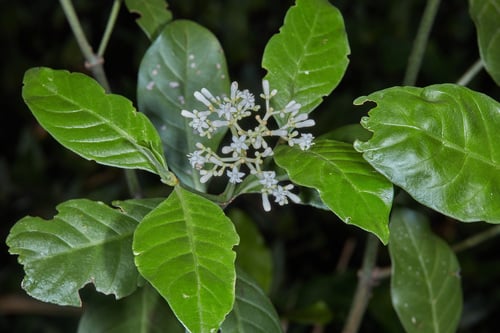
Paederia scandens
(Lour.) Merr.
iNaturalist· cc-by-nc
(c) John, some rights reserved (CC BY-NC)
iNaturalist· cc-by-nc
(c) John, some rights reserved (CC BY-NC)
iNaturalist· cc-by-nc
(c) John, some rights reserved (CC BY-NC)
Summary
Source: WikipediaA fast-growing deciduous climbing vine reaching 5.5 meters tall. Flowers July to August with hermaphroditic blooms. Grows in light sandy to heavy clay soils with mildly acid to alkaline pH. Requires full sun and moist soil; cannot tolerate shade.
Description
A fast-growing deciduous climbing vine reaching 5.5 meters tall. Flowers July to August with hermaphroditic blooms. Grows in light sandy to heavy clay soils with mildly acid to alkaline pH. Requires full sun and moist soil; cannot tolerate shade.
Edible Uses
The sweet juice from the stems is sucked directly in Taiwan.
Medicinal Uses
The plant is anodyne, antivinous, carminative, depurative, and vermifuge. The leaves are antirheumatic and are used to increase fertility and treat paralysis. A decoction of the whole plant is used to treat abdominal pain, abscesses, arthritis, and overeating.
Distribution
It is a subtropical plant.
Where It Grows
Asia, China, Taiwan,
Propagation
Seed — no specific information is available for this species, but sowing in late winter or early spring in a cold frame is suggested. Prick seedlings out into individual pots once large enough to handle, and grow on in the greenhouse through at least their first winter. Plant out into permanent positions in late spring or early summer, after the last expected frosts. Cuttings of half-ripe wood can be taken in July or August in a frame.
Other Uses
No other uses are known. The plant is noted for its scent.
Other Information
It is sold in local markets in China.
Nutrition
| Part | Moisture | kJ | kcal | Protein | Vit A | Vit C | Iron | Zinc |
|---|---|---|---|---|---|---|---|---|
| Leaves | 89.5 | 105 | 25 | 3.3 | — | — | — | — |
Also Known As
Chou ji shi teng
References (1)
- Li, D. et al, 2017, Ethnobotanical survey of herbal tea plants from the traditional markets in Chaoshan, China. Journal of Ethnopharmacology. 205 (2017) 195-206