Vangueria volkensii
K. Schum.
gbif· cc-by
Royal Botanic Gardens, Kew
gbif· cc-by
Royal Botanic Gardens, Kew
gbif· cc-by
Meise Botanic Garden
Description
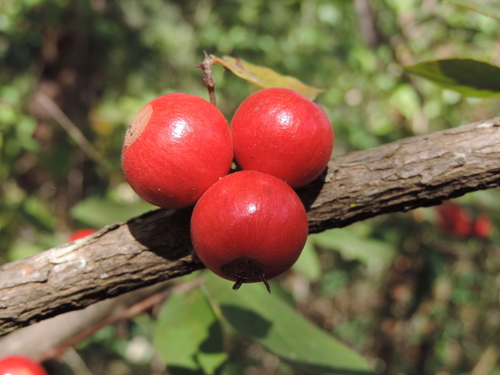
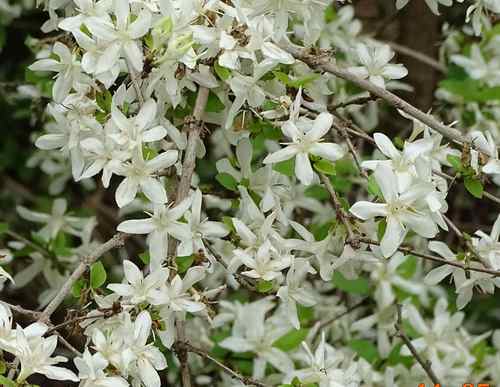
A tree. It grows 15 m high. It loses its leaves for a short time. The branches often arch over. The bark is dark grey and can be slightly cracked. The leaves are simple and opposite. The leaves are velvety and hairy. They are oval with a long point. They are 3-17 cm long. The flowers are pale green or yellow. The fruit are round berries 3 cm across.
Edible Uses
The ripe fruit is sweet and acidic and eaten fresh. Fruit can be dried and stored for up to 12 months, then soaked before eating. Fruit is sold in local markets.
Traditional Uses
The ripe fruit is sweet and acid and is eaten. Fruit can be dried and stored for up to 12 months and then soaked before eating.
This uses section is brief — help expand it
Medicinal Uses
No medicinal uses mentioned in the data.
Distribution
It is a tropical plant. It grows in the lowlands and the highlands. It grows in mountain rainforest. It suits humid locations. It is often in rocky places and on termite mounds. In Kenya it grows between 900-2,500 m altitude. It can grow in arid places.
Where It Grows
Africa, Central Africa, Congo, East Africa, Ethiopia, Kenya, Malawi, Mozambique, Rwanda, Sudan, Tanzania, Uganda, Zimbabwe,
Cultivation
Plants are grown from seeds. The seeds grow best after breaking the hard seed coat.
Propagation
Seed - germinates more reliably if first scarified by abrading the seed coat, making sure not to harm the embryo.
Other Uses
The wood is used for poles, handles and stirring sticks. The wood is used for fuel.
Production
In Tanzania fruit are collected from April - August.
Other Information
Fruit are sold in local markets. It is suggested as a tree worth domestication.
Synonyms
Also Known As
Engumi, Kaworo, Kikimoa, Mavuria, Mdyampofu, Msaadasada, Mukumoa, Mviru, Ndawiro, Ndowo, Olgumi, Olmadanyi, Theregho
References (15)
- Bussman, R. W., 2006, Ethnobotanyof the Samburu of Mt Nyiru, South Turkana, Kenya. Journal of Ethnobiology and Ethnomedicine. 2:35
- East African Herbarium records, 1981,
- FAO. 1983, Food and fruit-bearing forest species 1: Examples from Eastern Africa. FAO Food and Forestry Paper 44/1 p 119 (As Vangueria linearisepala)
- http://www.fao.org/forestry/25323-096344a3de335832e8f363c3ac5184a66.pdf (As Vangueria linearisepala)
- Kenya Trees, Shrubs, Lianas, 1994, nzdl.org
Show all 15 references Hide references
- Lovett, J. C. et al, Field Guide to the Moist Forest Trees of Tanzania. p 145
- Maundu, P. et al, 1999, Traditional Food Plants of Kenya. National Museum of Kenya. 288p
- Mbuvi, M. T. E., et al, 2019, Annonated checklist of plant species of Loita Forest Narok County, Kenya. Int. J. Adv. Res. Biol. Sci. (2019). 6(3): 54-110
- Mutie, F. G., 2020, Conservation of Wild Food Plants and Their Potential for Combatting Food Insecurity in Kenya as Exemplified by the Drylands of Kitui County. Plants 2020, 9, 1017
- Mutie, F. M., et al, 2023, Important Medicinal and Food Taxa (Orders and Families) in Kenya, Based on Three Quantitative Approaches. Plants 2023, 12, 1145
- Peters, C. R., O'Brien, E. M., and Drummond, R.B., 1992, Edible Wild plants of Sub-saharan Africa. Kew. p 177
- Royal Botanic Gardens, Kew (1999). Survey of Economic Plants for Arid and Semi-Arid Lands (SEPASAL) database. Published on the Internet; http://www.rbgkew.org.uk/ceb/sepasal/internet [Accessed 10th June 2011]
- Ruffo, C. K., Birnie, A. & Tengnas, B., 2002, Edible Wild Plants of Tanzania. RELMA p 708
- White, F., Dowsett-Lemaire, F. and Chapman, J. D., 2001, Evergreen Forest Flora of Malawi. Kew. p 507
- World Checklist of Useful Plant Species 2020. Royal Botanic Gardens, Kew