Corylus x vilmorinii
Rehder
Chinese trazel
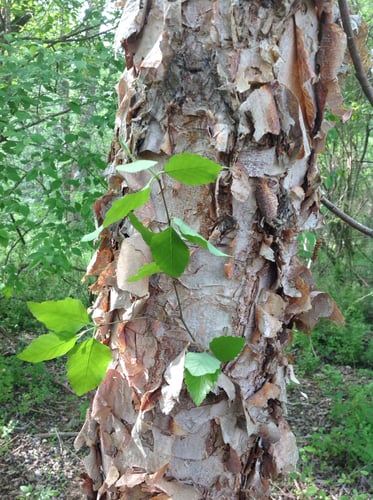
iNaturalist· cc-by-nc
(c) Friends of Rising Sun Country Park, some rights reserved (CC BY-NC)
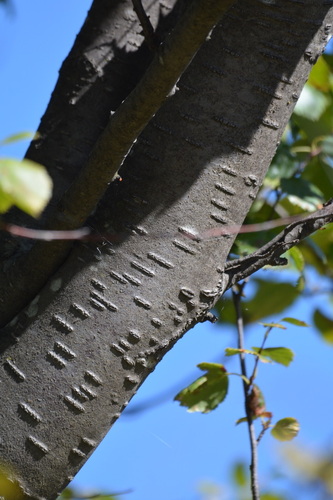
iNaturalist· cc-by-nc
(c) Friends of Rising Sun Country Park, some rights reserved (CC BY-NC)
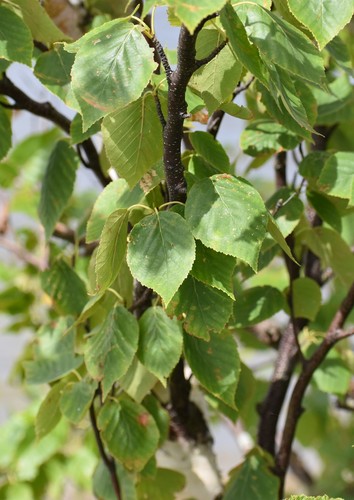
iNaturalist· cc-by-nc
(c) jdware, some rights reserved (CC BY-NC)
Summary
A deciduous tree reaching 25 m tall, hardy to UK zone 5. Bears both male and female flowers on the same plant, wind-pollinated. Thrives in light, medium, or heavy soils with mildly acid to basic pH, tolerating very alkaline conditions. Grows in semi-shade or full sun and prefers moist soil. Withstands strong winds but not coastal exposure.
Description
A deciduous tree reaching 25 m tall, hardy to UK zone 5. Bears both male and female flowers on the same plant, wind-pollinated. Thrives in light, medium, or heavy soils with mildly acid to basic pH, tolerating very alkaline conditions. Grows in semi-shade or full sun and prefers moist soil. Withstands strong winds but not coastal exposure.
Edible Uses
The oil-rich seeds can be eaten raw or cooked. They ripen in mid to late autumn and will likely need protection from squirrels. Stored unshelled in a cool place, seeds keep for at least 12 months. An edible oil can also be pressed from the seed.
Traditional Uses
The nut is eaten.
This uses section is brief — help expand it
Medicinal Uses
None known
Known Hazards
None known
Distribution
It is a temperate plant.
Where It Grows
Asia, China,
Cultivation
An easily grown plant, it succeeds in most soils, but is in general more productive of seeds when grown on soils of moderate fertility. It does less well in rich heavy soils or poor ones. Does well in a loamy soil. Very suitable for an alkaline soil, but it dislikes very acid soils. Plants are fairly wind tolerant. Members of this genus bear transplanting well and can be easily moved even when relatively large. This species is an artificial hybrid, produced by crossing C. chinensis x C. avellana. The Chinese parent contributes a characteristic rounded nut with a slightly thinner shell than C. colurna.
Propagation
Sow seed as soon as it is harvested in autumn in a cold frame; it germinates in late winter or spring. Stored seed should be pre-soaked in warm water for 48 hours, then given 2 weeks of warm stratification followed by 3–4 months of cold stratification. Germination takes 1–6 months at 20°C. Prick seedlings into individual pots when large enough to handle and grow on in a cold frame or sheltered spot through their first winter. Plant out into permanent positions in late spring or early summer. Note that this species is a hybrid and will not come true from seed. Layering in autumn is easy and takes about 6 months.
Other Uses
An oil is obtained from the seed.
Notes
There are about 15 Corylus species.
Synonyms
References (3)
- Facciola, S., 1998, Cornucopia 2: a Source Book of Edible Plants. Kampong Publications, p 83
- J. Arnold Arbor. 7(2):145. 1926
- Plants for a Future, The Field, Penpol, Lostwithiel, Cornwall, PL22 0NG, UK. http://www.scs.leeds.ac.uk/pfaf/