Curarea toxicofera
(Wedd.) Barneby & Krukoff
iNaturalist· cc-by
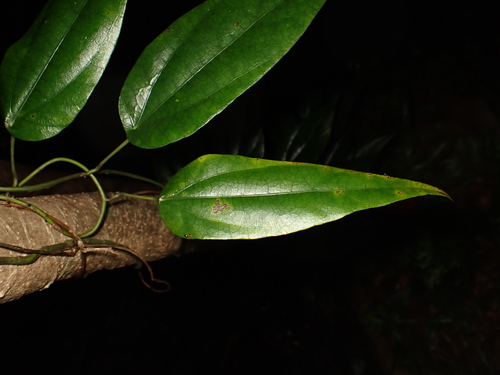
(c) Alan Rockefeller, some rights reserved (CC BY), uploaded by Alan Rockefeller
iNaturalist· cc-by
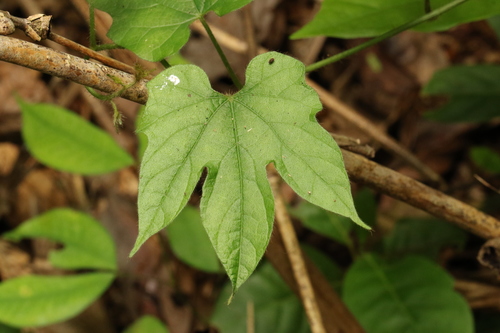
(c) Alan Rockefeller, some rights reserved (CC BY)
Description
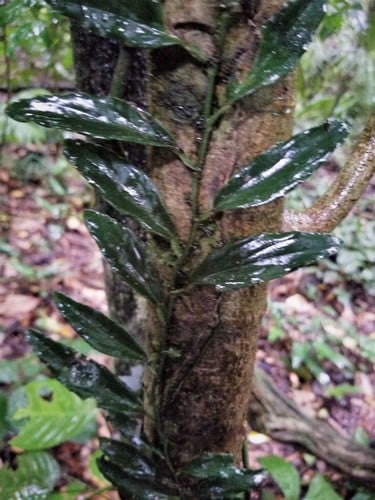
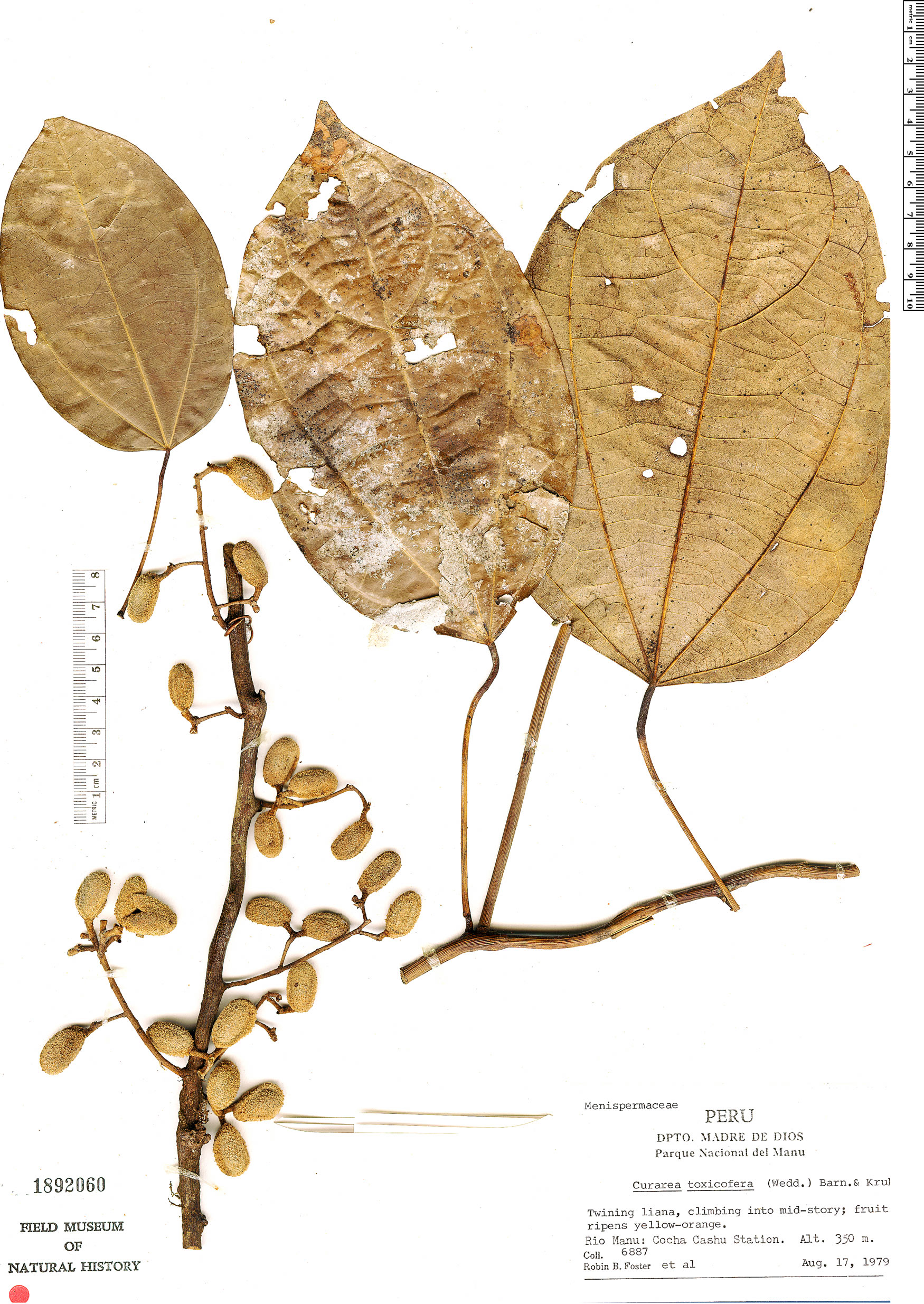
A creeper. It grows 10-12 m tall. The leaves are 8-24 cm long by 5-17 cm wide. The fruit are 1.8-2.1 cm long by 0.9-1.3 cm wide. They are dull orange to yellow when ripe.
Edible Uses
The fruit is eaten.
Medicinal Uses
The root is used as a source of 'Pereira root'. It is considered to be a bitter tonic and diuretic. The root contains a number of alkaloids including chondoinine, beheerin and misobeerin.
Known Hazards
The root contains toxic alkaloids. It is used in the preparation of curare, a well-known S. American poison used by hunting people to paralyze their prey.
Distribution
It is a tropical plant. It can grow in fields that are occasionally flooded and grows up to 500 m above sea level.
Where It Grows
Amazon, Andes, Brazil, Colombia, Ecuador, Peru, South America,
Cultivation
A dioecious species, both male and female forms need to be grown if fruit and seed are required.
Synonyms
Also Known As
Anku muyu, Curare, Namita, Nasotsimi, Ontame ota, Sapepa, Taufe-lleida, Toto'hue
References (3)
- Ortiz, R. del C., 2018, A taxonomic revision of Curarea Barneby & Krukoff (Menispermaceae). Phytokeys 100:9-89
- Roa, J. A. G. & Boada, D. S. G., 2018, Fundación para el Fortalecimiento de la Fruticultura y Plantas Alimenticias no Convencionales en Colombia.
- Torre, de la, L., et al, 2008, Enciclopedia de las Plantas Útiles del Ecuador. Herbario QCA. Pontificia Universidad Católica del Ecuador. p 442