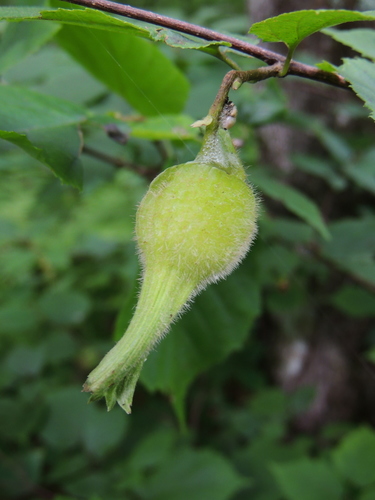
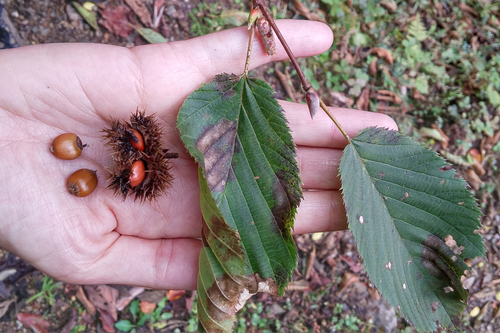
Corylus fargesii
(Franch.) C. K. Schneid.
Pi zhen ye zhen
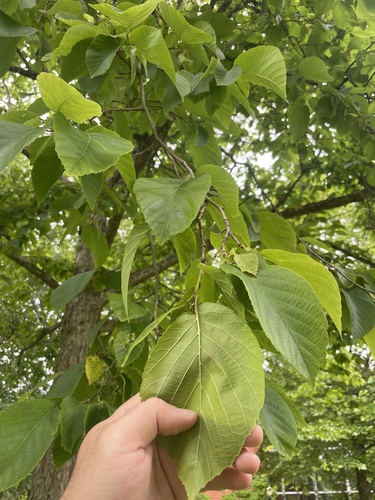
iNaturalist· cc-by
(c) Andrew Conboy, some rights reserved (CC BY), uploaded by Andrew Conboy
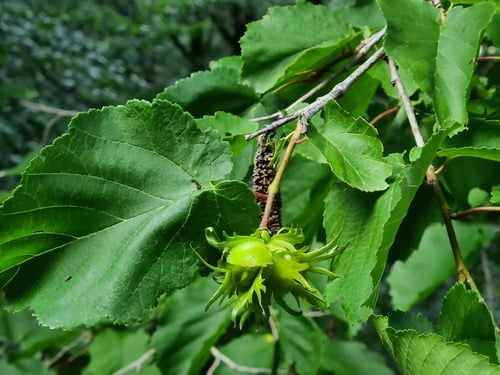
iNaturalist· cc-by
(c) Andrew Conboy, some rights reserved (CC BY), uploaded by Andrew Conboy
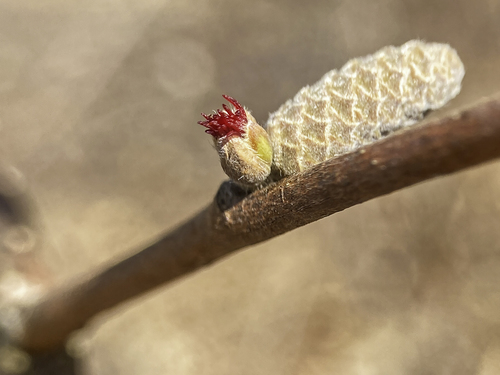
iNaturalist· cc-by
(c) Andrew Conboy, some rights reserved (CC BY), uploaded by Andrew Conboy
Summary
Source: WikipediaCorylus fargesii is a species of flowering plant in the family Betulaceae. It is native to China and Inner Mongolia.
Description
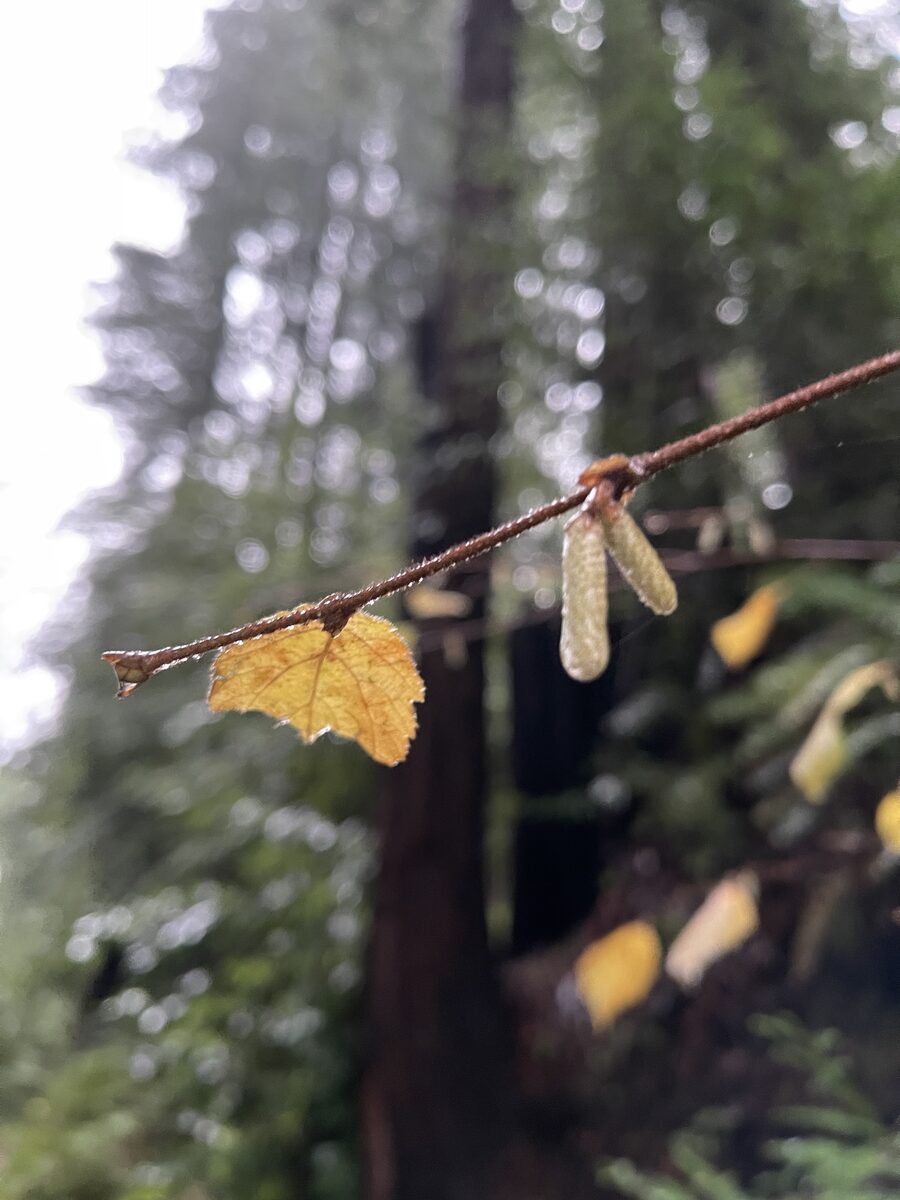
A tree. It grows 25 m tall. The bark is yellow brown and cracked. The leaves are oval or sword shaped and 6-9 cm long by 3-5 cm wide. The female flowers are in clusters of 2-4. The male flowers are in clusters of 2-8. The nut is enclosed by bracts. It is oval or round and 1-1.5 cm across.
Edible Uses
The seed can be eaten raw or cooked. In its shell it measures approximately 10–15mm in diameter. The seed ripens in mid to late autumn and will likely need protection from squirrels. Stored unshelled in a cool place, nuts keep for at least 12 months. An edible oil is also obtained from the seed.
Medicinal Uses
None known
Known Hazards
None known
Distribution
It is a temperate plant. It grows in forests in mountain valleys between 800–3000 m altitude in China.
Where It Grows
Asia, China,
Cultivation
We have very little information on this species and do not know if it will be hardy in Britain, though judging by its native range it should succeed outdoors in many parts of this country. This species is very closely related to C. chinensis and may be no more than part of that species. The following notes are based on the general needs of the genus. An easily grown plant, it succeeds in most soils, but is in general more productive of seeds when grown on soils of moderate fertility. It does less well in rich heavy soils or poor ones. Does well in a loamy soil. Very suitable for an alkaline soil, but it dislikes very acid soils. Plants are fairly wind tolerant. Members of this genus bear transplanting well and can be easily moved even when relatively large.
Propagation
Seed is best sown as soon as it is harvested in autumn in a cold frame, germinating in late winter or spring. Stored seed should be pre-soaked in warm water for 48 hours, then given 2 weeks of warm stratification followed by 3–4 months of cold stratification; it germinates in 1–6 months at 20°C. When large enough to handle, prick seedlings out into individual pots and grow on in a cold frame or sheltered spot outdoors through their first winter, then plant out in late spring or early summer. Layering in autumn is easy and takes about 6 months. Division of suckers in early spring is very easy; divisions can be planted straight into permanent positions.
Other Uses
An oil is obtained from the seed.
Production
In China plants flower in May to July and fruit from July to August.
Notes
There are about 15 Corylus species.
Synonyms
References (3)
- Ill. Handb. Laubholzk. 2:896, fig. 561e. 1912
- Lu De-quan, BASELLACEAE [Draft], Flora of China
- Plants for a Future, The Field, Penpol, Lostwithiel, Cornwall, PL22 0NG, UK. http://www.scs.leeds.ac.uk/pfaf/