Lepidium squamatum
(Forssk.) Asch.
Swine-cress, Creeping wartcress, Crowfoot
iNaturalist· cc-by-nc
(c) enkidoo, some rights reserved (CC BY-NC)
iNaturalist· cc-by-nc
(c) enkidoo, some rights reserved (CC BY-NC)
iNaturalist· cc-by-nc
(c) enkidoo, some rights reserved (CC BY-NC)
Description
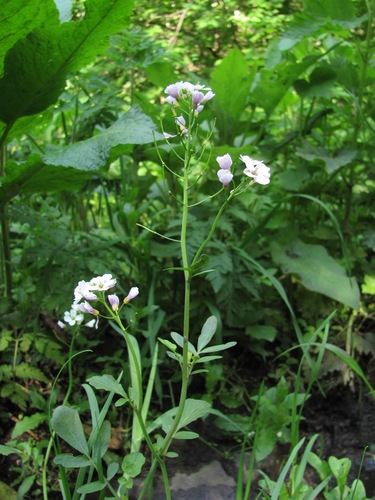
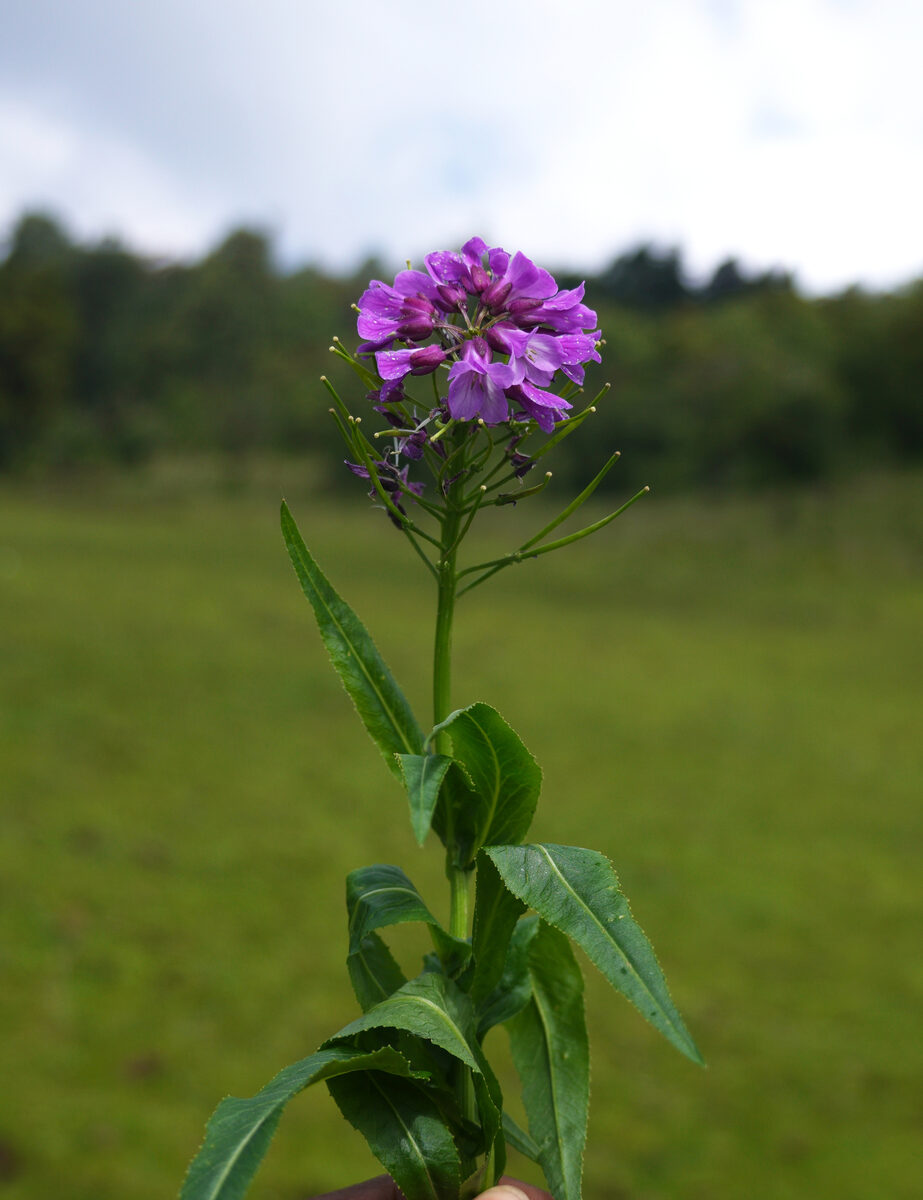
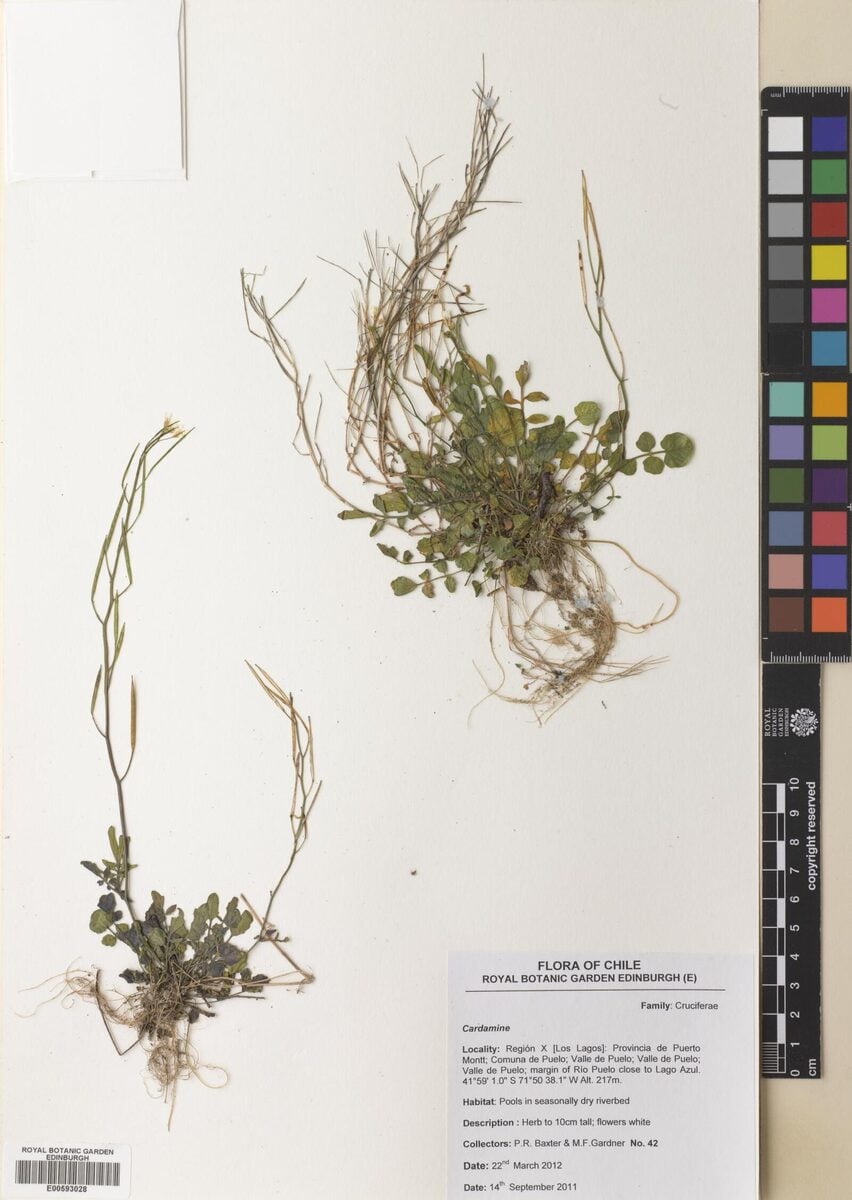
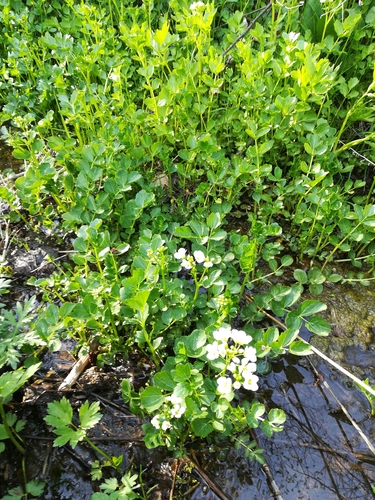
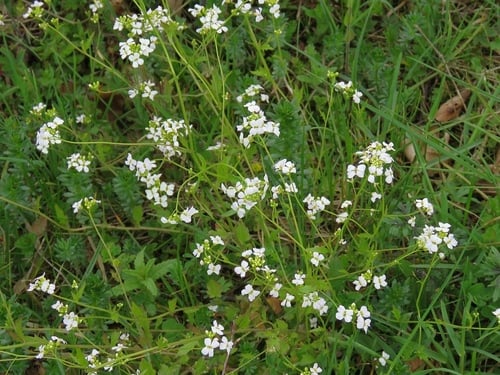
A cabbage family herb. It is a small plant 0.3 m high. It grows as an annual or completes its life cycle over two years. The stems lie along the ground. They are branched and 5-30 cm long. The flower occurs at the end of the main stem. The flowers are small. They are about 2.5 mm across. The fruit has no real stalk. It is about 4 mm across. It is kidney shaped. It is a rough pod with ridges across it.
Edible Uses
It was previously used as an alternative to watercress (in salads), but it was deemed such poor quality and only suitable for pigs to eat. It is thought to be slightly tasting of mustard.
Traditional Uses
The leaves are eaten after much cooking. The root is used cooked.
This uses section is brief — help expand it
Medicinal Uses
The chemotaxonomy of the plant was completed in 2008. It's chromosome count is 2n = 32.
Distribution
It is a temperate plant. It comes from Europe. It occurs self sown in other countries. It grows in moist brackish ground. It can grow in arid places. Tasmania Herbarium.
Where It Grows
Africa, Albania, Algeria, Armenia, Albania, Australia, Austria, Azerbaijan, Azores, Balkans, Belgium, Britain, Bulgaria, Canary Islands, Caucasus, Czech Republic, Denmark, Egypt, Estonia, Europe, Finland, France, Georgia, Germany, Greece, Hungary, Iran, Iraq, Ireland, Israel, Italy, Jordan, Latvia, Lebanon, Libya, Luxembourg, Mediterranean, Middle East, Moldova, Morocco, Netherlands, New Zealand, North Africa, Norway, Poland, Portugal, Romania, Russia, Scandinavia, Slovakia, Spain, Sweden, Switzerland, Syria, Tasmania, Tunisia, Turkey, Türkiye, Ukraine, Yugoslavia,
Cultivation
Plants grow from seed.
Notes
There are 10 Coronopus species.
Nutrition
| Part | Moisture | kJ | kcal | Protein | Vit A | Vit C | Iron | Zinc |
|---|---|---|---|---|---|---|---|---|
| Leaves | 88.2 | 144 | 34 | 2.8 | — | — | — | — |
Synonyms
References (11)
- Blamey, M and Grey-Wilson, C., 2005, Wild flowers of the Mediterranean. A & C Black London. p 69 (As Coronopus squamatus)
- Curtis, W.M., 1956, The Students Flora of Tasmania Vol 1 p 44 (As Coronopus squamatus)
- Fl. Brandenburg 1(1):62. 1860 (As Coronopus squamatus)
- Flora of Australia, Volume 8, Lecythidales to Batales, Australian Government Publishing Service, Canberra (1982) p 284 (As Coronopus squamatus)
- Food Composition Tables for the Near East. http://www/fao.org/docrep No. 438 (As Coronopus squamatus)
Show all 11 references Hide references
- Lazarides, M. & Hince, B., 1993, Handbook of Economic Plants of Australia, CSIRO. p 65 (As Coronopus squamatus)
- Low, T., 1991, Wild Herbs of Australia and New Zealand. Angus & Robertson. p 60 (As Coronopus squamatus)
- Martin, F.W. & Ruberte, R.M., 1979, Edible Leaves of the Tropics. Antillian College Press, Mayaguez, Puerto Rico. p 188 (As Coronopus squamatus)
- Plants for a Future database, The Field, Penpol, Lostwithiel, Cornwall, PL22 0NG, UK. http://www.scs.leeds.ac.uk/pfaf/ (As Coronopus squamatus)
- Royal Botanic Gardens, Kew (1999). Survey of Economic Plants for Arid and Semi-Arid Lands (SEPASAL) database. Published on the Internet; http://www.rbgkew.org.uk/ceb/sepasal/internet [Accessed 15th April 2011] (As Coronopus squamatus)
- USDA, ARS, National Genetic Resources Program. Germplasm Resources Information Network - (GRIN). [Online Database] National Germplasm Resources Laboratory, Beltsville, Maryland. Available: www.ars-grin.gov/cgi-bin/npgs/html/econ.pl (10 April 2000) (As Coronopus squamatus)