Bunias orientalis
L.
Hill mustard, Turkish rocket
iNaturalist· cc-by-nc
(c) olegglushenkov, some rights reserved (CC BY-NC), uploaded by olegglushenkov
iNaturalist· cc-by-sa
(c) Schurdl, some rights reserved (CC BY-SA)
iNaturalist· cc-by-nc
(c) Degtyarev Nikolai Ivanovich, some rights reserved (CC BY-NC), uploaded by Degtyarev Nikolai Ivanovich
Summary
Source: WikipediaBunias orientalis, the Turkish wartycabbage, warty-cabbage, hill mustard, or Turkish rocket, is an edible wild plant species in the genus Bunias. It is classified as an invasive neophyte in most of Middle Europe and parts of North America. It was in use as a food plant in France before 1920.
Description
A cabbage family herb. It is a perennial plant. It can grow as an annual or biennial. It grows up to 1 m tall. It grows into a clump.
This description is brief — help expand it
Edible Uses
Edible Parts: Flowers Leaves Stem Edible Uses: Leaves and young stems - raw or cooked. The young leaves have a mild cabbage flavour that goes very well in a mixed salad, though some people find them indigestible. The leaves are a bit hairy so we find them less than wonderful when eaten raw on their own. The cooked leaves make an excellent vegetable. The leaves are available early in the year, usually towards the end of winter, and the plant will continue to produce leaves until late autumn, with a bit of a gap when the plant is in flower[27, K]. Flower buds and flowering stems - raw or cooked. A pleasant mild flavour with a delicate sweetness and cabbage-like flavour, they make an excellent broccoli substitute though they are rather smaller.
Traditional Uses
The young leaves are eaten raw or cooked. The stems are peeled and added to soups. They are also pickled.
This uses section is brief — help expand it
Medicinal Uses
None known
Distribution
It is a temperate plant. It can survive frost and drought. It suits hardiness zone 4.
Where It Grows
Armenia, Asia, Azerbaijan, Balkans, Belarus, Britain, Bulgaria, Canada, Caucasus, Central Asia, China, Estonia, Europe, Finland, Georgia, Hungary, Iran, Iraq, Kazakhstan, Luxembourg, Middle East, Moldova, Mongolia, Norway, Poland, Russia, Western Siberia, Romania, Russian Ukraine, Scandinavia, Slovenia, Turkey, Türkiye, USA, Yugoslavia,
Cultivation
A very easily grown plant, it succeeds in any soil in a sunny position. Plants have also been seen growing exceedingly well in the dappled shade of a woodland garden. Plants are quite tolerant of neglect, growing well amongst long grass on our Cornish trial ground. The young spring growth can be quite badly damaged by slugs, though more mature plants grow away so quickly that this does not seem to be a problem.
Propagation
Seed - sow April in a cold frame. Germination is usually very quick and good. Prick out the seedlings into pots as soon as they are large enough to handle and plant them out in early summer. The seed can also be sown in situ in the spring, though the seedlings are rather prone to slug damage. Division in spring. Quick and easy. Root cuttings 2 - 5cm in length succeed at any time during the growing season, though early spring as the plant comes into growth is best. If the top 7 - 10cm of the plant is removed to supply root cuttings and divisions, the roots remaining in the soil usually regrow very quickly.
Other Uses
None known Special Uses Food Forest
Other Information
It is a commercially cultivated vegetable.
Notes
There are only 2 Bunias species.
Also Known As
Borsoslene, Borsos lenko, Brabin, Dikaia kapusta, Dikaia retka, Galaturpenk, Rakanyec, Rakvere raibe, Russekal, Sergibus, Szumcso, Tahlis, Tolk, Vzhodni pikasti lušček, Warty cabbage, You guo chi qi
References (28)
- Bircher, A. G. & Bircher, W. H., 2000, Encyclopedia of Fruit Trees and Edible Flowering Plants in Egypt and the Subtropics. AUC Press. p 69
- Bussman, R. W., et al, 2016, A comparative ethnobotany of Khevsureti, Samtskhe-Javakheti, Tusheti, Svaneti, and Racha-Lechkhumi, Republic of Georgia (Sakartvelo), Caucasus. Journal of Ethnobiology and Ethnomedicine (2016) 12:4
- Bussman, R. W., et al, 2021, Unity in diversity—food plants and fungi of Sakartvelo (Republic of Georgia), Caucasus. Journal of Ethnobiology and Ethnomedicine (2021) 17:72 p 7
- Cakir, E. A., 2017, Traditional knowledge of wild edible plants of Iğdır Province (East Anatolia, Turkey). Acta Soc Bot Pol. 2017;86(4):3568.
- Cerne, M., 1992, Wild Plants from Slovenia used as Vegetables. Acta Horticulturae 318
Show all 28 references Hide references
- Ciocarlan, N. & Ghendov, V., 2015, Ethnobotanical and Ecological Studies of Wild Edible Plants from Bugeac Steppe, Republic of Moldova. Journal of EcoAgriTourism. Cailta terra Vol. 11(2):
- Denes, A., et al, 2012, Wild plants used for food by Hungarian ethnic groups living in the Carpathian Basin. Acta Societatis Botanicorum Poloniae 81 (4): 381-396
- Ertug, F, Yenen Bitkiler. Resimli Türkiye Florası -I- Flora of Turkey - Ethnobotany supplement
- Facciola, S., 1998, Cornucopia 2: a Source Book of Edible Plants. Kampong Publications, p 57
- Flora of China @ efloras.org Volume 8
- Girard, N. J., 2020, Sustainable Foraging of Wild Edible Plants in Norway. A Biocultural Approach. M. Sc. thesis Norwegian University. p 129
- Hedrick, U.P., 1919, (Ed.), Sturtevant's edible plants of the world. p 139
- Hermandez Bermejo, J.E., and Leon, J. (Eds.), 1994, Neglected Crops. 1492 from a different perspective. FAO Plant Production and Protection Series No 26. FAO, Rome. p 263
- Hovsepyan, R., et al, 2016, Food as a marker for economy and part of identity: traditional vegetal food of Yezidis and Kurds in Armenia. Journal of Ethnic Foods. 3:32-41
- Jackes, D. A., Edible Forest Gardens
- Kaliszewska, I & Kolodziejska-Degorska, I, 2015, The social context of wild leafy vegetables uses in Shiri, Daghestan. Journal of Ethnobiology and Ethnomedicine, 11:63
- Kalle, R. & Soukand, R., 2012, Historical ethnobotanical review of wild edible plants of Estonia (1770s-1960s) Acta Societatis Botanicorum Poloniae 81(4):271-281
- Kays, S. J., and Dias, J. C. S., 1995, Common Names of Commercially Cultivated Vegetables of the World in 15 languages. Economic Botany, Vol. 49, No. 2, pp. 115-152
- Kolosova, V., et al, 2020, Foraging in Boreal Forest: Wild Food Plants of the Republic of Karelia, NW Russia. Foods 2020, 9, 1015; p 9
- Mukemre, M., et al, 2016, Survey of wild food plants for human consumption in villages of Catak, (Van-Turkey), Indian Journal of Traditional Knowledge. Vol. 15(2) pp. 183-191
- Plants for a Future database, The Field, Penpol, Lostwithiel, Cornwall, PL22 0NG, UK. http://www.scs.leeds.ac.uk/pfaf/
- Sp. pl. 2:670. 1753
- Turner, N. J. et al, 2011, Edible and Tended Wild Plants, Traditional Ecological Knowledge and Agroecology. Critical Reviews in Plant Sciences, 30:198-225
- Urgamal, M., Oyuntsetseg, B., Nyambayar, D. & Dulamsuren, Ch. 2014. Conspectus of the vascular plants of Mongolia. (Editors: Sanchir, Ch. & Jamsran, Ts.). Ulaanbaatar, Mongolia. “Admon“ Press. 334pp. (p. 79-90).
- USDA, ARS, National Genetic Resources Program. Germplasm Resources Information Network - (GRIN). [Online Database] National Germplasm Resources Laboratory, Beltsville, Maryland. Available: www.ars-grin.gov/cgi-bin/npgs/html/econ.pl (10 April 2000)
- Wiersema, J. H. & Leon, B., 2013, World Economic Plants. A Standard Reference CRC Press. 2nd Ed. p 124
- World Checklist of Useful Plant Species 2020. Royal Botanic Gardens, Kew
- Zhou Taiyan, Lu Lianli, Yang Guang; Ihsan A. Al-Shehbaz, BRASSICACEAE (CRUCIFERAE), Flora of China.
More from Brassicaceae
Brassica oleracea botrytis aparagoides
Nine Star Perennial Broccoli
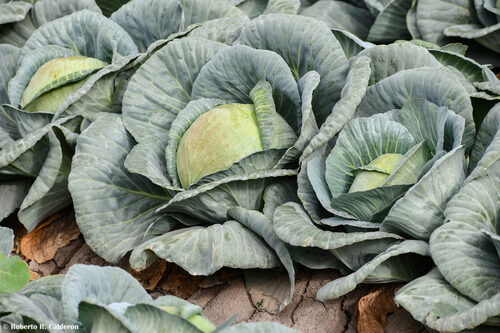
Brassica oleracea capitata
Cabbage,Ornamental Cabbage, Red Cabbage, Savoy Cabbage
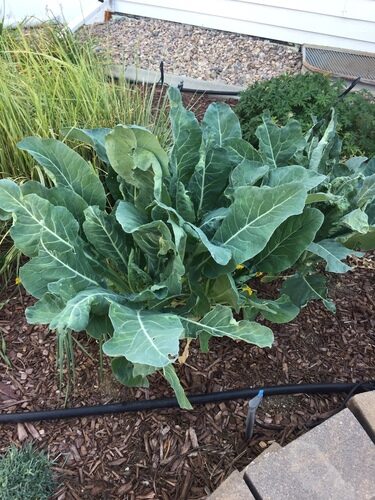
Brassica oleracea costata
Couve Tronchuda
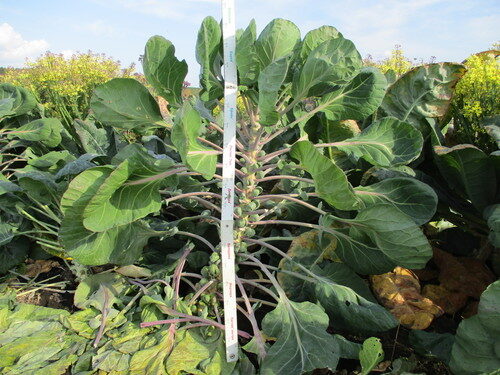
Brassica oleracea gemmifera
Brussels Sprouts
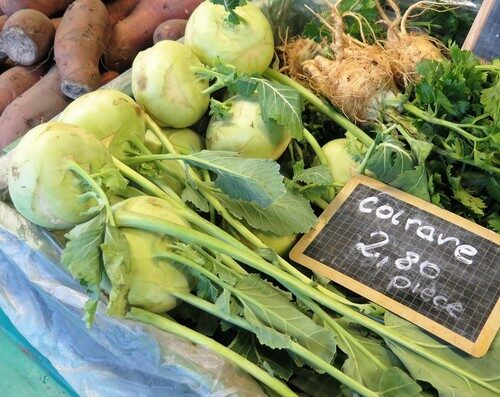
Brassica oleracea gongylodes
Kohl Rabi
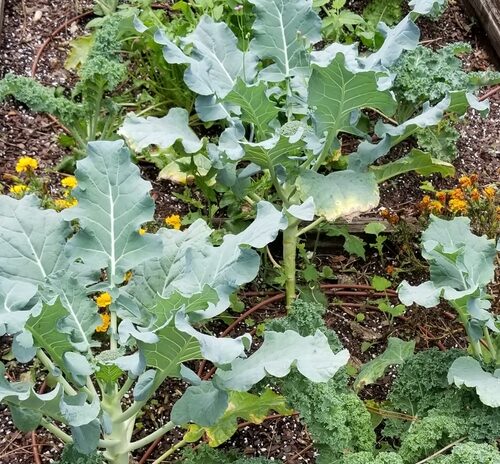
Brassica oleracea italica
Broccoli