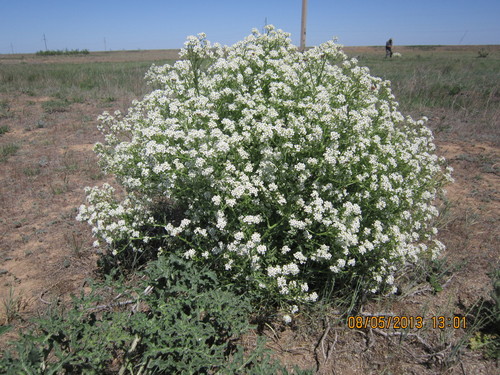
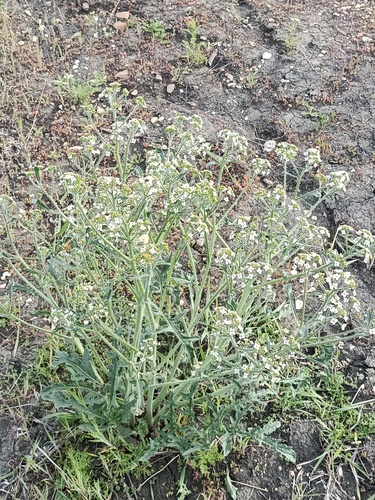
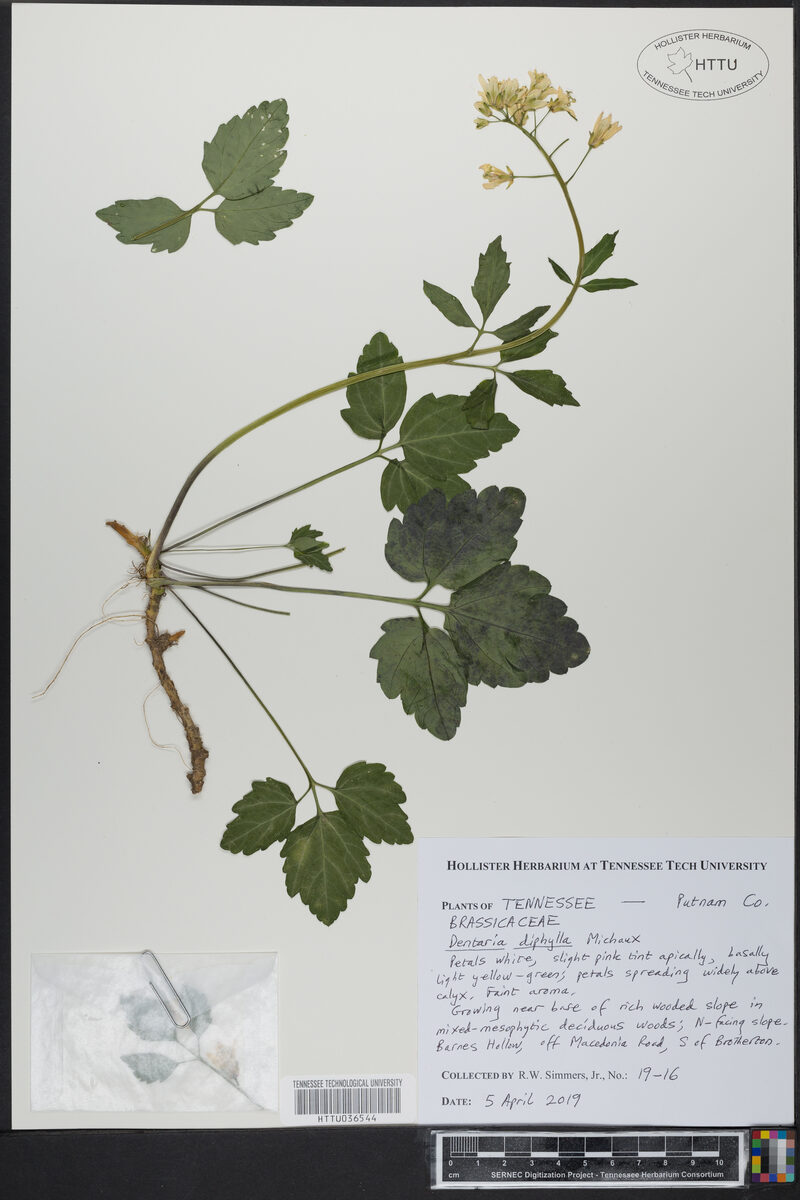
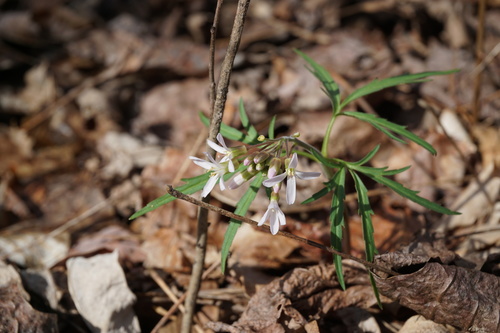
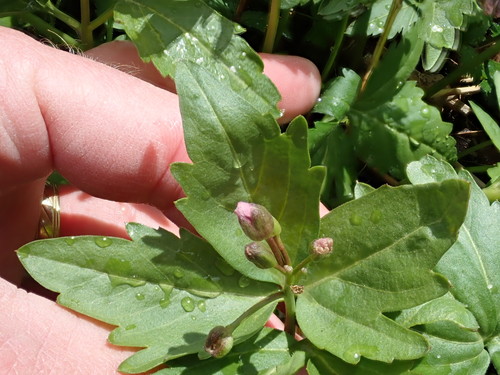
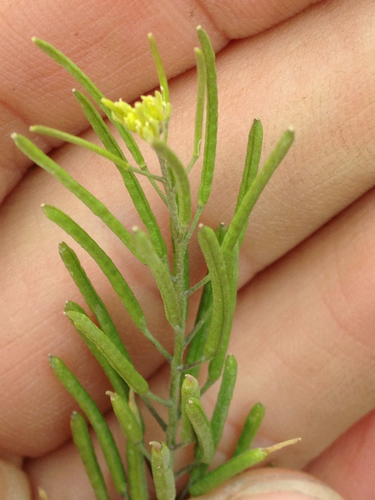
Cakile edentula
(Bigelow) Hook.
American sea rocket
iNaturalist· cc-by-nc
(c) Misha Zitser, some rights reserved (CC BY-NC), uploaded by Misha Zitser
iNaturalist· cc0
no rights reserved, uploaded by Peter de Lange
iNaturalist· cc-by
(c) John Steel, some rights reserved (CC BY), uploaded by John Steel
Summary
Source: WikipediaCakile edentula, the American searocket, is a species of the flowering Cakile plant. This plant is native to North America.
Description
A cabbage family herb. It is an annual herb. The stems are erect or bend upwards. The branches are spreading and up to 60 cm long. They are succulent. The leaves are broadly sword shaped. They have a lobes and a few blunt teeth. They are 3-6 cm long. The flowers are lilac coloured. The fruit are narrow and rocket shaped with one bump near the tip. These pods are 2.5 cm long.
Edible Uses
Edible Parts: Leaves Root Stem Edible Uses: Leaves and young stems - raw or cooked. The younger leaves are used in salads whilst older leaves are mixed with milder tasting leaves and used as a potherb. A horseradish flavour. Root - dried and ground into a powder, then mixed with cereal flours and used to make bread. A famine food, only used when all else fails.
Traditional Uses
The root is dried and ground and mixed with flour in times of scarcity. The leaves make good pickle. The young succulent leaves, stems and unripe capsules are eaten raw in salads. They have a sharp flavour.
Medicinal Uses
None known
Distribution
It is a temperate plant. They grow near beaches. They can grow near the high water mark. It is often on sandy and cobble beaches. It grows in temperate places. It is best in sandy soils and needs an open sunny position. It is damaged by drought or frost. Tasmania Herbarium.
Where It Grows
Australia, Canada, Lord Howe Island, New Zealand, North America, Tasmania, USA,
Cultivation
Plants can be grown from seed. They need to be in sandy, saline places.
Propagation
Seed - sow late spring or early autumn in situ. Germination is usually rapid.
Other Uses
None known Special Uses
Other Information
The root is a famine food.
Notes
There are 7 Cakile species. The mostly grow near the sea.
Synonyms
References (25)
- Beckstrom-Sternberg, Stephen M., and James A. Duke. "The Foodplant Database." http://probe.nalusda.gov:8300/cgi-bin/browse/foodplantdb.(ACEDB version 4.0 - data version July 1994)
- Bircher, A. G. & Bircher, W. H., 2000, Encyclopedia of Fruit Trees and Edible Flowering Plants in Egypt and the Subtropics. AUC Press. p 72
- Bodkin, F., 1991, Encyclopedia Botanica. Cornstalk publishing, p 182
- Breidahl H., 1997, Australian Southern Shores. Lothian. p 80
- Curtis, W.M., 1956, The Students Flora of Tasmania Vol 1 p 47
Show all 25 references Hide references
- Facciola, S., 1998, Cornucopia 2: a Source Book of Edible Plants. Kampong Publications, p 57
- Fl. bor.-amer. 1:59. 1830
- Flora of Australia, Volume 8, Lecythidales to Batales, Australian Government Publishing Service, Canberra (1982) p 252
- Flora of Australia Volume 49, Oceanic Islands 1, Australian Government Publishing Service, Canberra. (1994) p 137
- Harris, S., Buchanan, A., Connolly, A., 2001, One Hundred Islands: The Flora of the Outer Furneaux. Tas Govt. p 124
- Howells, C & Gulline, H., 2003, Coastal Plants of Tasmania. Plant Identikit. Australian Plant Society, Tasmania. p 39
- Hussey, B.M.J., Keighery, G.J., Cousens, R.D., Dodd, J., Lloyd, S.G., 1997, Western Weeds. A guide to the weeds of Western Australia. Plant Protection Society of Western Australia. p 116
- Kermath, B. M., et al, 2014, Food Plants in the Americas: A survey of the domesticated, cultivated and wild plants used for Human food in North, Central and South America and the Caribbean. On line draft. p 158
- KALM,
- Lazarides, M. & Hince, B., 1993, Handbook of Economic Plants of Australia, CSIRO. p 41
- Lim, T. K., 2015, Edible Medicinal and Non Medicinal Plants. Volume 9, Modified Stems, Roots, Bulbs. Springer p 19
- Low, T., 1991, Wild Herbs of Australia and New Zealand. Angus & Robertson. p 61 (Drawing)
- Low, T., 1992, Bush Tucker. Australia’s Wild Food Harvest. Angus & Robertson. p 147
- Paczkowska, G. & Chapman, A.R., 2000, The Western Australian Flora. A Descriptive Catalogue. Western Australian Herbarium. p 185
- Plants for a Future database, The Field, Penpol, Lostwithiel, Cornwall, PL22 0NG, UK. http://www.scs.leeds.ac.uk/pfaf/
- Seidemann J., 2005, World Spice Plants. Economic Usage, Botany, Taxonomy. Springer. p 71
- STURTEVANT,
- Tasmanian Herbarium Vascular Plants list p 16
- Tozer, F., 2007, The Uses of Wild Plants. Green Man Publishing. p 50
- Yanovsky, E., 1936, Food Plants of the North American Indians. United States Department of Agriculture Miscellaneous Publication No 237. Washington, D.C.