Bunias erucago
L.
Corn rocket
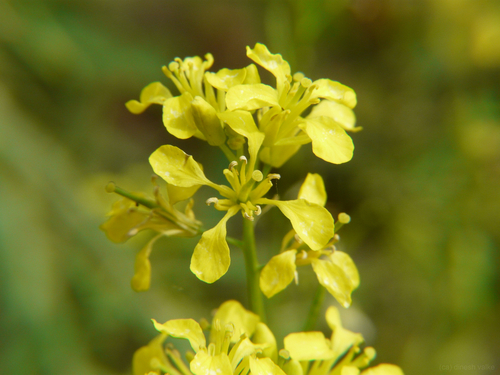
iNaturalist· cc-by-nc
(c) fischair, some rights reserved (CC BY-NC), uploaded by fischair
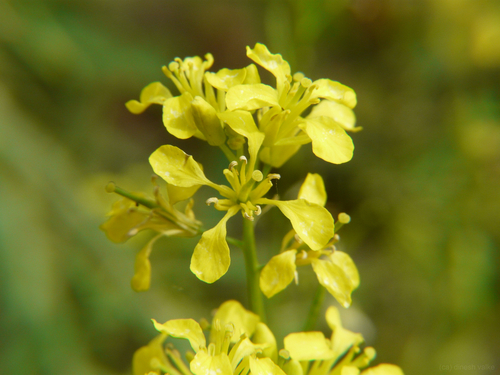
iNaturalist· cc-by-nc
(c) Valentino Traversa, some rights reserved (CC BY-NC)
Summary
An annual or biennial herb growing to 0.6 meters with flowers May to August and seed ripening July to September. Hermaphroditic and self-fertile, pollinated by bees and flies. Tolerates light sandy, medium loamy, and heavy clay soils including nutritionally poor soil across mildly acidic to basic pH. Requires full sun and prefers moist soil. Hardy to UK zone 7.
Description
A cabbage family herb. It is an annual plant. It is rough and hairy. The leaves have lobes along the side. The edges are wavy. The flowers are yellow. The petals are notched. The fruit is about 1 cm long and has toothed wings on the angles. It is square in cross section.
Edible Uses
Edible Parts: Leaves Root Edible Uses: Leaves and young stems - raw or cooked. A characteristic aromatic flavour that goes well with beans. The young and tender leaves make a refreshing spring soup. Root - raw. It can be sliced thinly or grated and then be added to salads.
Traditional Uses
The leaves are used in vegetable soups. The young leaves are also eaten as a salad.
This uses section is brief — help expand it
Medicinal Uses
None known
Distribution
It is a temperate plant. It usually grows on untilled and poor soils.
Where It Grows
Balkans, Bosnia, Britain, Croatia, Europe, Italy, Mediterranean, Sicily, Slovenia, Spain, Turkey, Türkiye,
Cultivation
Succeeds in most soils, including poor ones, preferring a sunny position.
Propagation
Seed - sow March to August in situ in order to obtain a succession of fresh young leaves. The seed usually germinates within 2 weeks.
Other Uses
None known Special Uses
Other Information
It is gathered wild and sometimes cultivated.
Notes
There are only 2 Bunias species.
Also Known As
Cagnapurcedd, Ciconia di vigna, Pakolec, Pisciacane, Rukvičasti pikasti lušček, Spinacia sarvaggia, Sportavecchia
References (17)
- Bianchini, F., Corbetta, F., and Pistoia, M., 1975, Fruits of the Earth. Cassell. p 72
- Bircher, A. G. & Bircher, W. H., 2000, Encyclopedia of Fruit Trees and Edible Flowering Plants in Egypt and the Subtropics. AUC Press. p 69
- Biscotti, N. & Pieroni, A., 2015, The hidden Mediterranean diet: wild vegetables traditionally gathered and consumed in the Gargano area, Apulia, SE Italy. Acta Societatis Botanicorum Poloniae 84 (3): 327-338
- Biscotti, N. et al, 2018, The traditional food use of wild vegetables in Apulia (Italy) in the light of Italian ethnobotanical literature. Italian Botanist 5:1-24
- Blamey, M and Grey-Wilson, C., 2005, Wild flowers of the Mediterranean. A & C Black London. p 62
Show all 17 references Hide references
- Dolina, K. & Luczaj, L., 2014, Wild food plants used on the Dubrovnik coast (south-eastern Croatia) Acta Soc Bot Pol 83(3):175–181
- Ertug, F, Yenen Bitkiler. Resimli Türkiye Florası -I- Flora of Turkey - Ethnobotany supplement
- Facciola, S., 1998, Cornucopia 2: a Source Book of Edible Plants. Kampong Publications, p 57
- Geraci, A., et al, 2018, The wild taxa utilized as vegetables in Sicily (Italy): a traditional component of the Mediterranean diet. Journal of Ethnobiology and Ethnomedicine (2018) 14:14
- Hedrick, U.P., 1919, (Ed.), Sturtevant's edible plants of the world. p 139
- Lentini, F. and Venza, F., 2007, Wild food plants of popular use in Sicily. J Ethnobiol Ethnomedicine. 3: 15
- Licata, M., et al, 2016, A survey of wild plant species for food use in Sicily (Italy) – results of a 3-year study in four Regional Parks. Journal of Ethnobiology and Ethnomedicine 12:12
- Luczaj et al, 2013, Wild vegetable mixes sold in the markets of Dalmatia (southern Croatia). Journal of Ethnobiology and Ethnomedicine. 8:2
- Luczaj, L. et al, 2014, Wild Food Plants of Dalmatia (Croatia). in A. Pieroni, C. L. Quave (eds.), Ethnobotany and Biocultural Diversities in the Balkans, p 138
- Pasta, S., et al, 2020, An Updated Checklist of the Sicilian Native Edible Plants: Preserving the Traditional Ecological Knowledge of Century-Old Agro-Pastoral Landscapes. Frontiers in Plant Science. Volume 11|Article 388
- Pieroni, A., 1999, Gathered wild food plants in the Upper Valley of the Serchio River (Garfagnana), Central Italy. Economic Botany 53(3) pp 327-341
- Plants for a Future database, The Field, Penpol, Lostwithiel, Cornwall, PL22 0NG, UK. http://www.scs.leeds.ac.uk/pfaf/
More from Brassicaceae
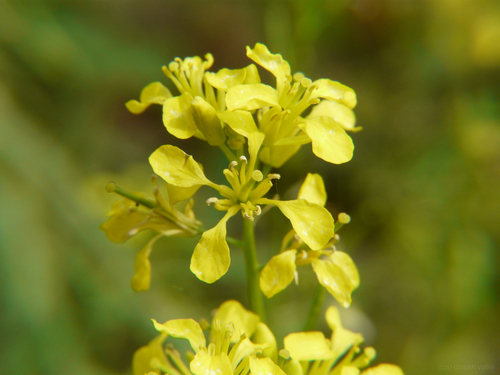
Brassica juncea var. megarrhiza
Tuberous-rooted mustard, Large-rooted mustard
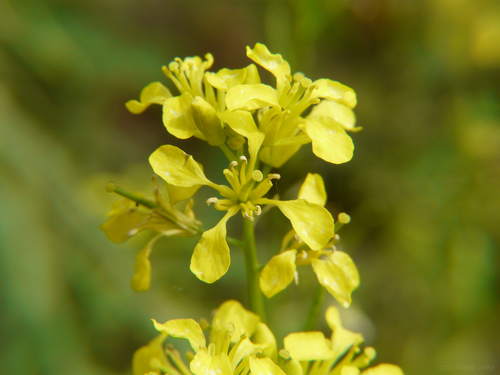
Brassica juncea var. multiceps
Chicken mustard, Multishoot mustard, Nine-head mustard
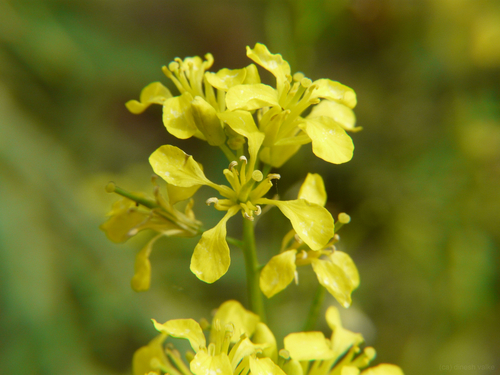
Brassica juncea var. multisecta
Thousand-veined mustard
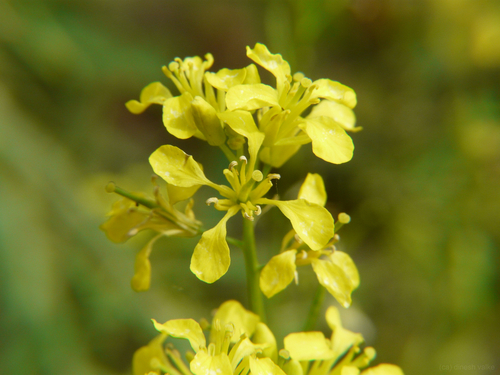
Brassica juncea var. napiformis
Large-root mustard, Root mustard, Tuberous-root mustard, Turnip-root mustard
Brassica juncea var. rugosa
Mustard cabbage, Chinese mustard, Cabbage-leaf mustard, Head mustard, Swatow mustard, Japanese red mustard, Mustard greens
Brassica juncea var. sareptana
Brown mustard, Sarepta mustard