Euphorbia balsamifera
Aiton
Balsam spurge
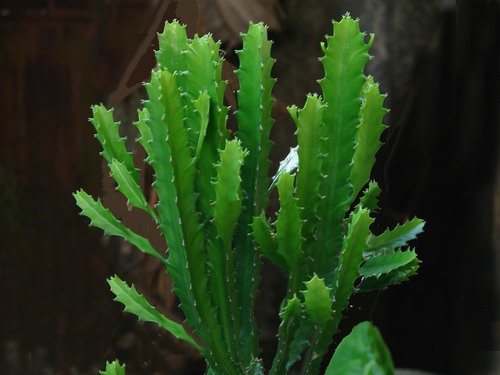
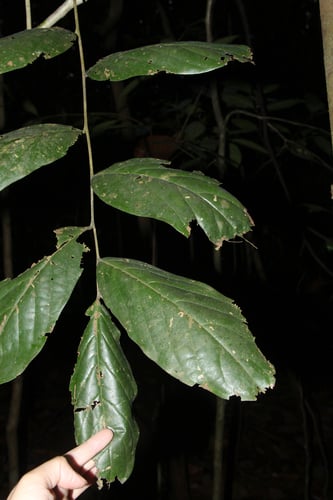
iNaturalist· cc-by-nc
(c) whinaem, some rights reserved (CC BY-NC)
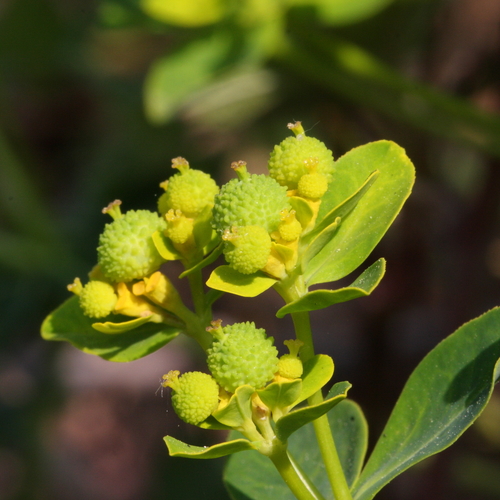
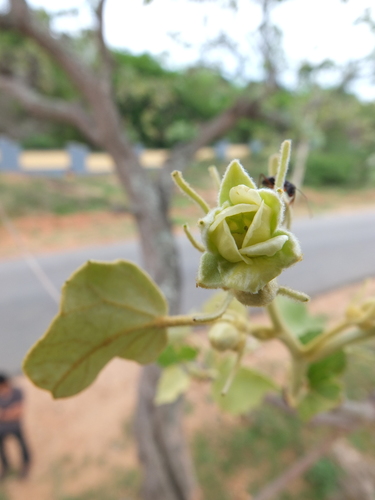
iNaturalist· cc-by-nc
(c) lougarou, some rights reserved (CC BY-NC), uploaded by lougarou
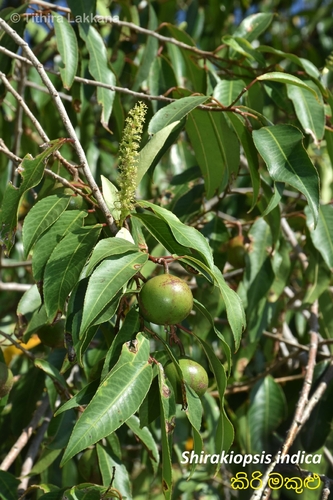
iNaturalist· cc-by-nc
(c) Pablo de la Fuente Brun, some rights reserved (CC BY-NC), uploaded by Pablo de la Fuente Brun
Summary
Source: WikipediaEuphorbia balsamifera (balsam spurge) is a flowering plant in the spurge family Euphorbiaceae. It is distributed in the Canary Islands and the western Sahara. It is the vegetable symbol of the island of Lanzarote. Euphorbia adenensis has been treated as a subspecies of this species.
Description
A half succulent shrub. It grows 2-4 m high and spreads 90 cm wide. The stems are spineless and it has many branches. The stems become gnarled and grey. The leaves are pale green and occur in rings. They are near the tips of the branches. The leaves are 3-5 cm long by 6 mm wide. They are light green or bluish green. They do not have stalks and often fall off. The flowers occur singly. They are greenish-yellow. The fruit are round 3 part capsules. They are 10-12 mm across.
Edible Uses
Milky latex of Euphorbia balsamifera is poisonous like in other Euphorbia species, but it is not so caustic. In Morocco, it is widely used in dentistry as anesthesia for acute dental pulpitis treatment. The leaves were gathered and cooked as a green vegetable in the Canary Islands. As most other succulent members of the genus Euphorbia, its trade is regulated under Appendix II of CITES.
Traditional Uses
Caution: All Euphorbias or spurges have irritating sap and many have chemicals that can cause cancer. The shoots and leaves are eaten cooked. The juice is thickened to a jelly and eaten.
Medicinal Uses
An aqueous macerate of the bark and roots is taken in draught as a drastic purge, and is administered as such in the treatment of conditions such as leprosy, syphilis and gonorrhoea which require cleansing of the abdominal region. A decoction of the leafy twigs is used to wash the genitals in the treatment of leucorrhoea and menorrhoea. The decoction is also applied to the skin to treat ringworm. Water in which leaves have been steeped is used to wash fever patients. A decoction of the roots is taken as a remedy for intestinal parasites. A decoction of flowering branch ends is taken to expel worms. The latex is used externally as an antitoxin on snake and insect-bites, and is also applied to guinea-worm sores. It relieves toothache and gum troubles - when placed on a carious tooth it not only curbs aching but serves to loosen the tooth to facilitate extraction. It is possible that there is some analgesic action. The latex is compounded into a poultice with the leaves of Annona senegalensis and the latex of Calotropis procera, this is then applied to the indurations of 'yaws' in order to maturate them. The latex contains a gum-resin and a revulsive identified as euphorbon.
Known Hazards
The plant, and more specifically the latex, are generally reported to be toxic. The latex is known to be dangerous to the eyes and the plant has been used for criminal purposes, in ordeal-poisons and in arrow-poisons. However, there are reports of consumption by people, and of people feeding their livestock with this plant. In a superstitious sense it is fed to camels in the Sahara as the lichen commonly covering the bark is said to enable them to see by night. The Fula of N Nigeria sometimes feed the latex to their cattle and other stock to promote fertility and to increase their milk flow. Superstition or no, this can hardly be practiced without a sense of responsible husbandry. It must appear that the toxicity of the plant needs examination in its edaphic and phenological context.
Distribution
A tropical plant. It needs bright light but not intense heat. It grows in the Sahel. It often grows on cliff tops and dry slopes near the sea. It can grow in sandy sites. It grows in areas with an annual rainfall between 100-600 mm. It cannot tolerate frost. It can grow in arid places. It suits hardiness zones 9-11.
Where It Grows
Africa, Australia, Benin, Burkina Faso, Canary Islands, Central Africa, Chad, Ghana, Mali, Mauritania, Mediterranean, Middle East, Morocco, Niger, Nigeria, North Africa, Oman, Sahel, Saudi Arabia, Senegal, Socotra, Somalia, Sudan, West Africa, Yemen,
Cultivation
It can be grown from cuttings. It can be used for hedges.
Propagation
Seed - Cuttings root easily and grow away quickly. They are best if taken at least 50cm long, can be planted directly where the plant is to grow, and can even survive many months of drought and still grow away afterwards.
Other Uses
The succulent branches carry a copious amount of latex. The latex is viscously tacky and might have some potential as a 'fly-paper' in the same way as the latices of some other Euphorbia spp., which retain an adhesive quality and have been successfully used to catch tsetse flies. The plant is commonly grown as a hedge and field-boundary marker. It is easily raised by cuttings and is said to be one of the best hedge plants for low rainfall areas, i.e. under 900 mm. It is not eaten by the stock, nor by termites. Though cattle do not browse the plant, it is taken in Senegal by camels, sheep and goats, and sheep will eat the fallen leaves. In the soundanian zone of Africa, the plant is commonly grown along the sides of roads and tracks and on wind-blown dunes as a sand-binder. Its ease of propagation, however, should not be allowed to lead to uncontrolled spreading and its restriction in the Sahel zone is recommended in order to improve pasturage.
Other Information
The young shoots are sucked especially by children.
Notes
There are about 2000 Euphorbia species. Most Euphorbias have sap which irritates the skin.
Synonyms
Also Known As
Aliyara, Kpagoboni, Ndamol, Salane, Sihoun
References (23)
- Anderson, M., 2002, The World Encyclopedia of Cacti and Succulents. Hermes House, New York. p 155
- Bodkin, F., 1991, Encyclopedia Botanica. Cornstalk publishing, p 462
- Bonou, A., et al, 2013, Valeur economique des Produits Forestiers Non Ligneux (PFNL) au Benin. Editions Universitaires Europeennes p 92
- Brickell, C. (Ed.), 1999, The Royal Horticultural Society A-Z Encyclopedia of Garden Plants. Convent Garden Books. p 427
- Burkill, H. M., 1985, The useful plants of west tropical Africa, Vol. 2. Kew.
Show all 23 references Hide references
- Cundall, P., (ed.), 2004, Gardening Australia: flora: the gardener's bible. ABC Books. p 583
- Diouf, M., et al, Leafy Vegetables in Senegal. Bioversity webite
- Etherington, K., & Imwold, D., (Eds), 2001, Botanica's Trees & Shrubs. The illustrated A-Z of over 8500 trees and shrubs. Random House, Australia. p 315
- Food Composition Tables for use in Africa FAO http://www.fao.org/infoods/directory No. 514
- Grivetti, L. E., 1980, Agricultural development: present and potential role of edible wild plants. Part 2: Sub-Saharan Africa, Report to the Department of State Agency for International Development. p 26
- Grubben, G. J. H. and Denton, O. A. (eds), 2004, Plant Resources of Tropical Africa 2. Vegetables. PROTA, Wageningen, Netherlands. p 561
- Gueye, 2007, Traditional Leafy Vegetables in Senegal: Diversity and medicinal Uses. Afr. J. Trad. CAM (2007) 4 (4): 469 – 475
- Hedrick, U.P., 1919, (Ed.), Sturtevant's edible plants of the world. p 303
- Hort. kew. 2:137. 1789
- Jardin, C., 1970, List of Foods Used In Africa, FAO Nutrition Information Document Series No 2.p 77
- Le Houerou, H. N., (Ed.), 1980, Browse in Africa. The current state of knowledge. International Livestock Centre for Africa, Ethiopia. p 162
- Martin, F.W. & Ruberte, R.M., 1979, Edible Leaves of the Tropics. Antillian College Press, Mayaguez, Puerto Rico. p 192
- Maydell, H. von, 1990, Trees and shrubs of the Sahel: their characteristics and uses. Margraf. p 267
- MORTIMORE,
- Nassif, F., & Tanji, A., 2013, Gathered food plants in Morocco: The long forgotten species in Ethnobotanical Research. Life Science Leaflets 3:17-54
- Royal Botanic Gardens, Kew (1999). Survey of Economic Plants for Arid and Semi-Arid Lands (SEPASAL) database. Published on the Internet; http://www.rbgkew.org.uk/ceb/sepasal/internet [Accessed 16th April 2011]
- World Checklist of Useful Plant Species 2020. Royal Botanic Gardens, Kew
- Yaradua, S. S. & El-Ghani, M. A., 2015, Ethnobotanical Survey of Edible Plants Sold in Katsina Metropolis Markets.International Journal of Science and Research (IJSR). 4(12)