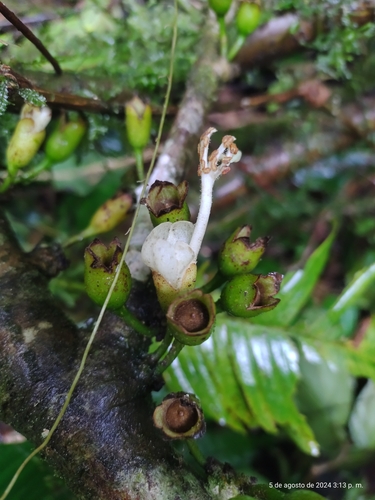
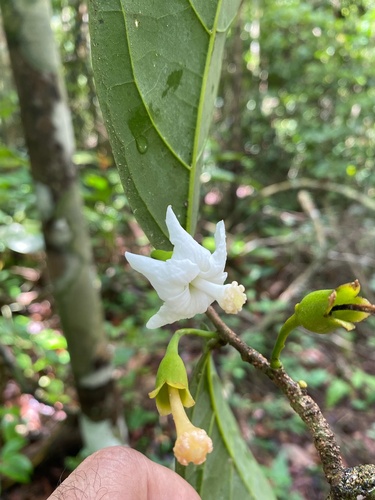
Herrania breviligulata
R. E. Schult.
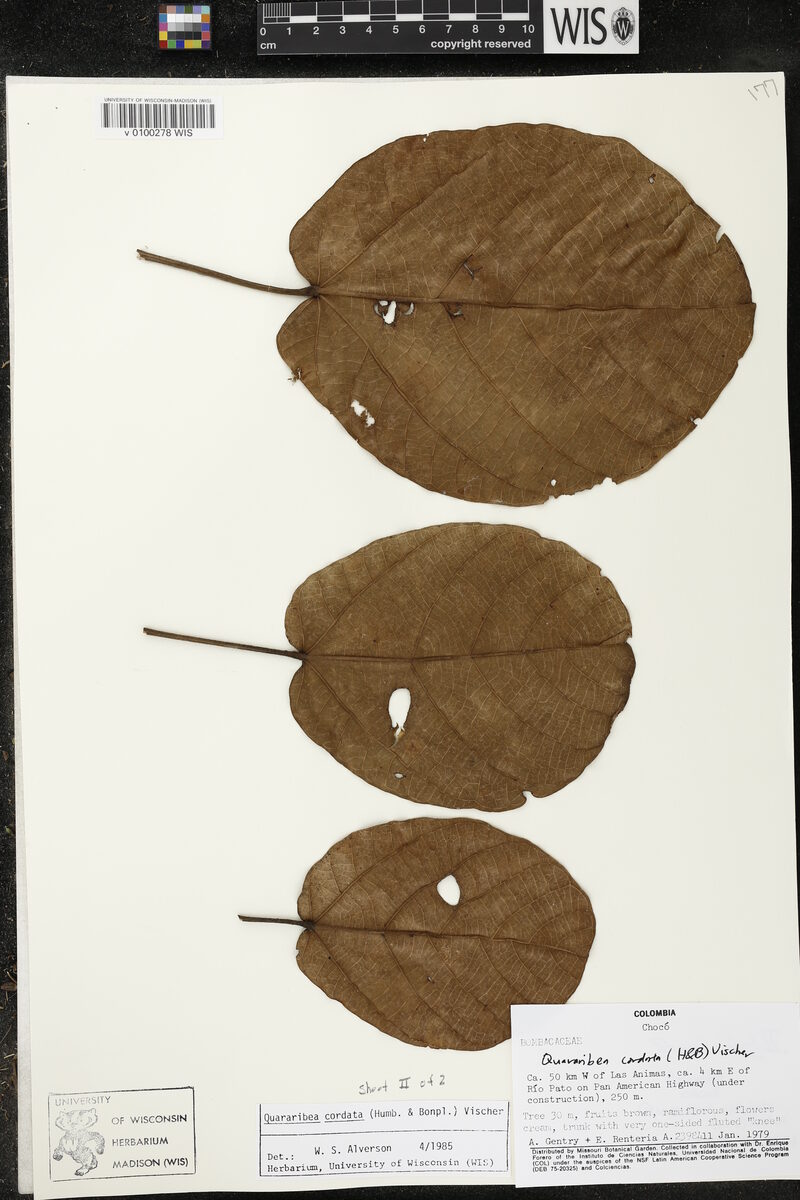
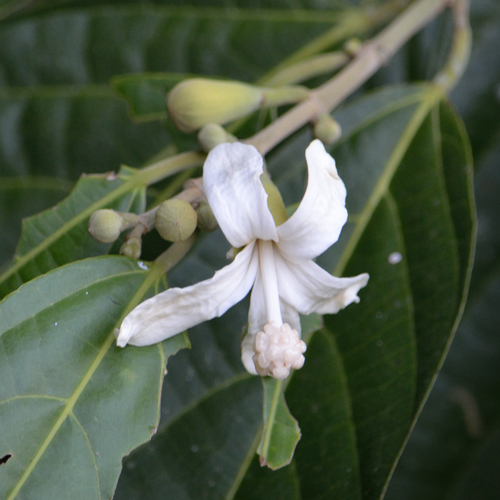
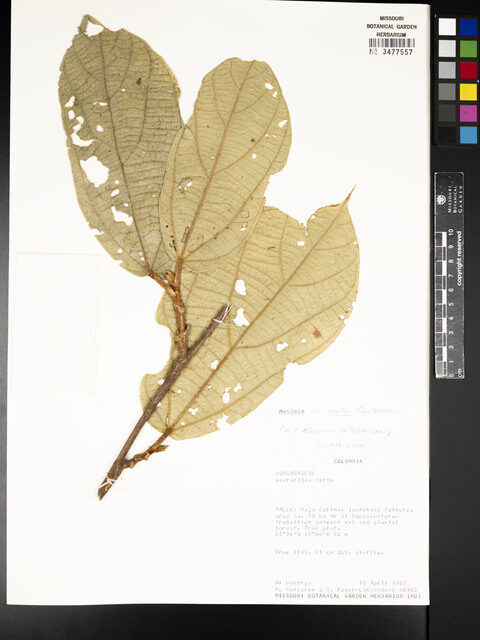
Shortligule herrania
gbif· cc0
President and Fellows of Harvard College
gbif· cc0
President and Fellows of Harvard College
Description
A tropical tree in the mallow family (Malvaceae), with edible fruit.
This description is brief — help expand it
Edible Uses
The following report is based mainly on the seeds of H. Nitida, but the seed of this species is likely to be very similar. The seed contains up to 66% oil. It is solid at room temperature, turning liquid at 25 - 29°c. The oil comprises 18 - 26% linoleic acid, 2 - 7% oleic acid and 74 - 76% saturated acids. Although we have no specific information for this species, the pulp surrounding the fruits of most, if not all members of the genus are edible. This white, acidulous pulp is eaten raw and is most delicious just before the complete ripening of the fruit.
Medicinal Uses
The ashes of the bark of Herrania breviligulata are employed to dry up and cure infected wounds and ulcers.
Known Hazards
The fruits of many members of this genus have some or many stinging hairs on them.
Distribution
It is a tropical plant.
Where It Grows
Amazon, Andes, Colombia, Ecuador, South America,
Cultivation
Succeeds in most soils.
Other Uses
The following description of the wood is for H. Nitida. The wood of this species is likely to be very similar. The heartwood is pinkish brown, the sapwood pale pink. The wood has no distinctive odour or taste; it is straight- or wavy-grained; coarse-textured. It is light in weight; soft; not durable. It requires sharp tools in order to cut smoothly across the grain.
References (2)
- Grandtner, M. M. & Chevrette, J., 2013, Dictionary of Trees, Volume 2: South America: Nomenclature, Taxonomy and Ecology. Academic Press p 298
- Roa, J. A. G. & Boada, D. S. G., 2018, Fundación para el Fortalecimiento de la Fruticultura y Plantas Alimenticias no Convencionales en Colombia.