Cordia obliqua
Willd.
Large sebesten
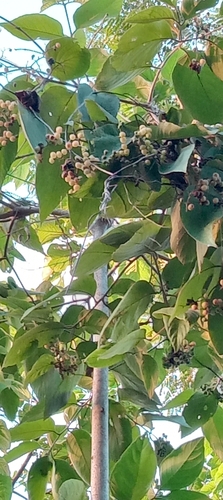
iNaturalist· cc-by-nc
(c) 小惠, some rights reserved (CC BY-NC)
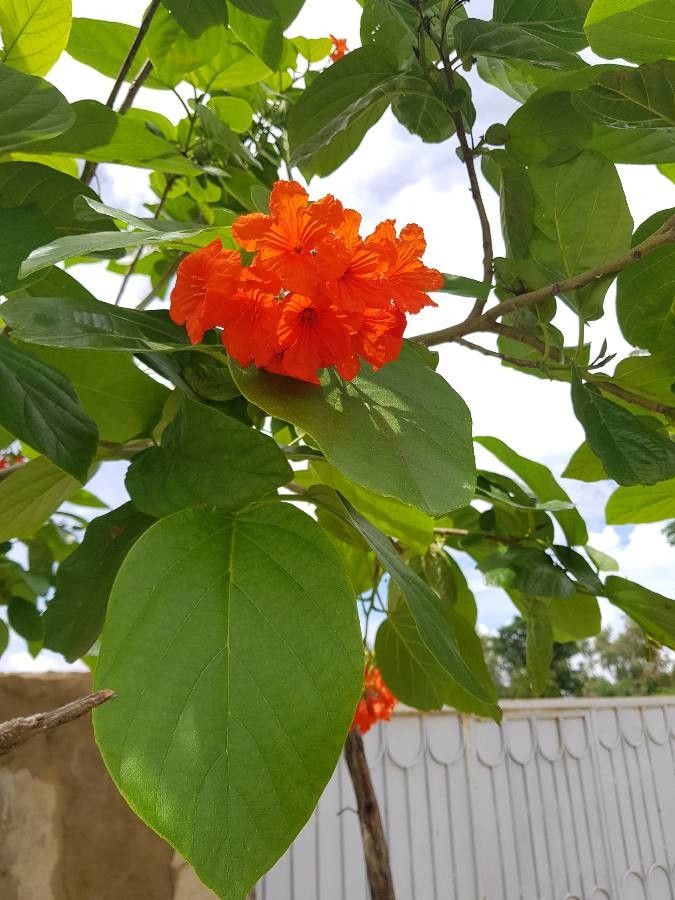
iNaturalist· cc0
no rights reserved
iNaturalist· cc0
no rights reserved
Summary
Source: WikipediaCordia obliqua, the clammy cherry, is a flowering plant species in the genus Cordia. The larvae of Brenthia coronigera, a species of moth found in Bengal, India, feeds on Cordia obliqua. Hesperetin 7-rhamnoside, a glycoside of hesperetin, can be isolated from the plant.
Description
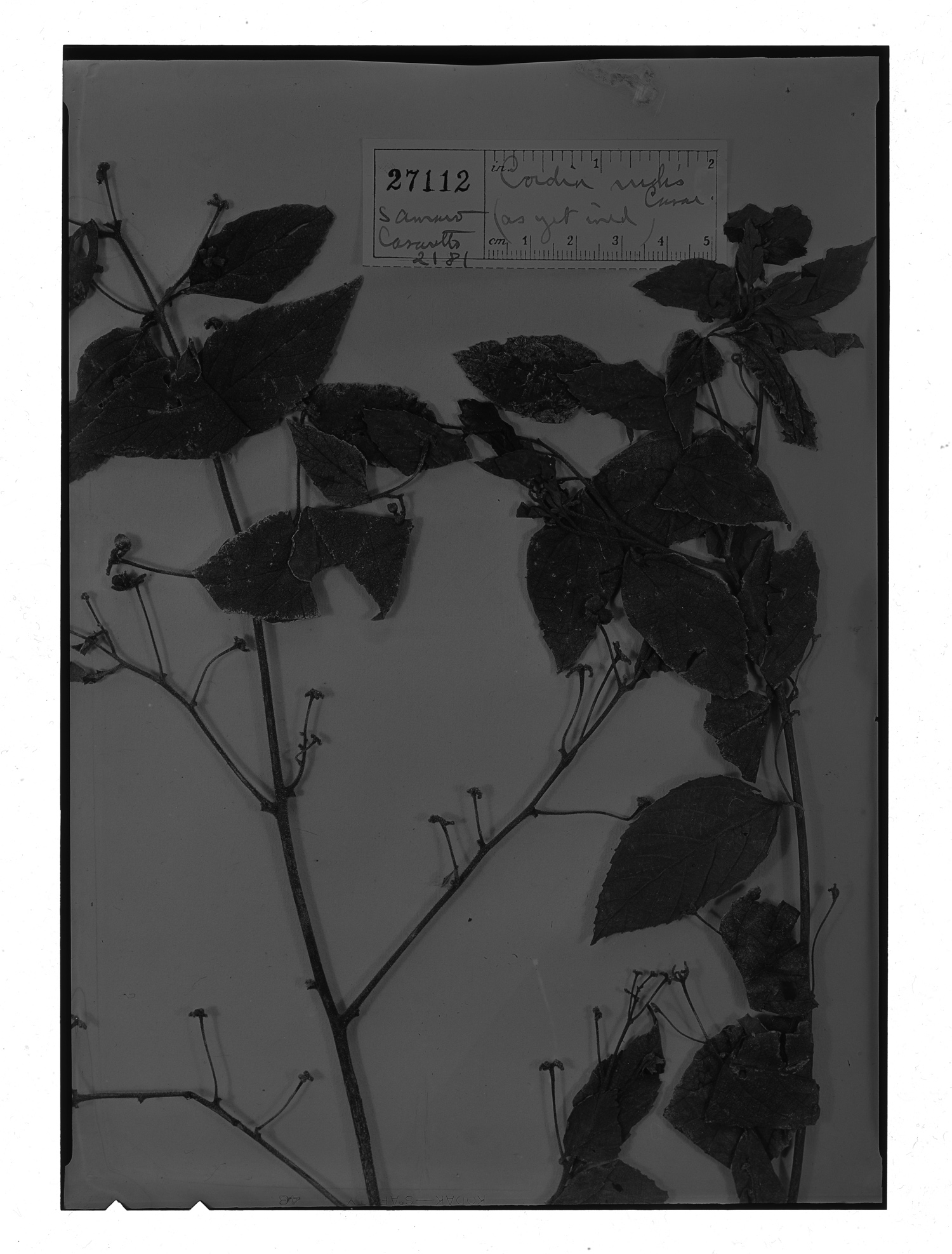
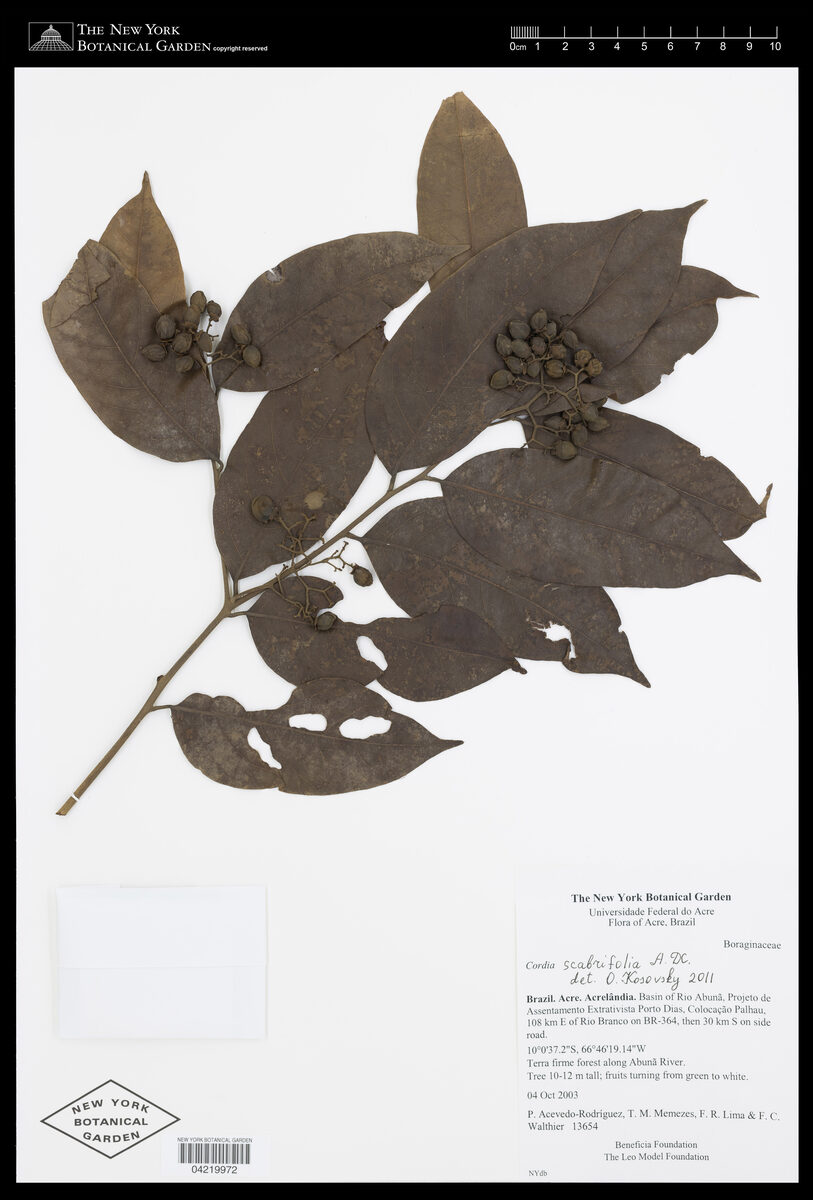
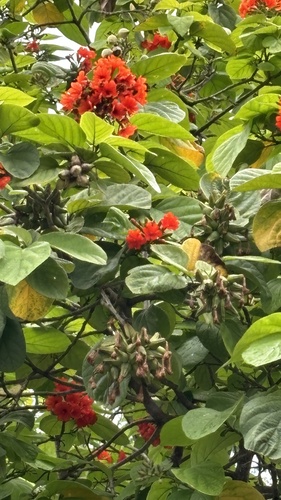
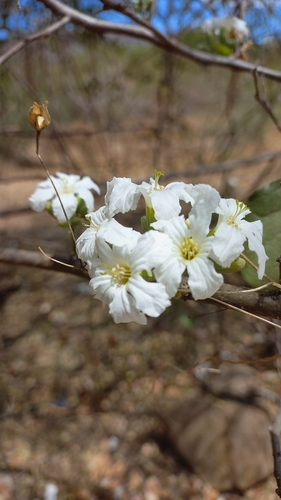
A medium sized tree. It grows 10.5 m tall. The trunk can be 70 cm across. It loses its leaves during the year. The leaves are alternate and oval. They are 10 cm long by 5.5 cm wide. Young leaves are hairy underneath. The flowers are small and white. They are 6 mm wide and smooth on short stalks. They are in clusters of up to 15 flowers. The fruit is fleshy and 1.75 cm across. They are light yellowish-green. The skin is thick and there is a hard stone with 2 seeds.
Edible Uses
The young fruit are pickled and eaten as a vegetable. The leaves are also edible.
Traditional Uses
The young fruit are pickled and eaten as a vegetable.
This uses section is brief — help expand it
Distribution
It is a tropical plant. In Puerto Rico it grows at low altitudes.
Where It Grows
Antigua and Barbuda, Asia, Barbados, Caribbean, Cuba, Himalayas*, India*, Mediterranean, Mexico, North America, Pakistan, Puerto Rico, South America, St. Kitts and Nevis, West Indies,
Production
A tree can produce 30 kg of fruit in a year. Fruit are harvested when fully ripe.
Notes
There are about 300 Cordia species.
Synonyms
Also Known As
Lasura
References (10)
- Arinathan, V., et al, 2007, Wild edibles used by Palliyars of the western Ghats, Tamil Nadu. Indian Journal of Traditional Knowledge. 6(1) pp 163-168
- Hedrick, U.P., 1919, (Ed.), Sturtevant's edible plants of the world. p 217
- Jabeen, A., et al, 2009, Indigenous uses of economically important flora of Margallah Hills National Park, Islamabad, Pakistan. African Journal of Biotechnology Vol. 8 (5), pp. 763-784
- Little, E. L., et al, 1974, Trees of Puerto Rico and the Virgin Islands. USDA Handbook 449. Forestry Service. p 844
- Lyle, S., 2006, Discovering fruit and nuts. Land Links. p 153
Show all 10 references Hide references
- Martin, F.W. & Ruberte, R.M., 1979, Edible Leaves of the Tropics. Antillian College Press, Mayaguez, Puerto Rico. p 179
- NYBG Herbarium "edible"
- Parmar, C., & Kaushel, M. K., 1982, In Wild Fruits. Kalyani Publishers, New Delhi, India. p 19
- Reis, S. V. and Lipp, F. L., 1982, New Plant Sources for Drugs and Foods from the New York Botanical Garden herbarium. Harvard. p 247
- Sp. pl. 1(2):1072. 1798