Bactris brongniartii
Mart.
Bango palm
iNaturalist· cc-by-nc-sa
(c) Mateo Hernandez Schmidt, some rights reserved (CC BY-NC-SA), uploaded by Mateo Hernandez Schmidt
iNaturalist· cc-by-nc-sa
(c) Rich Hoyer, some rights reserved (CC BY-NC-SA)
Description
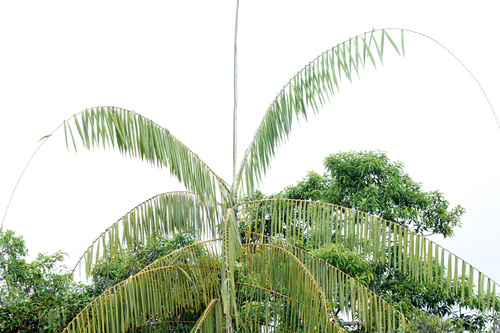
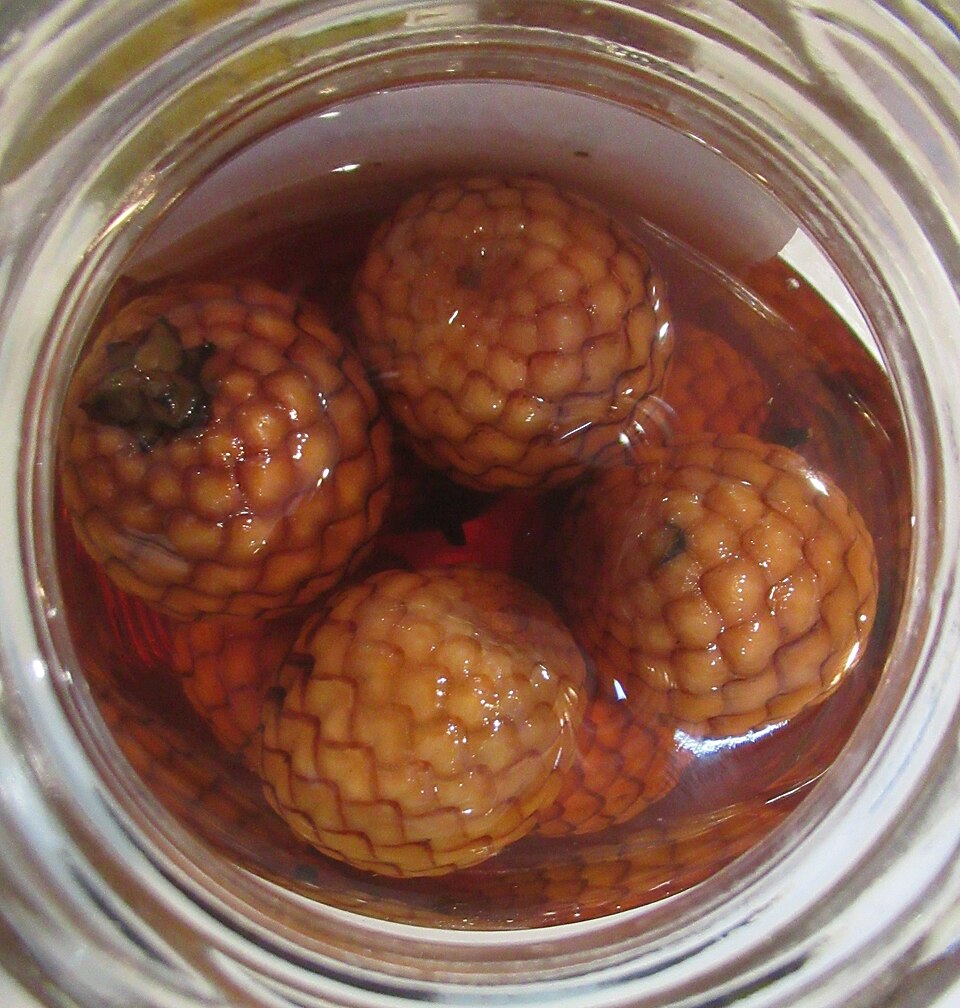
A palm which forms clusters. The stems are 8 m high and 5 cm across. They are light brown with darker rings of spines. There are 4-6 leaves. The leaves are 1.6 m long. The leaves have narrow, sword shaped leaflets. These are light green. The leaf stalk has spines. The leaves are feather like. There are 23-34 leaflets on each side. They are stiffly spreading and arranged in different planes. The flowering stalk has 15-33 flowering branches. The bract around the flower has flattened yellowish spines 2 cm long. The fruit are a flattened round shape and 1.5 cm across. They are purple-black and juicy. They have one large seed. They have a leathery skin. The skin is black. There is only a small amount of edible flesh. The fruiting stalk has about 10 short branches with about 12 fruit on each.
Edible Uses
The fruit are eaten fresh and also used for making drinks; fruit are sold in local markets.
Traditional Uses
The fruit are eaten and also used for drinks.
This uses section is brief — help expand it
Distribution
A tropical plant. It grows in low wet areas and along streams. It can grow in light shade but does better in full sunlight. It grows along the banks of black water streams and rivers rich in sediment. It can be in areas that are occasionally flooded.
Where It Grows
Amazon, Asia, Bolivia, Brazil, Colombia, Ecuador, Guiana, Guianas, Guyana, Indonesia, Peru, SE Asia, South America*, Suriname, Venezuela,
Cultivation
Plants can be grown from seeds or suckers.
Production
Fruit are produced during the rainy season.
Other Information
Fruit are sold in local markets.
Notes
There are 239 Bactris species. There are 75 species in tropical America. Most Bactris have fruit that are edible but many are not attractive.
Synonyms
Also Known As
Arapara, Cachepai montanero, Cana negra, Cana, Chacarra, Cubarra, Cubarro, Do'irre, Kurupiyua, Maradai, Maraja, Maria-ci, Maria-wa, Muru muru, Negra, Nejilla, Palem bango
References (15)
- A. D. d'Orbigny, Voy. Amerique mer. 7(3). Palmiers 59. 1844
- Grandtner, M. M. & Chevrette, J., 2013, Dictionary of Trees, Volume 2: South America: Nomenclature, Taxonomy and Ecology. Academic Press p 56
- Haynes, J., & McLaughlin, J., 2000, Edible palms and Their Uses. University of Florida Fact sheet MCDE-00-50-1 p 3
- Henderson, A., Galeano, G and Bernal, R., 1995, Field Guide to the Palms of the Americas. Princeton. p 185
- Janick, J. & Paul, R. E. (Eds.), 2008, The Encyclopedia of Fruit & Nuts. CABI p 102
Show all 15 references Hide references
- Johnson, D.V., 1998, Tropical palms. Non-wood Forest products 10. FAO Rome. p 91
- Kermath, B. M., et al, 2014, Food Plants in the Americas: A survey of the domesticated, cultivated and wild plants used for Human food in North, Central and South America and the Caribbean. On line draft. p 113
- Lopez-Diago, D. & Garcia, N., 2021, Wild edible fruits of Colombia. Biota ColomBiana 22 (2) p 31
- Maas, P.J. M., Non-Timber Forest Products of the North-West District of Guyana Part 2. The 85 most important NTFP species. p 24
- Marcia, M. J., et al, 2011, Palm Uses in Northwestern South America: A Quantitative Review. Bot. Rev. (2011) 77:462-570
- Riffle, R.L. & Craft, P., 2003, An Encyclopedia of Cultivated Palms. Timber Press. p 44, 266
- Roa, J. A. G. & Boada, D. S. G., 2018, Fundación para el Fortalecimiento de la Fruticultura y Plantas Alimenticias no Convencionales en Colombia.
- Smith, N., et al, 2007, Amazon River Fruits. Flavors for Conservation. Missouri Botanical Gardens Press. p 54
- Sukarya, D. G., (Ed.) 2013, 3,500 Plant Species of the Botanic Gardens of Indonesia. LIPI p 758
- Vasquez, R. and Gentry, A. H., 1989, Use and Misuse of Forest-harvested Fruits in the Iquitos Area. Conservation Biology 3(4): 350f